
The Top Email Outreach Tools With AI For Cold Email Personalization In 2026
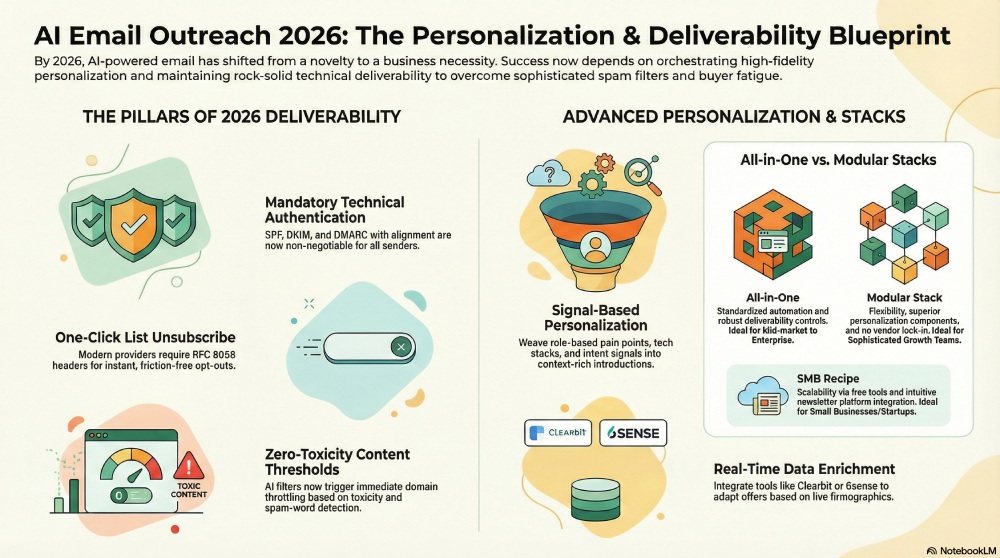
In 2026, AI-powered email has matured from novelty to necessity. The best email tools don’t just send messages; they orchestrate personalized conversations across channels, use enrichment to adapt offers in real time, and optimize deliverability at scale. For teams running cold email, personalization is the prime lever: models that weave firmographic and intent signals into context-rich intros consistently outperform generic templates, improving reply rates, pipeline velocity, and overall email marketing ROI.
This shift is visible across email outreach tools and AI email tools alike. High-performing teams blend sophisticated personalization with rigorous deliverability safeguards, CRM integration for accurate activity logging, and email automation that times touches to the customer journey. The same stack can power lead generation for SDR teams, ecommerce email marketing for DTC brands, and small business email marketing for local services—provided contact management is clean and automation software is governed well.
Even newsletter platforms are converging with outreach: ESPs like Mailchimp, Brevo (formerly Sendinblue), Klaviyo, and MailerLite now expose email API endpoints and audience targeting that let outbound and lifecycle programs share data. That matters because cold email success depends on more than witty copy; it depends on synchronized personalization, reliable deliverability, and workflow automation that connects outreach to marketing automation, lead nurturing, and conversion tracking.
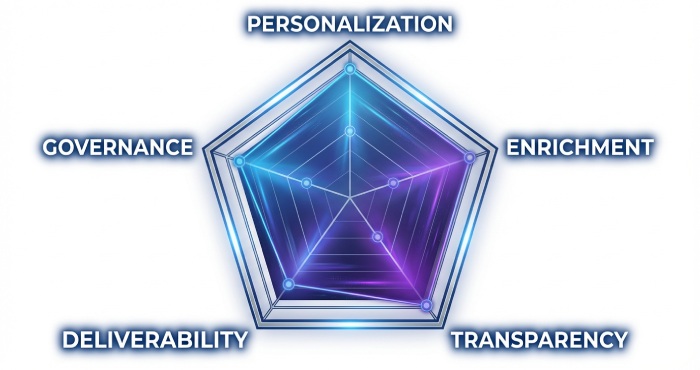
Evaluation framework: personalization depth, enrichment quality, model transparency, deliverability, and governance
Personalization depth
- Signal coverage: Can the tool personalize beyond first name and company? Look for role-based pain points, tech stack references, trigger events, and competitor context. AI features that assemble snippets from CRM fields, website scraping, and third-party enrichment usually yield stronger cold email performance.
- Automation flows: Ensure your email automation supports branching logic, drip campaigns, and automated follow-ups that adapt to opens, clicks, and meeting bookings. Smart automation with advanced segmentation and contact segmentation is now table stakes in modern email outreach tools.
- Copy intelligence: Subject line tester and subject line previewer utilities plus AI-powered email drafting improve relevance and avoid spammy phrasing.
Enrichment quality
- Data sources: Assess breadth and freshness from Clearbit, ZoomInfo, 6sense, People Data Labs, and Seamless.ai. A reliable smart finder accelerates lead generation while keeping contact management accurate.
- Verification: Native email verification and bounce prediction reduce risk. Incorporate a deliverability checklist, DMARC Monitoring Tools, and periodic email testing to protect sender reputation.
- Integrations: Strong integration with CRM (e.g., HubSpot, Pipedrive) ensures fields are synced for personalization and reporting.
Model transparency and governance
- Explainability: Favor AI email tools that surface which data points fuel recommendations and provide a tutorial for configuration. Model transparency reduces hallucinations and ensures compliant messaging.
- Controls: Granular roles, approval queues, and editable templates prevent off-brand sends. Some platforms offer governance playbooks and migration guides to standardize message quality across teams.
Deliverability fundamentals
- Infrastructure: Dedicated IPs or subdomains, automated warm-up, and support for SPF, DKIM, and DMARC are essential. Review each vendor’s email deliverability study and provide a side-by-side comparison of their practices when possible.
- Content safety: Built-in toxicity checks, spam-word detectors, and throttling protect domain health. Tools that integrate a newsletter editor with plain-text-first defaults and transactional emails routing keep mixed use-cases clean.
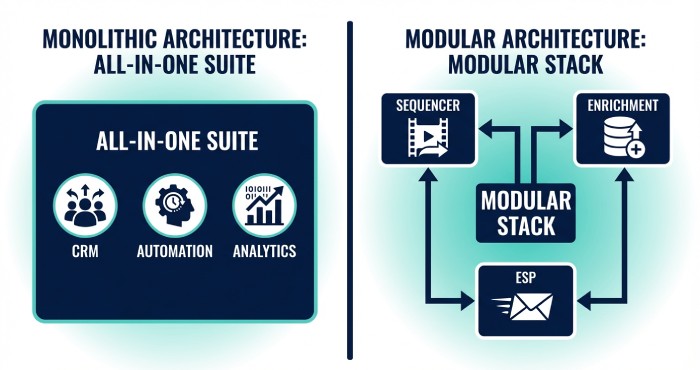
The tool landscape: all-in-one outreach suites vs. modular stacks—pros, cons, and fit by team size
All-in-one outreach suites
- Pros: Unified sequencing, contact management, email automation, campaign analytics, and conversion tracking under one roof. Easier CRM integration and governance for cold email at scale.
- Cons: May lag behind best-in-class personalization engines or enrichment breadth; pricing can rise with seats.
- Fit: Mid-market to enterprise SDR orgs needing standardized automation software and robust deliverability.
Modular stacks with newsletter platforms and ESPs
Pair an outreach sequencer with enrichment, a dedicated email service provider, and analytics. For example, teams might run Outreach or Salesloft with Clearbit enrichment, route transactional emails via Brevo, and push nurtures into Mailchimp or ActiveCampaign.
Newsletter platforms like Klaviyo, Omnisend, ConvertKit, GetResponse, EmailOctopus, Beehiiv, Constant Contact, MailerLite, Flodesk, and EngageBay bring newsletter creation, templates, newsletter tools, and mailing list management; many support automation flows, Ecommerce automation flows, and Omnichannel software. Ecommerce brands often add Kit for Shopify-style prompts and ecommerce email marketing automations.
- Pros: Flexibility, money-saving options via free tools tiers, and superior personalization components.
- Cons: More setup, reliance on email API wiring, and governance complexity.
- Fit: Sophisticated growth teams and small business email marketing programs that want scalability without lock-in.
Tip: Use a Tooltester Side-by-Side Comparison, an email platform comparison, and a free ESP comparison for pricing analysis. Some vendors offer a cost calculator to forecast seat and sending costs.
Top AI-native outreach suites to consider (profiles and standout features)
Apollo
All-in-one lead generation plus sequencing with strong contact management. AI features draft intros from firmographics; automated follow-ups, drip campaigns, and audience targeting come standard. Solid CRM integration for HubSpot and Pipedrive; deliverability controls and email verification built in.
Lemlist
Known for high-touch personalization and warm-up utilities. Image and video personalization, a subject line tester, and smart automation improve cold email performance. Robust workflow automation and integration with CRM options; campaign analytics are easy to digest.
Instantly
Focuses on scale and inbox rotation for deliverability. Quick setup for cold email, strong email automation, and a deliverability checklist. Pairs well with external enrichment for best email tools stacks.
Smartlead
Mailbox pools, warm-up, and rotation maximize deliverability. AI email tools generate tailored openers; good contact management and automated follow-ups. Simple email API hooks for modular builds.
Reply.io
Combines multichannel with AI-powered email writing. Deep CRM integration, conversion tracking, and advanced segmentation. Good templates library and subject line previewer; strong fit for small business email marketing teams upgrading from basic newsletter platforms.
Salesloft
Enterprise-grade governance and analytics with robust integration with CRM. Personalization at scale, audience targeting, and compliance features. Pairs with Clearbit/6sense for intent-driven email automation.
Outreach
Leader for enterprise sequencing and pipeline control. Excellent workflow automation, role-based governance, and deliverability tooling. Powerful campaign analytics and customer journey insights when connected to your data warehouse.
Amplemarket
AI-driven research and smart finder capabilities embedded into prospecting. Quality enrichment, automated follow-ups, and contact segmentation designed for lead generation teams.
Klenty
Lean, affordable sequencing with strong email automation and helpful tutorials. Good deliverability tools, templates, and CRM integration. A practical choice in best email tools shortlists for budget-conscious teams.
Note: Many of these email outreach tools can sync to newsletter platforms like Mailchimp or Brevo for post-demo nurtures, supporting a unified email marketing strategy across cold email, lifecycle, and transactional emails.
Best-in-class personalization engines and enrichment add-ons
Data enrichment powerhouses: Clearbit, ZoomInfo, 6sense, People Data Labs, Seamless.ai
- Coverage and intent: ZoomInfo and 6sense add company and intent data to fuel personalization and audience targeting; Clearbit and People Data Labs help with firmographic and role data; Seamless.ai offers a fast smart finder for net-new contacts.
- Deliverability support: Pair enrichment with email verification and DMARC Monitoring Tools to protect deliverability.
- Integration: These providers expose robust email API and native integration with CRM for clean contact management and reliable marketing automation.
Generative personalization copilots: Clay, Lavender, Lyne.ai
- Clay orchestrates enrichment, rules, and AI features to create ultra-specific openers referencing tech stack, job posts, and news—ideal for cold email at scale.
- Lavender scores tone and readability, acting as a live subject line tester and editor to align messages with buyer psychology.
- Lyne.ai mass-generates intro lines from scraped signals, powering automated follow-ups and drip campaigns with context that feels hand-written.
Visual and website personalization: Hyperise
- Hyperise personalizes images, website content, and CTAs per contact, boosting reply rates when combined with outreach sequences. It integrates with many email outreach tools and newsletter platforms, and supports templates for quick deployment.
Practical stack notes and buyer tips
- Governance and privacy: Ensure model transparency, opt-out handling, and audit logs across automation software, especially when scaling email marketing globally.
- Reporting: Unify campaign analytics and conversion tracking across outreach and newsletters to map the customer journey end to end.
- Compatibility: Confirm integration with CRM and newsletter editor compatibility for nurtures in Mailchimp, ActiveCampaign, Klaviyo, Omnisend, ConvertKit, MailerLite, GetResponse, Beehiiv, Constant Contact, EmailOctopus, Flodesk, and EngageBay.
- Resources: Look for a clear tutorial library, migration guides, and a deliverability checklist. Third-party Tooltester reviews and a rigorous pricing analysis or cost calculator help with vendor selection.
- Use cases: For ecommerce email marketing, pair Klaviyo or Omnisend for Ecommerce automation flows and transactional emails with an AI-native sequencer for prospecting. For small business email marketing, a lightweight sequencer plus a reliable email service provider and free tools can be a money-saving path while preserving scalability.
Bringing it together: the strongest stacks combine AI email tools for high-fidelity personalization, enrichment for accuracy, rock-solid deliverability controls, and CRM integration that keeps contact management aligned. Whether you standardize on an all-in-one platform or assemble modular best email tools with newsletter platforms, keep email automation disciplined and cold email governance tight to maintain sender reputation—and results.
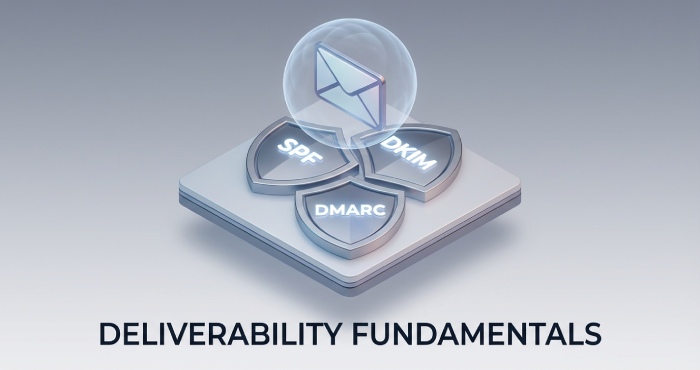
Deliverability, authentication, and compliance in 2026: SPF/DKIM/DMARC, Google/Yahoo requirements, opt-outs, and reputation management
The new baseline: SPF, DKIM, DMARC (and BIMI) for every sender
- In 2026, inbox providers expect authenticated domains and strict alignment. SPF and DKIM are table stakes; DMARC with quarantine or reject is becoming standard for strong deliverability. Even Nureply and other modern outreach platforms emphasize proper authentication and alignment to ensure emails land in the inbox rather than the spam folder.
- Google and Yahoo bulk sender requirements now include DMARC alignment, low spam rates, and one-click list-unsubscribe. Newsletter platforms and email outreach tools that automate alignment reduce risk.
- Add BIMI for brand trust; combined with a complete deliverability checklist, it can lift open rates across email marketing and cold email programs.
What to implement now
- Enforce DMARC at p=quarantine or p=reject and monitor with DMARC Monitoring Tools.
- Rotate DKIM keys and isolate transactional emails on dedicated subdomains.
- Use email verification and suppression lists to protect contact management and inbox reputation.
Monitoring and reporting
- Instrument FBLs, postmaster tools, and dashboards from your email service provider.
- Schedule a quarterly email deliverability study to catch drift before it affects ecommerce email marketing.
Consent, opt-outs, and data stewardship
- Maintain provable consent for small business email marketing and newsletter platforms; record consent timestamps within contact management and CRM integration.
- For cold email, apply local lawful-basis rules, verify business purpose, and provide transparent opt-outs.
Opt-out mechanics that inboxes expect
- Add list-unsubscribe (RFC 8058) and one-click headers in all marketing automation sends.
- Offer preference centers (opt-down) to reduce complaints without sacrificing lead generation.
Reputation management and list hygiene
- Segment new leads into drip campaigns with gradual ramping; throttle cold email until engagement signals stabilize.
- Apply advanced segmentation to suppress chronic non-openers, maintain separate pools for transactional emails, and run automated follow-ups only to engaged segments.
Ongoing audits
- Review bounce codes, blocklists, and IP/domain health monthly.
- Align contact segmentation and workflow automation with active lifecycle stages to preserve deliverability.
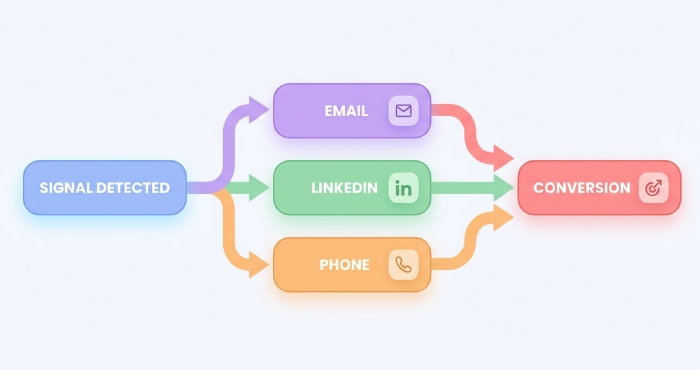
Sequencing and multichannel orchestration with AI: dynamic paths across email, LinkedIn, phone, and retargeting
Orchestrated journeys that adapt in real time
- AI email tools score intent, pick channels, and alter timing across email, LinkedIn, phone, and ads to maximize lead generation.
- Omnichannel software and automation software coordinate touchpoints so email automation reacts to signals like site visits and call outcomes.
Smarter content and timing
- Use AI-powered email to choose the right asset per persona and inject personalization at the sentence and snippet level.
- Employ a subject line tester and subject line previewer tied to campaign analytics to lift replies in cold email and nurture streams.
Channel selection guardrails
- Define caps per day and per contact to prevent fatigue.
- Route high-value accounts to SDRs when AI features detect buying signals.
Systems architecture for orchestration
- Anchor orchestration with deep CRM integration (HubSpot, Pipedrive) so every step writes back outcomes for attribution.
- Connect ad audiences, website events, and email API triggers to create closed-loop automation flows.
Example platform roles
- ActiveCampaign or Klaviyo for marketing automation and Ecommerce automation flows.
- Mailchimp, Brevo (Sendinblue), MailerLite, ConvertKit, Beehiiv, or Constant Contact as newsletter platforms for newsletter creation and templates.
- GetResponse, EmailOctopus, Flodesk, EngageBay, and Omnisend for alternative stacks with strong newsletter tools and drip campaigns.
Personalization at scale
- Merge firmographic and behavioral data to tailor messaging; this level of personalization drives both small business email marketing and enterprise programs.
- Automate lead nurturing with automated follow-ups that vary CTA by lifecycle stage.
Cold email with care
- Keep cold email sequences short, value-led, and compliant; warm up domains and validate data before first touch.
- Leverage smart automation to pause sequences when meetings are booked or when negative signals appear.
Implementation playbooks: stack recipes and templates for SMBs, agencies, and enterprise teams
SMB stack recipe
- Choose best email tools that balance ease and scalability: MailerLite or ConvertKit for newsletter creation, Brevo for free email marketing tiers, and Pipedrive or HubSpot for CRM integration.
- Use templates inside the newsletter editor, configure contact segmentation by persona, and enable email automation for welcomes and re-engagement—ideal for small business email marketing.
Money-saving and migration
- Start with free tools, then scale; lean on migration guides and a cost calculator to forecast growth.
- Adopt mailing list management best practices and email verification to protect budgets and deliverability.
Agency stack recipe
- Centralize client data and permissions; use marketing services workflows with GetResponse or ActiveCampaign plus Beehiiv for editorial newsletters.
- Standardize reporting with campaign analytics and conversion tracking, and maintain Side-by-Side Comparison dashboards for channel ROI.
Reusable assets
- Build a template library for niche verticals, including cold email openers and ecommerce email marketing automations.
- Document a step-by-step tutorial for onboarding, including integration with CRM and workflow automation.
Enterprise stack recipe
- Combine enterprise email outreach tools with Omnichannel software and an email API for custom triggers and SLAs.
- For retail, Klaviyo or Omnisend power Ecommerce automation flows; route transactional emails on a separate domain and IP.
Security and scale
- Enforce SSO, role-based access, and approval workflows in automation software.
- Design for scalability with microservices that isolate sending, tracking, and data enrichment.
Measurement and optimization: A/B testing, model feedback loops, safety guardrails, and ROI attribution
Test design and feedback loops
- Run disciplined A/B testing across copy, cadence, and offers; incorporate email testing for rendering and accessibility.
- Feed outcomes to AI email tools so models learn what drives responses, increasing precision in personalization and email automation.
What to measure
- Track opens, clicks, replies, meetings, pipeline, revenue, and deliverability metrics in campaign analytics.
- Pair conversion tracking with audience targeting and advanced segmentation to lift intent-driven outcomes.
Safety, compliance, and model governance
- Implement safety guardrails for AI-powered email: tone constraints, banned topics, and human-in-the-loop approvals.
- Validate links, sources, and claims; keep a deliverability checklist and run periodic email deliverability study reviews.
ROI and vendor selection analytics
- Use pricing analysis to compare total cost of ownership across email platform comparison candidates, including Mailchimp, ActiveCampaign, HubSpot, Omnisend, and Constant Contact.
- Consult Tooltester or a free ESP comparison for a Side-by-Side Comparison, and maintain an internal cost calculator that includes warmup, data, and creative.
What’s next: agentic workflows, first-party data strategies, and a practical 2026 buyer’s checklist
Agentic workflows get practical
- Agentic orchestration will let AI features plan, execute, and adapt sequences across channels, escalating to humans when needed.
- Expect tighter smart automation and automation flows that manage the customer journey end-to-end.
Orchestration under the hood
- Workflow automation will trigger from granular product telemetry, with AI email tools selecting messages and channels in real time.
- APIs will expose event-level data so email outreach tools and newsletter platforms stay synchronized.
First-party data as a strategic moat
- Build unified profiles through integration with CRM and CRM integration, web analytics, and commerce systems to power personalization without third-party cookies.
- Map identity resolution to content strategy for both ecommerce email marketing and small business email marketing, ensuring compliance and sustained deliverability.
2026 buyer’s checklist
- Deliverability and authentication: SPF, DKIM, DMARC, BIMI; include DMARC Monitoring Tools and a deliverability checklist.
- Capabilities: email automation, marketing automation, newsletter tools, email API, automation software, contact management, advanced segmentation, personalization, and robust email outreach tools.
- Use cases: cold email, lead generation, newsletter creation, and Ecommerce automation flows.
- Integrations: deep CRM integration, integration with CRM, ad platforms, calling, and data warehouses.
- Evaluation: run a Side-by-Side Comparison, pilot with email testing, review pricing analysis, consult migration guides, and validate support quality.
- Platforms to trial: Brevo (Sendinblue), Mailchimp, ActiveCampaign, Klaviyo, GetResponse, EmailOctopus, Beehiiv, ConvertKit, Constant Contact, HubSpot, Omnisend, Flodesk, EngageBay, and Kit (Shopify).
Fast start kit
- Launch with a guided tutorial, subject line tester, and subject line previewer.
- Use a smart finder to select segments, then deploy templates with automated follow-ups.
FAQs
What authentication do I need in 2026 to protect deliverability?
Implement SPF, DKIM, and DMARC with alignment, and add BIMI for brand trust. Monitor performance with DMARC Monitoring Tools and follow Google/Yahoo bulk sender rules, including one-click unsubscribe.
How do AI email tools improve multichannel sequencing?
They analyze engagement signals to select channels and timing, adapt copy for personalization, and coordinate email automation with ads, calls, and social touches. This lifts lead generation while reducing fatigue in cold email.
Which platforms are strong newsletter platforms for small teams?
MailerLite, ConvertKit, Beehiiv, and Brevo offer intuitive newsletter editors, templates, and mailing list management. They also integrate with CRM integration workflows to support small business email marketing.

How should ecommerce email marketing handle transactional emails?
Use a dedicated subdomain/IP with strict authentication and route via a reliable email service provider. Keep transactional streams separate from promotions to protect deliverability and customer experience.
What metrics best attribute ROI across channels?
Tie campaign analytics to conversion tracking, pipeline, and revenue, not just opens/clicks. Maintain clean contact management and use advanced segmentation to understand impact along the customer journey.
Can I start with free email marketing and still scale?
Yes—begin with free tools for newsletters and basic automations, then expand features as you grow. Use a cost calculator and pricing analysis to plan scalability and avoid lock-in.
How do I keep AI-powered email safe and compliant?
Set safety guardrails, require approvals for sensitive content, and log decisions. Maintain a deliverability checklist and run a periodic email deliverability study to validate outcomes and reputation.
Key Takeaways
- Authentication (SPF, DKIM, DMARC) plus one-click unsubscribe is non-negotiable for deliverability in 2026.
- AI email tools and automation software enable adaptive, multichannel journeys that boost lead generation and personalization.
- Choose best email tools that fit use case and budget, validating with a Side-by-Side Comparison and pricing analysis.
- Strong CRM integration, contact management, and email automation underpin both small business email marketing and ecommerce email marketing.
- Measure beyond vanity metrics with campaign analytics, conversion tracking, and continuous testing to drive ROI.