
The 2026 Deliverability Checklist For Automated Email Outreach
Automated email outreach lives or dies by deliverability in 2026. ISPs have tightened enforcement, users expect instant control, and privacy-first defaults punish sloppy sending. This deliverability checklist distills what high-performing teams do to keep automated email outreach, cold email, and email marketing campaigns consistently landing in the inbox. It also frames how to evaluate email outreach tools, automation software, and email marketing services with an eye on email deliverability, CRM integration, newsletter tools, and pricing—so you can select the best email outreach tools for your stack.
What deliverability means in 2026 automated outreach and the new baseline
The new ISP thresholds and feedback loops
Modern ESP (Email Service Provider) policies and mailbox providers like Gmail and Yahoo enforce stricter spam thresholds, authentication-by-default, and sender reputation scoring. For automated email outreach, that means your outreach campaign must maintain low complaint and bounce rates, respect engagement signals, and demonstrate consistent identity.
Deliverability is no longer just “don’t send spam”—it’s system-level compliance plus user delight across email subject lines, content, and cadence. Expect granular enforcement per domain, per pathway (SMTP), and per content type (marketing vs transactional emails). High email deliverability correlates with sustained open rate, click-through rate, and conversion tracking tied to clean data and disciplined process.
One-click unsubscribe and preference centers
One-click unsubscribe is mandatory and must be visible. Pair it with a preference center to reduce total opt-outs and improve email engagement. Segmenting lists by interest and frequency, paired with personalization and A/B testing of email subject lines, gives recipients control while signaling to filters that your automated email outreach respects user intent. Many email outreach tools and newsletter tools now include a subject line tester, email campaign editor, and email templates to operationalize these best practices at scale.
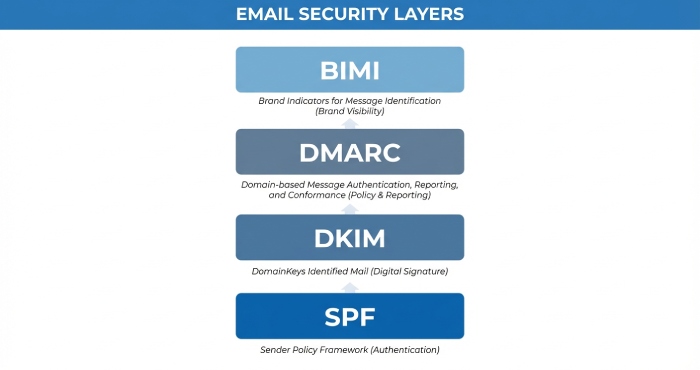
Authentication-by-default: SPF, DKIM, DMARC, BIMI
At a minimum, align SPF, DKIM, and DMARC for every domain used in email outreach or cold email. DMARC at enforcement (p=quarantine or p=reject) protects your brand and stabilizes deliverability. BIMI adds visual trust when properly validated. In 2026, authentication-by-default is a baseline for email marketing, outreach automation, and email automation flows, regardless of whether you send via Mailchimp, Brevo, Omnisend, ActiveCampaign, Klaviyo, GetResponse, MailerLite, EmailOctopus, Beehiiv, Constant Contact, Flodesk, SendGrid, or another ESP (Email Service Provider).

Build a compliant sending stack: domains, DNS, SPF/DKIM/DMARC alignment, BIMI, rDNS/MX/HELO, MTA-STS/TLS-RPT, custom tracking domains
DNS and protocol checklist
- Publish SPF with only authorized senders and keep it under the 10-DNS-lookup limit.
- Sign all mail with DKIM; rotate keys periodically.
- Enforce DMARC alignment for From, Return-Path, and DKIM domains.
- Configure rDNS, MX, and HELO to match sending hosts.
- Enable MTA-STS and TLS-RPT for secure SMTP and visibility into transport issues.
- Add BIMI with verified logo once DMARC is at enforcement.
These steps harden identity for automated email outreach, improve email deliverability, and prevent spoofing that can crater deliverability.
Alignment and enforcement settings
- Use domain alignment for both DKIM and SPF to the visible From domain used in email outreach.
- Move to p=quarantine, then p=reject on DMARC once you’re confident; monitor aggregate reports.
- For transactional emails, consider separate subdomains and dedicated DKIM selectors to isolate reputation from email marketing and bulk email.
Custom tracking and link branding
Link-branding via custom tracking domains prevents mismatched links that trigger filters. Most email outreach tools and email marketing services support branded click domains, which help outreach automation maintain consistent identity through redirects, UTMs, and conversion tracking. This is crucial for best email outreach tools used in cold email and newsletter tools alike.
Testing tools and audits
Run a periodic audit using free tools, a step-by-step guide, or a tutorial-style email marketing guide to validate DNS, TLS, and content quality. A Tooltester-style comparison template or review can help you assess integration depth, campaign management, contact management, and reporting and analytics across providers. Supplement with internal email tutorials to standardize practice across teams and agency solutions.
Domain and IP strategy for outreach: subdomain separation, domain aging, dedicated vs shared IPs, and reputation ownership
Subdomain and brand protection
Use distinct subdomains for automated email outreach versus core email marketing and transactional emails. This isolates risk: a poor cold email sprint won’t poison lifecycle communications or ecommerce automation flows. Maintain separate tracking and bounce handling per subdomain for cleaner telemetry and deliverability.
IP choices and ownership
- Shared IPs suit small business solutions when volume and consistency are limited; reputable ESP pools (e.g., SendGrid or Brevo) provide stable baselines.
- Dedicated IPs benefit senders with steady volume who want direct reputation ownership for outreach automation and newsletter tools.
Coordinate IP and domain decisions with your ESP (Email Service Provider) and CRM integration roadmap (HubSpot, Pipedrive, EngageBay) to ensure data sync, campaign management, and integration don’t fragment identity.
Aging, warming, and cross-channel impacts
New domains should age 2–4 weeks before meaningful volume. Avoid tying risky cold email tests to your primary corporate domain. Consider how omnichannel software, sales funnel software, landing page builder activity, and membership platforms link-click behavior can affect reputation via shared tracking or redirect domains.

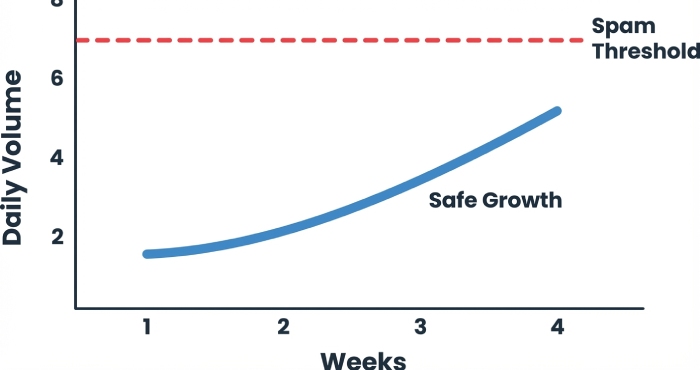
Ramp-up and volume governance: warm-up schedules, per-MBP throttles, daily caps, sequencing, and mailbox rotation without footprints
Safe warm-up schedules
Start with dozens per mailbox per day, then scale slowly while monitoring open rate, click-through rate, replies, and spam signals. Use email scheduling to pace delivery and interleave outreach campaign steps with drip campaigns for nurtures. Mature email outreach programs apply automation flows and email automation to modulate cadence across segments, supported by personalization and segmenting lists.
Throttles, caps, and pacing
Implement per-MBP throttles (e.g., Gmail vs Outlook) and daily caps that adapt based on engagement and bounce signals. Avoid bulk email blasts; sequence sends over hours with randomized intervals. Many best email outreach tools include a cost calculator, pricing tiers, and governance features that let you balance throughput with safety, aided by reporting and analytics and A/B testing of email subject lines.
Mailbox rotation and footprint control
Mailbox rotation reduces per-mailbox volume but must avoid detectable footprints. Randomize senders, vary email templates and signatures, and rotate custom tracking domains judiciously. Outreach automation platforms with strong contact management and campaign management protect against collisions and duplicate touchpoints, especially when CRM integration synchronizes status changes from lead generation and prospecting tools.
List acquisition and data health: consent for cold vs opted-in, verification, bounce/spam-trap avoidance, and enrichment hygiene
Consent models and legal posture
For opted-in lists, document consent, provide one-click unsubscribe, and maintain a preference center. For cold email, enforce strict local-compliance workflows, honor do-not-contact flags, and clearly identify your organization. Do not mix cold email with opt-in newsletter tools on the same domain or IP. Maintain separate automation software paths so email deliverability for marketing nurtures remains protected.
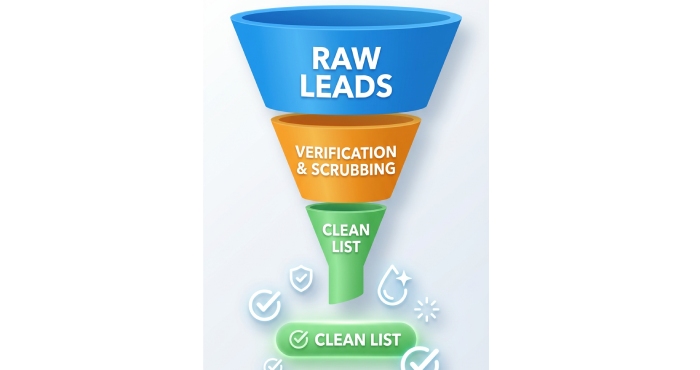
Verification and hygiene
Adopt email verification before any outreach campaign using tools like Nureply to protect sender reputation. Suppress role accounts, likely spam-traps, and high-risk domains before launching sequences. Continuously cleanse bounces and unsubscribes through seamless integration between Nureply, your ESP (Email Service Provider), and CRM to maintain list hygiene.
Ensure enrichment processes preserve accurate fields for personalization, as stale or incorrect data quickly degrades deliverability and email engagement. Leverage reporting, analytics, and conversion tracking inside Nureply to identify and prune segments that consistently fail to engage, keeping your outreach performance strong and sustainable.
Data enrichment without risk
Only append data from reputable sources; validate phone/location fields when used by omnichannel software. Keep enrichment minimal for first-touch cold email to avoid creepy personalization. Align categories and schema in HubSpot, Pipedrive, or EngageBay to ensure contact management fields map cleanly into outreach automation and email automation flows.
Practical tooling notes for 2026:
- Platform selection: Evaluate Mailchimp, Brevo, SendGrid, Omnisend, ActiveCampaign, Klaviyo, GetResponse, MailerLite, EmailOctopus, Beehiiv, Constant Contact, Flodesk, and Kit against deliverability controls, CRM integration, automation flows, and pricing. Shortlist the best email outreach tools with a comparison template that weights deliverability, email outreach features, and integration.
- Feature fit: Confirm availability of subject line tester, email campaign editor, A/B testing, email templates, drip campaigns, and ecommerce automation. Ensure robust API integration for transactional emails and outreach automation.
- Services vs build: Some teams prefer email marketing services for managed ramp-up and agency solutions; others assemble their own stack with free tools plus SendGrid SMTP. Small business solutions may consolidate on all-in-one suites; enterprises may mix specialized newsletter tools with dedicated ESPs to monetize content and scale.
- Governance: Create an internal deliverability checklist, step-by-step guide, and tutorial library to standardize best practices. Reference an external review or email marketing guide for periodic audits and use marketing resources from vendors to train new staff with email tutorials.
- Measurement: Track open rate, click-through rate, replies, conversions, and spam complaints. Tie outreach campaign steps to sales attribution in CRM for accurate conversion tracking. Use A/B testing and reporting and analytics to refine cadence, content, and segmentation.
- Financials: Model total cost with a cost calculator that includes pricing for ESP seats, domains, dedicated IPs, verification, and enrichment—plus time for campaign management. Evaluate pricing not just monthly, but per successfully delivered message to reflect true email deliverability performance.
Inbox-friendly templates and content
Deep personalization that scales
- Move beyond “Hi {FirstName}.” Pull in role, industry, stack, trigger events, and account-level goals to make email outreach feel 1:1. Modern email outreach tools pair CRM integration with contact management so you can reference a prospect’s use of SendGrid or a recent DMARC policy update.
- For automated email outreach, build personalization into automation flows and drip campaigns using tokens, conditional content, and fallbacks. Most email marketing services and newsletter tools (Brevo, Mailchimp, MailerLite, EmailOctopus, Beehiiv, Flodesk) support dynamic blocks and segmenting lists for credible specificity.
Personalization guardrails
- Limit variable fields per message to avoid template “mad libs.”
- Validate fields with email verification and field-level QA to prevent awkward merges.
Dynamic fields and fallbacks
- Use “if/else” logic in your email campaign editor to gracefully omit missing fields.
Plain-text-first formatting
- For cold email and early-stage outreach automation, a short, plain-text-first message typically earns higher email deliverability and reply rates. Keep HTML minimal and mirror the plain-text copy.
HTML hygiene
- Avoid heavy CSS, background images, and web fonts; they can trip spam filters and hurt deliverability.
- Ensure mobile-first line lengths and adequate contrast for accessibility.
Subject lines and preview text
- Write clear, human email subject lines; test with a subject line tester as part of an A/B testing routine. Keep preview text complementary, not redundant.
Links, attachments, and trust signals
- Limit links (1–2 maximum) in cold email; avoid URL shorteners. Host assets on a reputable domain, and never attach large files; link to a landing page builder or drive via your site.
Footer and unsub compliance
- Include a physical address and a clear opt-out. Implement List-Unsubscribe (RFC 8058) with mailto and HTTPS methods; major ESP (Email Service Provider) inboxes honor these for one-click opt-outs.
Legal footer essentials
- Company identity, mailing address, and a plain-language unsubscribe—these are non-negotiable best practices that protect email deliverability.
Cadence design and sending behavior
Time zones and randomized send times
- Respect local time zones and apply email scheduling windows with ±15–30 minute randomized send times to avoid automation tells. Email outreach tools and omnichannel software can stagger bulk email while aligning with working hours.
Sequencing rules
- Start with a 2–3 message outreach campaign, spaced 2–5 business days apart; let engagement data (open rate, click-through rate, and replies) tune cadence.
Reply-aware pauses and frequency caps
- Pause automated email outreach the moment a reply, meeting, or conversion tracking event is detected via CRM integration. Frequency caps across email marketing and transactional emails reduce fatigue and preserve email engagement.
Threading etiquette
- Keep follow-ups in the same thread unless the conversation has pivoted; short bump messages often outperform longer re-pitches.
Quiet hours and avoiding automation tells
- Enforce quiet hours (e.g., 7 p.m.–8 a.m. local time, weekends optional). Vary send-day patterns to mimic natural behavior. Outreach automation should never batch-send at exact clock times.
Humanized variability
- Rotate sign-offs and micro-variants in email templates, and insert occasional plain-text nudges to keep patterns organic.
Engagement-led segmentation and hygiene
Suppress unengaged and design reactivation/sunset policies
- Build an engagement ladder: active, at-risk (no reply/click in 60–90 days), inactive (no reply/click in 120–180 days). Suppress inactive from automated email outreach and run a short reactivation series before sunsetting.
Reactivation play
- Offer value: a concise tutorial, free tools, a short email marketing guide, or a relevant review or comparison template. If no signal, sunset to protect email deliverability.
A/B tests and prioritizing replies over opens
- Optimize for replies, meetings, and pipeline—treat open rate as directional given privacy changes. Use A/B testing across subject lines, calls to action, and send windows, and measure with reporting and analytics and conversion tracking.
Signal weighting
- Weight replies and positive outcomes above clicks; negative feedback (spam reports, hard bounces) should immediately trigger suppression per your deliverability checklist.
Email verification and source quality
- Validate addresses pre-send; categorize bounces to identify source issues. Pair lead generation and prospecting tools with double opt-in for newsletter tools and with role filtering for cold email.
Data governance
- Maintain source tags in CRM integration so you can audit outcomes by list origin and improve campaign management.

Compliance and data protection
Laws to know: CAN-SPAM, CASL, GDPR/ePrivacy, CPRA
- Align your outreach automation with regional laws: clear identity, lawful basis (especially under GDPR/ePrivacy), and consent or legitimate interest where applicable. Keep opt-out SLAs tight (preferably instant) and maintain records of consent.
Identity and opt-out
- Use a real sender identity and a monitored reply-to. Implement List-Unsubscribe and honor removals within 10 business days at most (sooner for best practices).
DPAs, vendor reviews, and data residency
- Execute DPAs with vendors (Brevo, Omnisend, ActiveCampaign, Klaviyo, GetResponse, Constant Contact) and confirm data residency options. Review SMTP handling and logging with providers like SendGrid and your ESP (Email Service Provider).
Security and alignment
- Enforce SPF, DKIM, and DMARC alignment before scaling automated email outreach. Document subprocessors and run periodic access audits across HubSpot, Pipedrive, EngageBay, and any sales funnel software.
Choosing providers and pricing transparency
- When evaluating the best email outreach tools and email marketing services, pressure-test pricing tiers (contacts, sends, seats, add-ons), ecommerce automation features, and CRM integration depth. Tooltester and similar marketing resources offer a useful review baseline—validate with your own cost calculator and a proof-of-concept.
Stack considerations
- Map newsletter tools and membership platforms (Beehiiv, MailerLite, Flodesk) for publish-and-monetize content use cases; pair with landing page builder modules. Ensure integration paths with Kit and other Shopify-friendly options.

Monitoring, diagnostics, and remediation
Postmaster Tools/SNDS/FBLs and blocklist checks
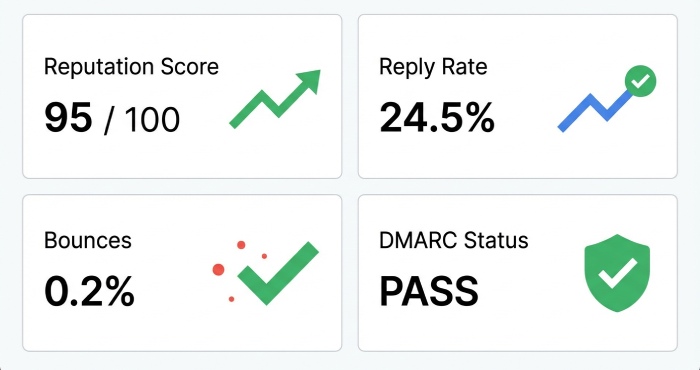
- Monitor Google Postmaster Tools, Microsoft SNDS, and Feedback Loops for complaint rates, domain health, and spam trap indicators. Run routine blocklist checks and correlate with spikes in bounces or drops in email deliverability.
Inbox placement and logs
- Test inbox placement before scaling; review SMTP logs to spot throttling or policy rejections early.
Bounce taxonomy and inbox testing
- Classify bounces: hard (invalid), soft (quota), policy (blocked), and technical (DNS, TLS). This taxonomy informs re-tries, suppression, and whether outreach campaign copy or reputation is the culprit.
Preflight checklist
- Maintain a deliverability checklist: DMARC aligned, warmed domains/IPs, stable cadence, healthy engagement, and clean lists.
KPI thresholds and recovery playbooks
- Establish thresholds for complaint rate (<0.1%), hard bounce rate (<2%), and inbox placement (>85% for warmed domains). If metrics slip, initiate a recovery playbook: pause bulk email, tighten segmenting lists to recent engagers, revert to plain-text-first, and re-warm gradually.
Tooling and iteration
- Leverage reporting and analytics to track reply rates, click-through rate, and revenue attribution. Many of the best email outreach tools and email marketing services now bundle advanced dashboards, A/B testing, and automation software diagnostics.

Putting providers in context for outreach and newsletters
Ecosystem snapshots
- For cold email and automated email outreach: consider tools with robust outreach automation, flexible pricing, and native CRM integration; ActiveCampaign, HubSpot, and Pipedrive bridges are common.
- For newsletters and content-led email marketing: Mailchimp, Beehiiv, MailerLite, and EmailOctopus are strong newsletter tools with email automation flows and monetization options.
Capability cross-check
- Verify campaign management, integration options, and email templates depth; ensure transactional emails and drip campaigns live alongside outreach without cross-contaminating reputation.
Budgeting note
- Compare pricing by sends, contacts, and features; distinguish agency solutions from small business solutions to avoid overbuying.

Practical workflows and resources
Step-by-step guide highlights
- Start with authentication (SPF/DKIM/DMARC), verify data quality, load segments, and build automation flows. Ship a small pilot, measure, and scale.
Templates, tests, and tutorials
- Maintain a comparison template for vendor features; run weekly A/B testing; create short email tutorials for your team. Keep marketing resources centralized.
Extend beyond email
- Consider omnichannel software for coordinated touchpoints across SMS, chat, and ads—just ensure it doesn’t compromise email deliverability.
Continuous improvement loop
- Use a review cadence to retire low performers, refine email subject lines, and tune outreach campaign timing based on fresh analytics.

FAQs
How many links should I include in a cold email?
Limit links to one or two and avoid URL shorteners. Fewer links reduce spam risk and improve email deliverability and reply rates.
Do plain-text emails really perform better for outreach?
Often yes, especially in early-stage email outreach. Plain-text-first reduces spam signals and feels more human, which benefits automated email outreach when done carefully.
What tools help monitor sender reputation?
Use Google Postmaster Tools, Microsoft SNDS, and FBLs, plus blocklist checks. Many email outreach tools and email marketing services integrate these signals into reporting and analytics.
How do I prioritize metrics after privacy changes?
Focus on replies, meetings, and conversion tracking over open rate alone. Click-through rate and complaint rates remain useful—but reply signals should lead decisions.
What legal elements must be in my footer?
Include company identity, physical address, and easy opt-out. Implement List-Unsubscribe (RFC 8058) for compliant one-click unsubscribes that also aid inbox placement.

When should I sunset unengaged contacts?
After a reactivation attempt and a defined period of no engagement (e.g., 120–180 days). Sunsetting protects email deliverability and improves overall email engagement.
Which providers are good starting points?
For newsletters: Mailchimp, Beehiiv, and MailerLite. For outreach automation and CRM integration: ActiveCampaign, HubSpot, and Pipedrive-connected stacks; compare pricing and features before scaling.
Key Takeaways
- Treat personalization, plain-text-first, and List-Unsubscribe as foundational to email deliverability and credible email outreach.
- Design cadences with time zone awareness, reply-aware pauses, and quiet hours to avoid automation tells in automated email outreach.
- Segment by engagement, prioritize replies over opens, and enforce reactivation/sunset policies to keep lists healthy.
- Meet legal and security standards (CAN-SPAM, CASL, GDPR/ePrivacy, CPRA) and execute DPAs with vendors; authenticate with SPF/DKIM/DMARC.
- Monitor with Postmaster Tools/SNDS/FBLs, maintain a deliverability checklist, and use recovery playbooks when KPIs drift.