
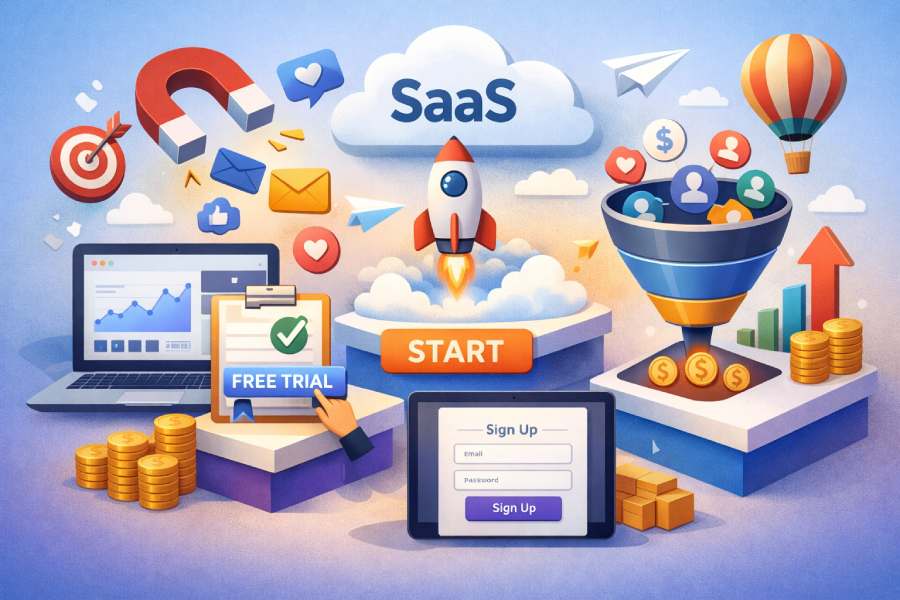
Inbound Lead Generation Examples For Saas: From Free Trials To Product‑led Funnels
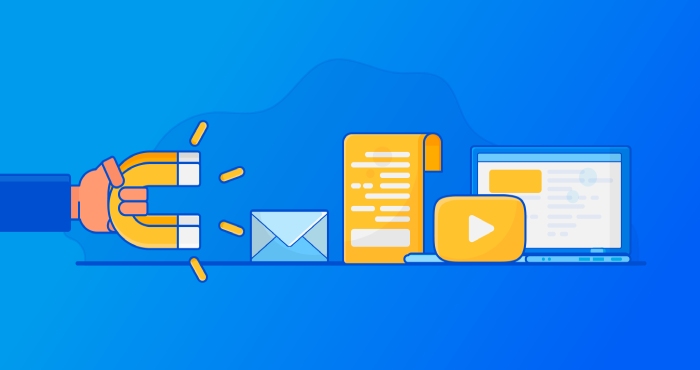
Inbound lead generation has become the backbone of sustainable growth for SaaS companies. Instead of relying solely on cold outreach or aggressive advertising, modern SaaS brands attract potential customers by offering value first—whether through helpful content, free tools, educational resources, or seamless product experiences. This approach not only builds trust but also encourages prospects to engage with the product on their own terms, creating a stronger foundation for long-term customer relationships.
From free trials that let users experience the software risk-free to product-led funnels designed to guide prospects naturally toward conversion, inbound strategies are reshaping how SaaS businesses capture and nurture leads. These methods focus on solving real problems, demonstrating value early, and reducing friction in the buyer journey. In this article, we’ll explore practical inbound lead generation examples that successful SaaS companies use to attract high-quality leads, improve conversion rates, and drive predictable revenue growth.
How inbound powers product‑led funnels in SaaS
Definitions: inbound, product‑led, and funnel stages
Inbound lead generation in B2B SaaS attracts prospects by delivering value before a sale—through content marketing, SEO, and product experiences that align to buyer intent. In a product‑led growth (PLG) motion, the product itself drives acquisition, activation, and expansion; inbound lead generation fuels that engine by feeding high‑intent traffic and users into the marketing funnel and sales funnel. Typical stages include buyer awareness, consideration, evaluation, and purchase—mapped to MQL (Marketing Qualified Lead), SQL (Sales Qualified Lead), and opportunity creation.
Inbound lead examples in a PLG context include blog content that answers niche problems, case studies that demonstrate ROI, bottom‑of‑funnel content that nudges demo requests, and pricing pages that channel organic search traffic to free trials. These touchpoints accelerate pipeline generation by meeting prospects where they are in the buyer journey and surfacing the right product experience at the right moment.
Where inbound lead examples fit in the product
- Blog content and educational resources create brand awareness and early buyer intent.
- Product pages, comparison pages, and pricing pages capture demand from organic search traffic and convert through contact forms, newsletter signup, and demo or consultation requests.
- In‑product prompts, templates, and interactive tools translate interest into activation, moving MQLs to SQLs and increasing conversion rates.
- Webinars and webinar attendance drive trust‑building for complex use cases, while case studies reinforce lead quality and help RevOps forecast opportunity creation.
Comparing with outbound lead generation and outbound lead examples
Unlike inbound, outbound lead generation pushes messages to target accounts via cold email, cold calling, LinkedIn outreach, direct mail campaigns, and event‑based outreach. Outbound lead examples include SDR activity against an Ideal Customer Profile (ICP), account-based campaigns with personalized messaging, and targeted ad campaigns to warm up discovery calls. Both motions matter in B2B marketing: outbound lead generation is effective for list building and industry targeting; inbound lead generation compounds over time through SEO and content-assisted pipeline. A balanced revenue engine uses inbound for efficient, high buyer intent and outbound for coverage of strategic target accounts.
High‑intent SEO pages: pillars, comparison/alternative pages, and bottom‑funnel search capture
Pillar and cluster strategy for B2B SaaS
A durable SEO strategy organizes blog content and product education into pillar pages with topic clusters. For example, a Healthcare SaaS pillar on “HIPAA‑compliant workflows” can branch into compliance templates, integration guides for an IT Director, and procurement checklists for a VP of Finance. These assets earn organic search traffic, signal thought leadership, and build trust‑building through depth and clarity. When aligned to the Ideal Customer Profile (ICP)—CEO, Founder, Marketing Director, Operations Manager—pillar hubs generate consistent inbound lead generation while supporting account-based marketing narratives.

Capturing organic search traffic with bottom‑of‑funnel content
Bottom‑funnel search terms (e.g., “[product] pricing,” “[tool] demo,” “[competitor] alternative”) show high buyer intent. Build:
- Product pages that explain key workflows, integrations, and security, with clear contact forms and demo requests.
- Pricing pages with transparent tiers, reverse‑trial options, and strong social proof via case studies and Webinar clips.
- Comparison pages and alternatives pages optimized for conversion rates and lead quality; add CTAs for free trial and discovery calls.
These inbound lead examples not only convert but also improve lead source attribution for RevOps: you can trace SQL creation to specific bottom‑of‑funnel content and refine the marketing funnel accordingly.
Comparison and alternatives pages to win buyer intent
Comparison and “best alternatives” pages capture evaluation‑stage queries and steer traffic toward your differentiators. Use competitive matrices, migration timelines, and ROI models pulled from case studies. Complement with LinkedIn outreach from a Sales Development Representative (SDR) to invite prospects to a Demo or Webinar—combining inbound lead generation with gentle outbound lead generation for a multi-touch journey that boosts prospect engagement.
Optimizing product pages, pricing pages, and demo requests
- Place multiple CTAs: free trial, demo or consultation requests, and newsletter signup for lead nurturing.
- Offer industry‑specific use cases (e.g., Healthcare SaaS workflows) to raise lead quality and accelerate SQL rates.
- Track engagement metrics—scroll depth, on‑page interactions, and contact forms started—to improve conversion rates and opportunity creation.
Template libraries and use‑case playbooks as evergreen lead magnets (gated vs. ungated)
Evergreen lead magnets: gated vs. ungated
Template libraries (dashboards, SOPs, onboarding checklists) and use‑case playbooks are powerful inbound lead examples because they map directly to product value. Ungated templates maximize organic search traffic and shareability; gated versions capture emails for lead nurturing via email newsletters. Choose gating based on buyer intent: ungated for awareness and link building; light gating for evaluation content where MQL thresholds are clear.
To maintain lead quality, ask for minimal fields on forms and use progressive profiling. RevOps can score interactions—template downloads, playbook usage, webinar attendance—to promote MQLs to SQLs when intent signals spike.
Content‑assisted pipeline and lead nurturing with educational resources
- Pair each template with a short video walkthrough, case studies, and a one‑click “use this in product” CTA.
- Build drip sequences with educational resources and thought leadership, including podcast appearances and Virtual Events clips to reinforce expertise.
- For Account-Based Marketing, map specific libraries to target accounts and follow up with personalized messaging from an SDR. Agencies like Reach Marketing can support list building for hard‑to‑reach verticals while your inbound content marketing does the heavy lifting.

Interactive tools and calculators (including Chrome extensions and micro‑apps) that prime product value
Chrome extensions and micro‑apps
Interactive tools, ROI calculators, and Chrome extensions are standout inbound lead examples because they reduce time‑to‑value. A micro‑app that audits data quality or forecasts savings can move a prospect from casual blog content to in‑product activation. Offer single‑sign‑on with low friction (Google, LinkedIn) and a prompt to import data—this bridges marketing funnel engagement with product‑qualified actions that often produce SQLs.
For B2B marketing teams, embed these tools on product pages and promote via email newsletters, Podcast mentions, and Webinar follow‑ups to sustain organic search traffic while nudging higher buyer intent.
Measuring engagement metrics and prospect engagement
Treat interactive tools as experiments. Track:
- Tool starts, completions, and share rate for engagement metrics.
- Lead source attribution (SEO, referrals, LinkedIn outreach) to optimize spend.
- Movement from tool usage to discovery calls, Demo attendance, and trial signups to validate pipeline generation.
Coordinate with RevOps so Sales Development Representatives (SDRs) know when to trigger discovery calls. SDR activity should focus on high‑signal events—calculator completion with enterprise inputs from an IT Director or budget fields indicating a VP of Finance is involved.

Free trial, freemium, and reverse‑trial models: structuring offers that convert and activate
Structuring offers that convert
- Freemium for top‑of‑funnel scale: Ideal for brand awareness and wide net inbound lead generation, especially when backed by strong SEO and blog content. Use in‑app prompts to guide demo requests for advanced features.
- Time‑boxed free trials for mid‑funnel urgency: Short trials (e.g., 14 days) paired with case studies and Webinar replays improve buyer intent and conversion rates.
- Reverse‑trial for faster activation: Start users on premium, then downgrade—this surfaces aha moments early and elevates lead quality before sales engagement.
Support each model with bottom‑of‑funnel content, clear pricing pages, and contextual CTAs. Encourage referrals by adding share links and “invite your team” nudges; these are classic inbound lead examples that amplify organic search traffic with network effects, outperforming many outbound lead examples on efficiency.
Activation tactics: email newsletters, webinar attendance, discovery calls
- Onboarding sequences: Combine email newsletters with in‑product tips, Webinar invitations, and role‑based playbooks for a multi-touch journey. Tailor flows for a CEO, Founder, Marketing Director, Operations Manager, or IT Director to improve prospect engagement.
- Sales alignment: When product signals indicate high buyer intent (workspace invites, integrations enabled), route to a Sales Development Representative (SDR) for personalized messaging and discovery calls. Convert high‑fit users to SQL (Sales Qualified Lead) faster by aligning to Account-Based Marketing for target accounts.
- Outbound assists: Light outbound lead generation—polite LinkedIn outreach or event-based outreach—can prompt hesitant evaluators to schedule a Demo. Use account-based campaigns and targeted ad campaigns to complement inbound rather than replace it.
Finally, maintain a clear RevOps process for lead source attribution, MQL/SQL definitions, and opportunity creation. Whether you work with in‑house teams or partners like Reach Marketing, the goal is an integrated revenue engine where inbound lead generation, supported by selective outbound lead generation, turns buyer intent from SEO, blog content, case studies, and webinar attendance into repeatable pipeline generation.
Self-serve product tours, sandboxes, and interactive demos that reduce time-to-value
Why self-serve experiences accelerate pipeline
Self-serve product tours, sandboxes, and interactive demos compress the marketing funnel by letting prospects feel value before they ever talk to sales. For inbound lead generation, these assets provide immediate proof, qualify buyer intent through engagement metrics, and shorten the sales funnel by removing friction. They also create high-intent inbound lead examples: a Healthcare SaaS prospect who spins up a sandbox after reading blog content; a VP of Finance who completes an interactive ROI calculator and requests pricing; a Founder who engages with a click-through demo from a Webinar recap.
This motion complements outbound lead generation by giving SDR activity a strong destination. Outbound lead examples like cold email, LinkedIn outreach, and targeted ad campaigns convert better when they drive to a guided tour rather than a static landing page. The result is improved lead quality and faster opportunity creation across B2B marketing programs.
Instrumentation and routing that protect lead quality
- Track depth-of-use signals (steps completed, features explored, time-in-sandbox) as buyer intent indicators and route to MQL (Marketing Qualified Lead) or SQL (Sales Qualified Lead) tiers in RevOps.
- Tie interactions to account-based marketing data to detect target accounts and trigger discovery calls with a Sales Development Representative (SDR).
- Use lead source attribution to differentiate organic search traffic from event-based outreach and make smarter pipeline generation decisions.

Converting product interest into revenue conversations
Attach bottom-of-funnel content to the tour: product pages, pricing pages, and case studies that answer late-stage objections. Prompt contextual demo requests and contact forms inside the experience, offer demo or consultation requests for complex packages, and accelerate SQL creation with personalized messaging for your Ideal Customer Profile (ICP).
Instrumentation checklist
- Event tracking for key “aha” moments and feature depth
- Progressive profiling tied to newsletter signup and demo requests
- Lead nurturing triggers for stalled sandboxes
Example flow
Visitor reads blog content, starts interactive demo, explores a use-case, views case studies, then completes contact forms for a Demo—qualifying as an MQL and handing off to SDR activity.
Integration-driven acquisition: marketplace listings, partner co-marketing, and use-case pages
Marketplace listings as always-on inbound engines
Integration listings in ecosystems like LinkedIn, Salesforce AppExchange, or cloud marketplaces generate persistent inbound lead generation through SEO and category placement. Well-optimized profiles pull organic search traffic for integration keywords and deliver strong inbound lead examples when paired with use-case pages that rank for “how to integrate X with Y.” Add screenshots, case studies, and pricing pages to capture bottom-of-funnel demand and increase conversion rates.
SEO advantages and use-case hubs
Use structured data and internal linking to tie marketplace listings to use-case hubs that expand content marketing coverage. This creates a content-assisted pipeline: blog content that explains workflows, educational resources that show outcomes, and case studies that provide social proof—each reinforcing buyer awareness and buyer intent before sales engagement.

Partner co-marketing with account-based precision
Co-branded webinars, joint blog content, and partner events combine inbound lead generation with account-based campaigns. With partners like Reach Marketing, you can align target accounts and industry targeting, then layer outbound lead generation on top—direct mail campaigns, event-based outreach, and cold email—to drive registration. These are strong outbound lead examples when they funnel into a joint on-demand demo and co-written case studies that nurture SQL.
From partner awareness to opportunity creation
Integrate list building with RevOps to prioritize shared target accounts and orchestrate discovery calls. Use lead source attribution to split pipeline generation, and coordinate Sales Development Representative follow-up with personalized messaging that references the integration and partner return on investment(ROI).
Webinars, live workshops, and on-demand demo hubs that funnel directly into signups
Turning webinar attendance into sales-ready action
Webinars and live workshops remain reliable B2B marketing engines because webinar attendance signals high buyer intent. To maximize inbound lead generation, make registration frictionless and drive from email newsletters, podcast appearances, and blog content. After the session, route attendees to an on-demand demo hub with one-click demo requests, and prompt contact forms for those seeking deeper consultation.
Nurturing sequences that convert
Use email newsletters and LinkedIn outreach to deliver follow-up: workshop recaps, case studies, and educational resources mapped to the buyer journey. This multi-touch journey improves lead quality, increases conversion rates, and accelerates sales funnel progression with timely discovery calls.

Building an on-demand demo library
Create an indexed demo hub segmented by use-case, role, and industry (e.g., Healthcare SaaS). Pair each demo with bottom-of-funnel content—product pages, pricing pages, and role-specific case studies—to capture demand immediately.
Measure what matters
Instrument lead source attribution across virtual events and on-demand views; monitor prospect engagement; and connect engagement metrics to MQL/SQL thresholds. This allows the revenue engine to prioritize follow-up and forecast opportunity creation with higher precision.
Community, academies, and certifications that compound trust and create inbound momentum
Trust-building through participation and proof
Communities, academies, and certifications compound trust-building and brand awareness while fueling inbound lead generation. They function as content marketing ecosystems: ongoing blog content, office hours, and educational resources that build thought leadership and drive organic search traffic. Inbound lead examples include members completing a certification, then requesting a demo to operationalize what they learned.
Certification as a buying signal
Certifications that require platform usage produce buyer intent signals stronger than generic downloads. They often convert to SQL faster, particularly when tied to role-based tracks for a Marketing Director, IT Director, Operations Manager, or CEO.
Operationalizing communities with SDR alignment
A Sales Development Representative (SDR) can monitor community milestones and trigger personalized messaging via LinkedIn outreach, cold email, or warm referrals using Nureply to streamline automation and improve response rates. Coordinate SDR activity with RevOps so that ICP-aligned members who show consistent prospect engagement receive timely discovery calls and invitations to virtual events, while Nureply’s data-driven insights help ensure outreach remains relevant and well-timed.
From community to account-based marketing
Feed community membership into account-based marketing segments and run targeted ad campaigns to engaged accounts. The result: a harmonized inbound and outbound lead generation loop where outbound lead examples (cold calling to members, direct mail campaigns for alumni) reinforce community-driven buyer awareness.
Social proof at scale: case studies, review sites, and customer stories that rank and convert
Ranking with SEO, converting with specificity
Case studies, customer stories, and review profiles are high-performing content marketing formats that drive organic search traffic and increase lead quality. Optimize these assets with SEO best practices, internal links from blog content, and rich snippets so they rank for solution + industry queries. Place them adjacent to product pages and pricing pages to serve bottom-of-funnel content where prospects are most ready to convert through demo requests and contact forms.
Build a role- and industry-based library
- CEO and Founder stories that highlight strategic outcomes and opportunity creation
- VP of Finance narratives that quantify ROI and conversion rates
- IT Director and Operations Manager features that detail integrations and risk reduction
- B2B SaaS and Healthcare software as a service industry targeting measurable Key performance indicators(KPIs).

Story architecture that moves the sales funnel
Great case studies follow a consistent arc: pain, trigger, use-case, implementation, and quantified impact. This structure supports inbound lead generation by aligning to the buyer journey, while also giving outbound lead generation assets that SDRs can cite in personalized messaging. Outbound lead examples include cold email that references a relevant customer win, account-based campaigns that promote a peer case study, and event-based outreach that invites prospects to a customer-led Webinar.
Scale distribution to compound impact
Repurpose stories into Podcast interviews, Webinar panels, and short clips for LinkedIn. Promote via email newsletters and paid retargeting; syndicate to review sites to capture bottom-of-funnel intent; and align with Reach Marketing or other partners for co-marketing amplification. The compound effect improves the marketing funnel, increases buyer intent, and produces consistent inbound lead examples month after month.
FAQs
How do self-serve demos improve inbound lead generation?
Self-serve tours and sandboxes surface buyer intent early, converting organic search traffic and blog content readers into engaged prospects. They reduce friction in the marketing funnel and move qualified users toward demo requests and discovery calls.
What are strong outbound lead examples that pair with these tactics?
Effective outbound lead examples include LinkedIn outreach to target accounts, cold email sequences referencing relevant case studies, and direct mail campaigns inviting prospects to a Webinar. These motions drive to interactive demos or use-case pages to raise lead quality.
How do webinars and on-demand hubs translate webinar attendance into revenue?
By routing webinar attendance directly to bottom-of-funnel content—product pages, pricing pages, and role-specific case studies—you capture intent while it’s hot. Automated lead nurturing and SDR activity then convert MQLs to SQLs and accelerate opportunity creation.
How can partnerships and marketplaces boost SEO and organic search traffic?
Marketplace listings rank for integration queries and feed organic search traffic into use-case hubs optimized with SEO. Partner co-marketing expands distribution, creating more inbound lead examples through shared audiences and thought leadership.
What metrics matter most for evaluating these programs?
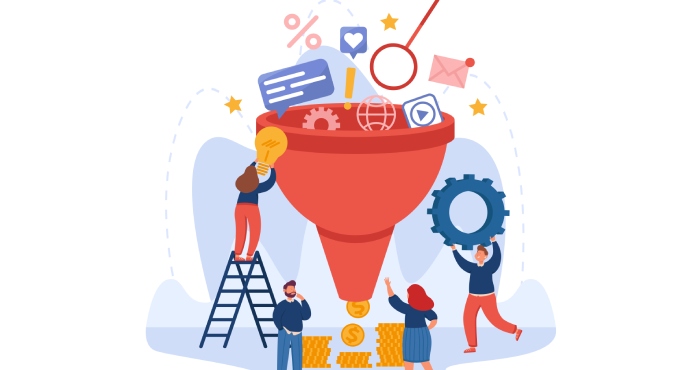
Track engagement metrics in product tours, lead source attribution across events, conversion rates on pricing pages, and MQL-to-SQL progression. Together these indicate buyer intent, pipeline generation velocity, and sales funnel health.
How does community and certification impact lead quality in B2B marketing?
Community participation and certifications are high-signal activities that demonstrate buyer awareness and readiness to adopt. They produce better-fit MQLs, faster SQL conversion, and stronger trust-building before a Demo.
Key Takeaways
- Self-serve tours, sandboxes, and demo hubs convert buyer intent quickly and lift inbound lead generation while aiding outbound lead generation follow-up.
- Integration listings, partner co-marketing, and use-case pages drive SEO, organic search traffic, and content-assisted pipeline with measurable conversion rates.
- Webinars and workshops turn webinar attendance into MQL and SQL momentum when routed to bottom-of-funnel content and supported by SDR activity.
- Communities, academies, and certifications compound trust-building, improve lead quality, and feed account-based marketing with high-signal engagement.
- Social proof at scale—case studies, reviews, and customer stories—ranks in search, fuels the marketing funnel, and accelerates opportunity creation through targeted distribution.