
How To Automate Cold Emails Using Deep Personalization At Scale
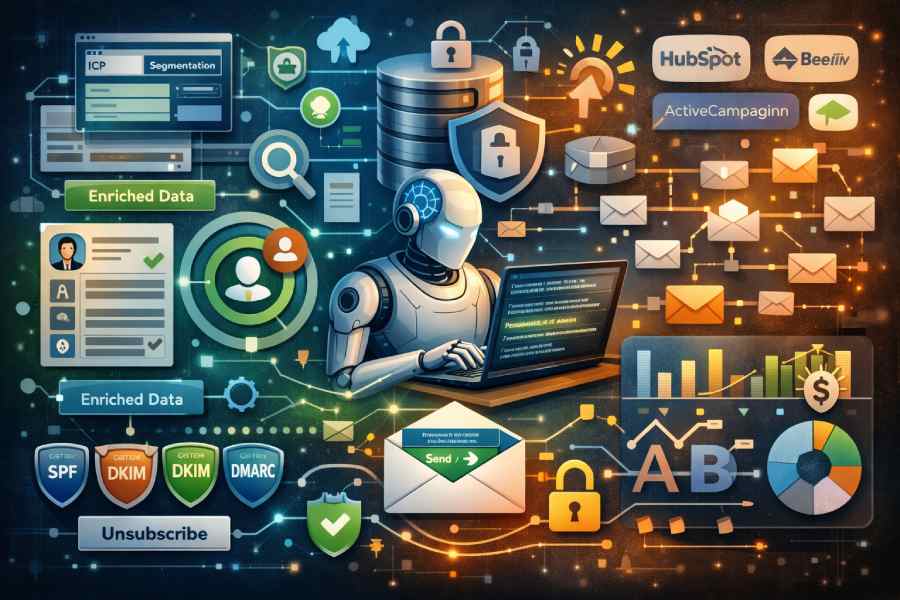
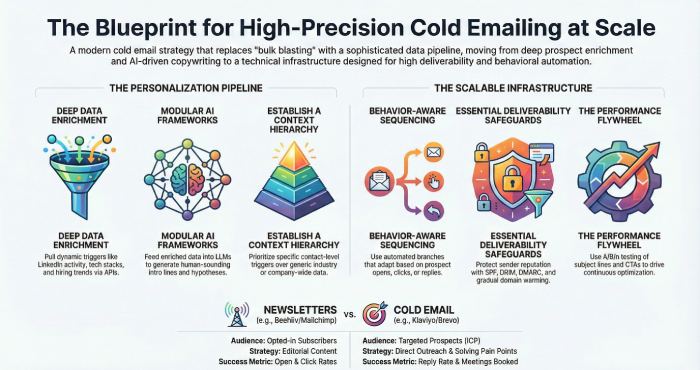
Automating cold emails using deep personalization at scale means combining advanced data enrichment, AI-driven research, and smart sequencing tools to send highly relevant messages without manual effort for every prospect. Start by defining a clear ICP and segmenting your list based on industry, role, company size, and pain points, then use enrichment platforms to pull dynamic data such as recent LinkedIn activity, company news, tech stack, funding rounds, or hiring trends. Feed this data into AI writing tools to generate customized first lines, pain-point hypotheses, and value propositions that feel human rather than templated.
Build modular email frameworks with dynamic variables and conditional logic so each message adapts automatically to different segments, and integrate everything into an outreach platform that automates scheduling, follow-ups, and reply detection. To maintain authenticity, use personalized hooks tied to real triggers (like a recent product launch or blog post), rotate variations to avoid spam filters, and continuously A/B test subject lines, CTAs, and messaging angles. When done correctly, this system allows you to deliver one-to-one relevance at one-to-many scale—blending automation, AI, and behavioral data to create emails that feel handcrafted while operating like a machine.
Why Deep Personalization Matters and What “At Scale” Really Means
Deep personalization is the difference between ignored cold email and compounding replies. When your email outreach references a prospect’s role, pain points, tech stack, and recent activity, it signals relevance rather than interruption. That relevance improves engagement metrics—open rate, reply rate, and positive outcomes—and it also strengthens deliverability, because emails that earn opens, clicks, and replies are less likely to be trapped by spam filters. In other words, strong email personalization is a deliverability strategy as much as a messaging strategy.
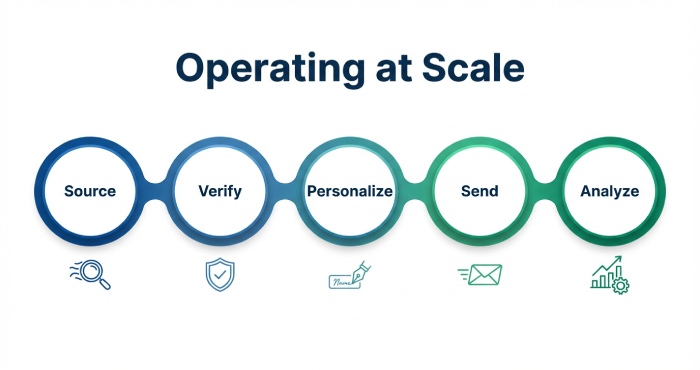
At scale doesn’t mean blasting bulk email. It means you can run a campaign across thousands of prospects while maintaining one-to-one specificity. True scale combines email automation, robust outreach tools, and a disciplined data layer so every message reads like it was hand-written. You’ll orchestrate multi-step sequences with dynamic email subject lines, tailored value props, and timely follow-up emails that adapt to behavior. This is where an email marketing platform with tight CRM integration and reliable email deliverability shines.
- Personalization as a growth lever: better engagement yields better email analytics, which feeds future optimization.
- Scale as an operational system: automation software, workflow automation, and multi-step sequences that never trade quality for quantity.
- Clear separation from newsletters: newsletters and newsletter platforms like Beehiiv, Flodesk, and MailerLite serve subscribers, while cold email requires different compliance, data, and sequencing tactics than editorial newsletters.
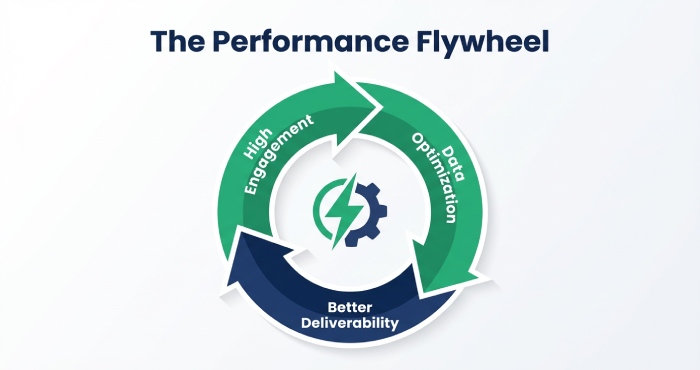
The performance flywheel
- Improved email tracking and reporting surface winning variations for A/B testing.
- Positive engagement improves deliverability and email deliverability specifically, reducing risk in future marketing campaigns.
- Better data and contact segmentation drive even sharper personalization in the next campaign.
What counts as “scale” in practice
- Automatic lead generation and list building linked to your CRM/CDP.
- Email scheduling and scheduled sending that respect time zones and intent signals.
- Automated, behavior-aware follow-up emails that adapt the sequence based on opens, clicks, or a landing page visit.
Prerequisites: ICP, Buyer Personas, Offer-Market Fit, and Message-Market Validation
Before choosing outreach tools or building a campaign, sharpen your strategy.
Define ICP and personas with precision
Start with an Ideal Customer Profile and role-based buyer personas. Map use cases, triggers, and objections. This drives contact segmentation and determines which attributes you’ll enrich later. Your contact list should include fields like industry, tech stack, revenue band, and priority pain points—essential ingredients for high-fidelity email personalization.
- Best practices: Standardize data fields for seamless contact import and downstream CRM integration. Keep email list management hygiene high with routine email verification to protect deliverability.
Validate your offer and message
Test your narrative quickly. Use A/B testing across email templates and mail merge variables to compare value props, proof points, and calls to action. A simple comparison template can help you track which messages resonate across segments. Early tests can run to warm subscribers or via small cold email samples; watch open rate, click-through, and reply quality.
- Use email analytics, not anecdotes. Tie each variation to a specific hypothesis.
- Draft a short tutorial, Ebook, or email course as a value-led CTA to increase engagement and trust.
Compliance and trust signals
Even in cold email, compliance matters. Include a clear unsubscribe path, respect GDPR compliance, and ensure domain authentication (SPF, DKIM, DMARC) is in place. Proper domain authentication, paired with deliverability tools and thoughtful sending volumes, underpins both deliverability and email deliverability. Avoid mixing transactional emails with outreach streams to keep reputation clean.

Data Foundations: Prospect Sourcing, Enrichment, Intent Signals, and Compliance-Ready Storage
Your results will only be as good as your data. Build a durable data pipeline before scaling email outreach.
Prospect sourcing and verification
Source prospects from high-quality databases, partnerships, events, and inbound signals (e.g., WordPress content downloads, Shopify app installs). Keep a clean contact list by running ongoing email verification and removing hard bounces. Separate prospects from subscribers to avoid confusing newsletters with cold email sequences.
- List building: Capture form fills on a landing page with an explicit value exchange.
- Protect deliverability: throttle new domains and warm IPs with help from services like SendGrid or deliverability tools integrated into email marketing services.
Enrichment with third-party integrations
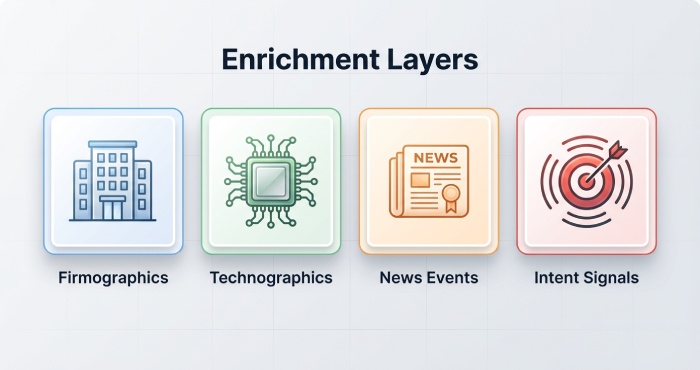
Enrich contacts with firmographic, technographic, and behavioral data via API-based enrichment. Third-party integrations make it possible to append title, team size, recent funding, and installed apps that fuel personalization. Use Google Workspace and CRM rules to normalize fields so mail merge logic and automation flows remain predictable across your campaign.
- Tie enrichment to workflow automation so fields update before email scheduling.
- Surface strong signals (e.g., recent hiring) to steer dynamic email templates and follow-up emails.
Intent signals and behavioral scoring
Track intent across channels. Email tracking and site analytics can reveal which accounts visited a pricing page or a relevant landing page. Pair open rate and click data with downstream behaviors (e.g., signed up for a free trial, downloaded an Ebook) to trigger multi-step sequences that reflect real interest. Intent-aware personalization drives higher engagement and better deliverability.
Compliance-ready storage and governance
House all data in a CRM/CDP with role-based permissions and audit trails. Systems like HubSpot, Pipedrive, or EngageBay help align sales and marketing and ensure CRM integration with your email marketing platform. Apply GDPR compliance flags, honor unsubscribe states, and use email list management rules to prevent accidental bulk email blasts. Good governance is non-negotiable for sustained email outreach.
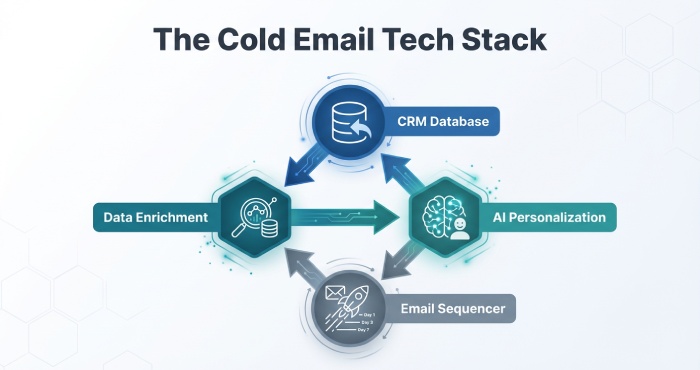
Tech Stack Architecture: CRM/CDP, Enrichment APIs, Sequencers, LLMs, and Orchestration
Your tech stack determines whether deep personalization can be automated without sacrificing quality.
Core systems and CRM integration
Anchor your operation in a CRM/CDP that supports bi-directional CRM integration with your email marketing platform. Popular email marketing services like Mailchimp, ActiveCampaign, Brevo, Omnisend, MailerLite, Klaviyo, GetResponse, EmailOctopus, Constant Contact, Flodesk, SendGrid, and Beehiiv (for newsletters) each offer different strengths—from Ecommerce automation to advanced automation flows. Evaluate outreach tools and email marketing services using a comparison template and a cost calculator to align pricing with your scale.
- Look for native API access, robust reporting, and reliable email automation features.
- Ensure contact import, domain authentication, and unsubscribe management are straightforward.
Sequencers for cold email and follow-up emails
Pair your CRM with sequencer-style outreach tools that support multi-step sequences, scheduled sending, and adaptive logic. The sequencer should let you branch based on opens, clicks, or replies and automatically pause when a prospect books a meeting. Strong sequencing protects deliverability by avoiding reckless bulk email while still enabling high-volume email outreach.
- Include safeguards: spam filters checks, daily caps, and warming rules.
- Draft reusable email templates in a shared template library and refine with A/B testing.
LLM-powered personalization and mail merge
Use LLMs to transform raw data into precise, human-sounding personalization. Feed structured fields and recent signals into prompt frameworks that output intro lines, context-rich value propositions, and tailored CTAs. Combine this with mail merge and field fallbacks so every message lands with relevance—even when some enrichment fields are missing.
- Employ workflow automation to trigger the right creative block at the right moment.
- Maintain tone and compliance with a style guide and automated checks before a campaign launches.
Orchestration, monitoring, and deliverability
Use orchestration layers to coordinate APIs across your stack: enrichment, sequencing, CRM updates, and analytics. Run health checks on email deliverability, monitor inbox placement, and audit engagement by segment. Strong reporting helps you adjust sending windows, refine contact segmentation, and tune follow-up emails for each campaign.
- Integrate Google Workspace for sending identities and DNS management.
- Leverage deliverability tools to watch sender reputation and throttle as needed.
Cost and pricing considerations
- Start with a free trial where possible to validate features like email scheduling, API depth, and reporting.
- Use a cost calculator to model per-seat pricing, sending volume, and expected engagement lift before committing.
Ecommerce automation and platform fit
If you sell via Shopify, prioritize Ecommerce automation with Klaviyo, Omnisend, or even Kit for simple store-driven triggers. Map cart events and product views into your sequencer, but keep transactional emails separate from cold email to preserve domain reputation.
Evaluating newsletter platforms and outreach tools
While newsletters are distinct from cold email, your stack may include both. Beehiiv, Flodesk, and MailerLite excel for editorial newsletters and subscribers; pair them with dedicated outreach tools for prospecting. Resources like Tooltester can help benchmark email marketing services on deliverability, workflow depth, and third-party integrations.
Operational checklist to run at scale without losing the human touch:
- Data: verified contact list, structured enrichment, and intent signals.
- Messaging: rigorously tested personalization and email subject lines aligned to ICP.
- Systems: CRM integration, reliable automation software, and a sequencer that respects best practices.
- Safeguards: GDPR compliance, unsubscribe handling, domain authentication, and continuous optimization via email analytics.
When these components work together, you’ll run a cold email campaign that feels handcrafted, uses email automation responsibly, and consistently converts—without compromising deliverability or the prospect experience.
Personalization Framework: Variables, Context Hierarchy, and Modular Snippet Library
Define a variable taxonomy that scales
- Contact variables: Name, role, seniority, geography, language, and the source of truth in your contact list. Enrich these with signals like tech stack, recent funding, and social proof to elevate email outreach without bloating storage.
- Company and intent variables: Industry, size, ICP fit score, lifecycle stage, and declared vs. inferred intent. Map to campaigns across cold email, newsletters, and transactional emails to keep your email automation coherent.
Contact variables
Use normalized fields for phone, timezone, and channel preference to power email scheduling and scheduled sending. Add flags like “previous demo,” “subscriber,” or “trial user” to gate follow-up emails and route to the correct sequence.
Company and intent variables
Track commercial triggers (new job, product launch, hiring spree) and negative signals (vendor lock-in) to sharpen personalization while avoiding irrelevant bulk email volume that can hurt deliverability.
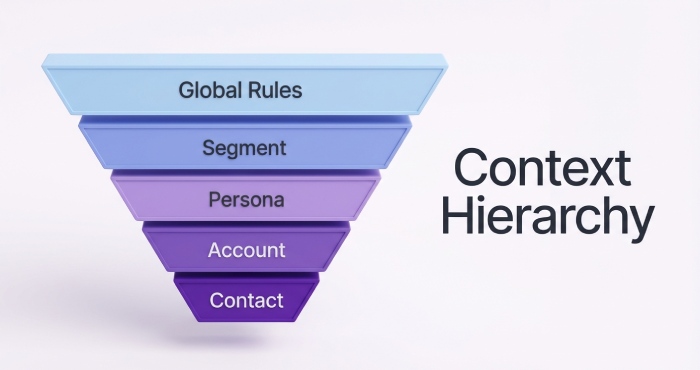
Establish a context hierarchy
Prioritize the highest-fidelity data at send time. A robust hierarchy prevents template conflicts and protects tone and accuracy across outreach tools.
Global > segment > persona > account > contact stack
- Global rules: Brand voice, compliance copy, and footer with unsubscribe and company details.
- Segment: Industry/vertical insights, newsletter platforms preferences, Ecommerce automation hooks.
- Persona: Role-based pain points and benefits.
- Account: Current vendor, CRM integration landscape, and third-party integrations already in place.
- Contact: Micro-triggers used for email personalization and email subject lines.
Build a modular snippet library
Create a template library of short, reusable blocks: opener, problem insight, proof, value prop, CTA, and PS. Store variants for cold email, newsletters, and marketing campaigns to keep tone consistent across your email marketing platform.
Reusable hooks and CTAs
- Hooks: “Noticed your Shopify checkout drop-off,” “Your WordPress site speed note,” or “Saw your team hiring in RevOps.”
- CTAs: Soft (share an Ebook, tutorial, or email course) vs. hard (book a call, view landing page). Use contact segmentation to select which CTA renders per segment.
Building the Automation: Prompting LLMs, Modular Templates, Dynamic Fields, Sequencing, and Routing Logic
Prompting LLMs for on-brand copy
Constrain large language models with role, audience, tone, and length. Provide few-shot examples for each snippet type and add guardrails: banned claims, compliance lines, and “never mention competitors by name.” Feed structured variables via API to ensure deterministic personalization rather than hallucinated details.
Few-shot and style constraints
Use a comparison template of winning vs. losing messages to show the LLM what “good” looks like. Include email templates for cold email, newsletters, and reactivation to maintain consistent phrasing across automation flows.
Modular templates and dynamic fields
Compose messages from atomic blocks that render based on logic: industry = SaaS, stage = trial, persona = CFO. Keep mail merge fields typed and validated to avoid broken tokens in bulk email.
Merge tags and mail merge safety
Implement pre-send linting: check for empty dynamic fields, broken links, and missing signatures. Run email verification on new records during contact import to cut bounces before they hit your domain reputation.
Sequencing and routing logic
Map multi-step sequences with time-zone aware email scheduling and cross-channel nudges. Routing logic should branch on engagement events (opened, clicked, replied) from email tracking while respecting opt-out states.
Multi-step sequences and branch conditions
- Step 1: Value-first cold email with a soft CTA.
- Step 2–3: Follow-up emails offering proof or a short case study.
- Branch A: If reply, stop; if click but no reply, send a landing page comparison or invite to a free trial.
- Branch B: If no activity after 3 touches, cool down and enroll in a newsletter drip via workflow automation.

Deliverability and Infrastructure: Domains, Warming, Authentication, Throttling, and Reputation
Domains and authentication
Separate domains/subdomains for cold email vs. product updates vs. newsletters. Enforce domain authentication end to end and align the visible From domain with DKIM and SPF to improve email deliverability.
SPF, DKIM, DMARC, and domain alignment
- SPF: Authorize your email marketing services and infrastructure like SendGrid or Google Workspace.
- DKIM: Sign all messages; rotate keys during vendor changes.
- DMARC: Monitor, then enforce p=quarantine/p=reject to protect against spoofing and strengthen deliverability.
Warming, throttling, and reputation management
Warm new sending domains/IPs gradually: start low volume, prioritize high-quality contacts, and increase by cohort. Throttle by provider (Gmail, Outlook) and time-of-day windows for scheduled sending. Continuously monitor spam filters, soft/hard bounces, and feedback loops.
Ramp schedules and scheduled sending windows
Target fewer than 50/day during week one for net-new cold email, blending in low-risk newsletters to engaged subscribers. Use deliverability tools for seed tests and inbox placement, and pair with periodic email verification to keep list hygiene tight.
Measurement and Optimization: KPIs, A/B/n Tests, Experiment Design, and Feedback Loops
Core KPIs and diagnostics
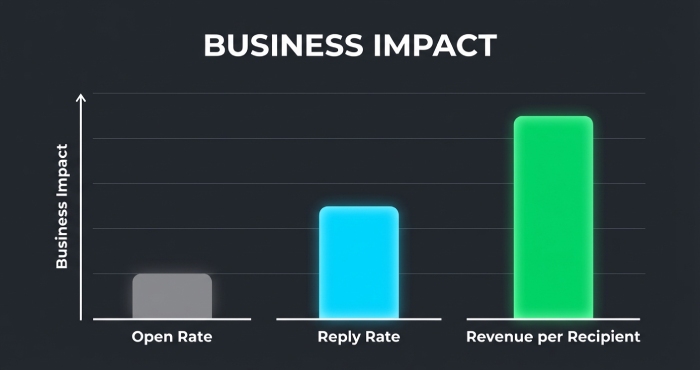
Track open rate, click-through rate, reply rate, meetings booked, pipeline created, and revenue attribution per campaign and per sequence. Layer email analytics with CRM integration to qualify outcomes, not just vanity metrics.
Open rate, reply rate, and qualified meetings
Optimize email subject lines and preview text first; then iterate on value props and CTAs. For Ecommerce automation, add revenue per recipient and per-trigger metrics.
A/B/n tests and feedback loops
Run A/B testing and A/B/n tests with adequate sample sizes and holdouts. Instrument event streams into your CRM and analytics stack for daily reporting and automated alerts when performance degrades.
Sample size, holdouts, and stopping rules
Predefine MDE, confidence, and max duration. Use sequential testing only with guardrails to avoid peeking bias; codify best practices in your automation software.
Governance, Compliance, and Ethics: Consent, Opt-Outs, Safety Rails, and Data Minimization
Consent, opt-out mechanics, and data rights
Respect regional requirements for consent and provide single-click unsubscribe plus a preference center. Align GDPR compliance and CAN-SPAM/CASL with clear data retention policies and role-based access.
Unsubscribe and preference center
Offer granular choices: newsletters only, product updates, or pause for 90 days. Always confirm removal and update subscribers status across systems via third-party integrations.
Safety rails, vendor controls, and data minimization
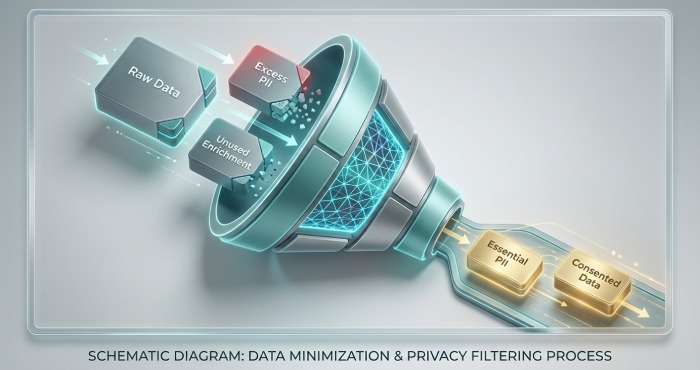
Minimize PII stored for personalization; purge enrichment fields not used in campaigns. Vet vendors—Mailchimp, ActiveCampaign, Brevo, Omnisend, MailerLite, Klaviyo, Kit, GetResponse, EmailOctopus, Beehiiv, Constant Contact, Flodesk—and document data flows with HubSpot, Pipedrive, EngageBay, and SendGrid.
API, data processing, and access policies
Use scoped API keys, IP allowlists, and audit logs. Map data lineage from WordPress/Shopify forms to your email marketing platform, and maintain a DPIA. Reference Tooltester and vendor documentation for pricing comparisons, free trial limits, and sending thresholds.
- Tie-ins and practical notes:
- Email marketing services and outreach tools should support contact segmentation, email list management, and list building at scale without sacrificing deliverability.
- Leverage email marketing platform features like automation flows, workflow automation, and contact import to operationalize campaigns across newsletters, cold email, and transactional emails.
- Use a cost calculator to model ROI across marketing campaigns, and a landing page optimized for engagement to capture lead generation from clicks.
FAQs
What’s the fastest way to improve deliverability for cold email without pausing sends?
Start by authenticating domains (SPF, DKIM, DMARC), throttling volume, and removing risky contacts via email verification. Shift initial sends toward engaged subscribers and gradually reintroduce colder segments.
How many steps should my sequence include for B2B email outreach?
Most multi-step sequences perform well with 3–5 touches plus one final break-up note. Space follow-up emails 2–4 business days apart and branch based on engagement signals.
Which platforms are best for newsletters versus cold email?
For newsletters, platforms like Beehiiv, MailerLite, and Mailchimp are popular choices for building and managing subscriber-based email campaigns. For cold email outreach and smart routing, tools such as ActiveCampaign, Klaviyo, Brevo, GetResponse, and Nureply offer robust CRM integration, automation workflows, lead scoring, and advanced email tracking to streamline personalized outreach at scale.
How do I personalize at scale without breaking mail merge fields?
Use typed dynamic fields, pre-send linting, and fallback logic in your email templates. Keep a modular snippet library so the LLM can assemble contextually correct copy from safe components.
What KPIs should I prioritize beyond open rate?
Focus on reply rate, qualified meetings, pipeline, and revenue per recipient. For Ecommerce automation, include conversion rate and average order value from triggered flows.
How do I stay compliant with GDPR and still run effective campaigns?
Obtain consent, provide clear unsubscribe options, and minimize stored PII. Ensure third-party integrations honor suppression lists and that your API usage is scoped and audited.
When should I use A/B/n vs. simple A/B testing?
Use A/B for high-impact variables like subject lines or CTAs when volume is limited. Choose A/B/n when you have sufficient traffic and want to compare multiple variants in one campaign.
Key Takeaways
- Build a variable hierarchy and snippet library to power consistent personalization across cold email, newsletters, and transactional emails.
- Anchor automation in robust sequencing and routing logic with CRM integration, dynamic fields, and safe mail merge practices.
- Protect deliverability with domain authentication, warming, throttling, and continuous list hygiene via email verification.
- Measure beyond open rate, using A/B/n testing and integrated reporting to tie email analytics to pipeline and revenue.
- Enforce consent, unsubscribe controls, and data minimization with vetted vendors and tightly scoped APIs.