
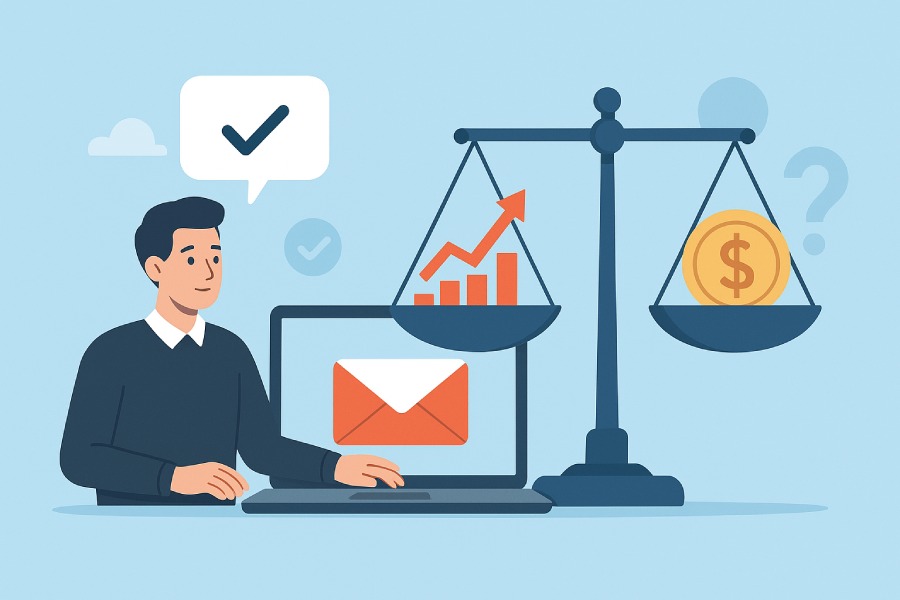
Do Email Warming Services Work And Are They Worth The Investment For Your Business?
Building strong email deliverability is essential for any business that relies on outreach, nurturing, or marketing campaigns. With inbox providers becoming stricter than ever, many companies turn to email warming services to improve sender reputation and ensure their messages land in the inbox—not the spam folder. But do these services actually work, and are they worth the investment? Understanding their real impact can help you decide whether they’re a smart addition to your email strategy.
Understanding Email Warming: Definition and Fundamental Concepts
Email warming, also referred to as the email warm up process, is a foundational practice in modern email marketing, particularly for businesses launching new email accounts or scaling outbound cold email campaigns. In its essence, email warming involves gradually increasing the volume of emails sent from a new or dormant email account to establish a positive sender reputation. The goal is to demonstrate to email service providers (ESPs) such as Google (Gmail) and Microsoft (Outlook) that your messages are legitimate, non-spam, and elicit positive engagement metrics from actual recipients.
The warm-up process plays a critical role in directing your messages toward inbox placement instead of the spam folder. By starting with a low sending volume and systematically increasing the number of sent emails—a gradual build-up—email warming sends positive signals to ISPs about your sender legitimacy. This includes tracking open rates, response rate, unsubscribe, and reply rate, which are key engagement rates closely watched by ISPs.
Traditionally, the email warming process applied to IP addresses and domains. The same principles apply today, but the method has evolved in response to increasingly sophisticated spam filters and service provider algorithms. New compliance requirements—including GDPR in Europe and the CAN-SPAM Act in the United States—further emphasize the need for consent, data protection, and transparency, making careful email reputation management more crucial than ever.

The Importance of Sender Reputation in Modern Email Marketing
Sender reputation is the cornerstone of email deliverability, directly impacting whether your emails reach the inbox, get blocked, or wind up in the spam folder. Major email service providers like Gmail and Outlook, as well as large ISPs, assess sender reputation using a complex mix of factors—engagement metrics (open and reply rates), bounce rates (including hard bounces), spam complaints, blacklist status, domain reputation, the configuration of SPF, DKIM, and DMARC, and more.
A poor sender reputation can result from excessive spam complaints, high bounce rates from sending to invalid or fake emails, hitting spam traps, or failing to comply with legal considerations like opt-in protocols and unsubscribe mechanisms. When a sender’s IP address or domain becomes blacklisted, entire marketing campaigns can grind to a halt, drastically reducing deliverability rates and campaign ROI.
Conversely, maintaining a healthy sender reputation through steady engagement and low complaint rates increases the chances of inbox placement. Modern email warm up services and warm up tools (like Emailchaser, Folderly, Instantly, Smartlead, Gmass, and AudiencePoint) help marketing professionals and sales teams monitor deliverability, optimize warm-up pools, build trust, and avoid blocked accounts—ultimately bolstering the effectiveness of their commercial messages and cold email campaigns.
How Email Warming Services Operate: Processes and Mechanisms
The Warm-Up Pool and Automating Engagement
A core concept in modern email warm up service workflows is the use of a warm-up pool—an interconnected network of real or controlled email accounts that send, receive, open, and sometimes reply to emails from each other. This process is highly effective at simulating authentic recipient interaction and building engagement metrics that look natural to ISPs and ESPs.
These automation services utilize a gradual increase in email volume over a set sending schedule, mimicking organic growth as would occur with real commercial outreach. Advanced email warm up tools like Instantly and Smartlead automate not just sending, but also artificial engagement: marking messages as “not spam,” archiving, replying, and unsubscribing as if interacting like true recipients.
Technical Protocols and Authentication
In addition to sender behavior, technical authentication protocols are critical. High-quality email warming services insist on proper setup of SPF (Sender Policy Framework), DKIM (DomainKeys Identified Mail), and DMARC (Domain-based Message Authentication, Reporting & Conformance). These records verify sender legitimacy, reduce the risk of email blocking, and reinforce a sender’s domain reputation with ISPs. Failure to implement them can invite spam filters to block or junk your emails, regardless of engagement.
Monitoring and Optimization
Effective email warming tools continually monitor engagement metrics, tracking open rates, reply rates, bounce rates, spam complaints, and blacklist status. This data allows for optimization—adjusting the sending schedule, email volume, and interaction patterns to maximize deliverability and prevent triggering service provider algorithms designed to detect attempts to artificially manipulate inbox placement.

Key Features of Leading Email Warming Tools and Platforms
Automation, Reply Simulation, and Insights
The best email warm up tools—like Folderly or Emailchaser—stand out through robust automation capabilities. They automate not only the gradual increase of sending volume, but a comprehensive warm-up process: simulating real recipient interaction, ensuring messages are moved out of spam folders, and providing detailed analytics on sender reputation and deliverability.
Some platforms offer advanced reporting on domain reputation, IP address health, and blacklist monitoring, alerting users to any drop in deliverability or engagement rates. These automated insights support data-driven optimization of ongoing email campaigns.
Compliance and Security
Leading platforms also enable legal compliance and transparency by supporting opt-in management, unsubscribe options, and adherence to GDPR, CAN-SPAM Act, and other international email regulations governing consent and data protection. Physical postal addresses and unsubscribe mechanisms are often automatically appended to marketing emails to satisfy privacy regulations and marketing laws.
Integration and Ecosystem Compatibility
Enterprise-grade tools like SendGrid and Gmass easily integrate with mainstream marketing platforms, CRM systems (e.g., LinkedIn integration for sales), and other automation tools, making them ideal for scaling cold email operations. Many offer customizable sending schedules, advanced recipient segmentation, and compatibility with evergreen cold email campaigns for long-term, repeatable results.
Community and Thought Leadership
Platforms that stand out, such as those often promoted on Cold Email Community forums or recommended by influencers like Jesse Ouellette and Erol Toker, frequently foster knowledge sharing and community-driven best practices. Reviews and guides by entities like Ahrefs and freelance experts on Fiverr further help businesses identify the right fit for their unique needs.

Manual vs. Automated Email Warming: Pros and Cons
Manual Warming: Control and Limitations
Manual email warming involves gradually increasing sending volume from a new email account and directly monitoring recipient interaction, open rates, and response rate. While this provides full control—and greater transparency over compliance with privacy regulations and service provider terms of service—it is time-consuming, error-prone, and difficult to scale. Manual processes often fail to simulate authentic engagement metrics at the frequency and quality required to influence sender reputation meaningfully.
Manual methods also present risks of missing crucial automation features: monitoring blacklist status, adjusting to sudden changes in engagement rates, or quickly responding to deliverability issues caused by spam traps or hard bounces. In complex campaign environments, manual warm-up methods rarely match the effectiveness of sophisticated automation services.
Automated Warming: Efficiency and Effectiveness
Automated email warm up services provide significant advantages in scalability and consistency. They utilize automation to orchestrate a gradual build-up of sending volume, ensure comprehensive monitoring of engagement, and provide real-time insights for optimization. Platforms like Instantly and Emailchaser offer configurable warm-up pools, integrated domain reputation signatures, and automation services to effectively boost inbox placement and reduce risk of the spam folder.
However, automation introduces new legal considerations: over-automation can appear as an attempt to artificially manipulate spam filter outcomes. Some low-quality tools may even employ fake emails or reply rate manipulation, risking blocked accounts or being blacklisted if detected. High-quality services, by contrast, prioritize compliance, recipient consent, and best practices, maximizing deliverability and sender legitimacy.
Choosing Between Manual and Automated Approaches
Ultimately, whether a business should use manual processes or invest in an email warming tool depends on sending volume, campaign complexity, and risk tolerance. For organizations running large-scale cold email marketing campaigns, where sender reputation and inbox placement are mission-critical, automated email warm up services deliver ROI far beyond their subscription fee by ensuring sustained deliverability and campaign success.
For smaller enterprises or one-off campaigns, manual warm-up can be effective if executed with rigor, attention to legal compliance, and consistent engagement monitoring. Regardless of the method, proper SPF, DKIM, DMARC setup—and adherence to GDPR, CAN-SPAM Act, and recipient consent—are non-negotiable for long-term email marketing effectiveness.
Common Email Deliverability Issues Addressed by Warming Services
Efficient email warm up is fundamental to achieving high inbox placement and avoiding the notorious spam folder. When organizations initiate cold email campaigns using a new email account or domain, their email reputation with service providers like Google or Microsoft has yet to be established. This can trigger a host of email deliverability issues, which purpose-built email warm up tools and services are designed to solve.
Key Deliverability Challenges Faced by Senders
- Cold IP Address and Domain Reputation: A new IP address or freshly registered domain has no sending history, making ISPs more wary of the sender’s legitimacy. Proper email warm up helps cultivate sender reputation gradually, signaling trustworthiness to email service providers.
- Abrupt Sending Volume Spikes: Sudden increases in email volume can flag a sender as suspicious. Without a gradual build-up, mass cold email sends from a dormant account often result in blacklisting or immediate blocking.
- High Bounce Rates and Spam Complaints: An unprepared, non-warmed inbox may experience greater rates of hard bounces, spam complaints, and poor open rates, quickly damaging sender reputation and deliverability.
- Spam Trap Interactions: Accidentally emailing spam traps can cause rapid blacklisting. Warming minimizes this risk by building engagement metrics and ensuring recipient interaction.
- Lack of Engagement: ISPs and mailbox providers rely on engagement metrics like opens, replies, and clicks. Low activity signals poor quality, increasing the chance of email blocking or spam filter triggers.
- Authentication Shortcomings: Failure to implement SPF, DKIM, and DMARC alongside the warm-up process can hinder inbox placement and sender legitimacy.
By leveraging an email warm up service, marketers and sales teams avoid these pitfalls, fostering higher response rates, better open rates, and sustainable sender reputation.

The Science Behind Email Warming: Algorithms, Engagement, and Volume Ramps
Modern email warm up tools, such as Instantly, Smartlead, Gmass, and Folderly, employ sophisticated algorithms and automation to optimize every phase of the email warm-up process.
How Email Warm Up Algorithms Work
Automation services orchestrate a gradual increase in sending volume, mimicking natural email behavior. These solutions add the sender’s email account into a warm-up pool—typically composed of real inboxes owned by other users in the platform, including high authority accounts associated with Gmail, Microsoft, or AudiencePoint.
Key Elements in Automated Email Warm-Up
- Volume Ramps and Gradual Increase: Algorithms initiate with small, consistent sends from the new email account, automatically escalating daily or weekly based on engagement rates and feedback from ISPs.
- Simulated Human Interactions: The warm-up pool generates authentic-looking opens, replies, and even threaded conversations, artificially simulating recipient interaction.
- Active Engagement Monitoring: Engagement metrics, including open rates, reply rate, bounce rates, and spam complaints, are continuously analyzed to tailor the ramp-up speed and volume of emails.
- Restorative Operations: If emails are flagged or land in the spam folder, some tools (like Emailchaser or Folderly) use peer accounts to mark them as ‘Not spam,’ nurturing deliverability recovery.
- Compliance with Email Authentication: Advanced platforms verify that SPF, DKIM, and DMARC records are correctly set, ensuring optimal sender reputation throughout the warm-up process.
The Warm-Up Pool and Its Role
The efficacy of these tools is often attributed to the size and quality of the warm-up pool. More diverse and active the pool, the better the modeling of real-world inbox placement and the clearer the signals sent to service provider algorithms.

Potential Risks and Drawbacks of Using Email Warming Services
While automation tools and email warm-up services provide clear deliverability benefits, several risks merit consideration to ensure sender legitimacy and compliance.
Primary Concerns and Setbacks
- Unnatural Engagement and Artificial Manipulation: ISPs may detect overly artificial engagement patterns, potentially resulting in sender domains getting blacklisted or blocked accounts.
- Dependence on Automation: Relying solely on automation services can obscure underlying deliverability problems, such as poor list hygiene or lack of consent (opt-in), leading to long-term email reputation damage.
- Service Abuse and Faux Results: Unethical vendors—often found on marketplaces like Fiverr—may use fake emails for reply rate manipulation, jeopardizing sender reputation and triggering spam trap hits.
- Compliance and Legal Issues: Improper implementation of a warm-up pool—especially sending emails without recipient consent—may violate GDPR, CAN-SPAM Act, or local international email regulations.
- Blocked Accounts and Provider Terms: Emails practices conflicting with terms of service of companies like Google, Microsoft, or SendGrid may result in permanent sender blocking or blacklisted email accounts.
Best Practices for Mitigation
Carefully select a reputable deliverability company; do not shortcut manual best practices. Always verify email authentication records and ensure real recipient interaction when conducting email marketing for commercial purposes.
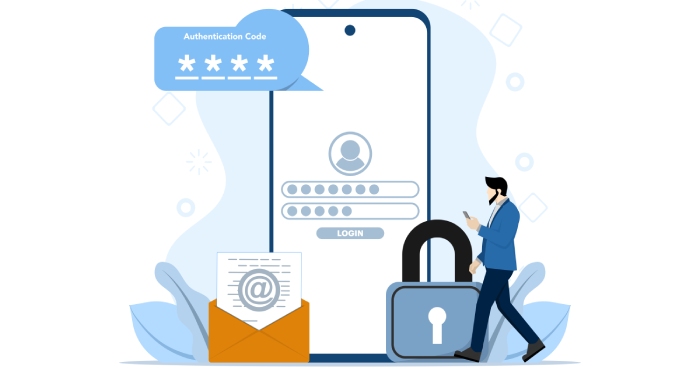
Legal and Compliance Considerations: GDPR, CAN-SPAM, and Beyond
Email warm up—while technically focused on deliverability—must weave in compliance with global privacy regulations and email laws to protect data and sender legitimacy.
Understanding Regulatory Requirements
- GDPR (Europe): Requires explicit recipient consent for processing personal data, transparency about mailing activities, and robust data protection measures. Automation tools involved in warm-up pools must respect privacy regulations and not bypass opt-in requirements.
- CAN-SPAM Act (United States): Mandates clear unsubscribe mechanisms, honest sender identification (including a physical postal address), and a transparent unsubscribe option for all email recipients.
- International Email Regulations: Many ISPs enforce local laws (such as those in Germany or Canada) regarding sender consent and commercial communications. Violations can result in severe penalties and immediate email blocking.
How to Measure ROI for Email Warming Investments
Email warming requires an investment—either of time and effort with manual methods or financial resources when using a professional email warm up tool or email warm up service. Determining return on investment (ROI) is essential to justify ongoing spend and refine your email marketing strategy.

Tracking Key Email Metrics
To accurately track ROI, leverage core deliverability and engagement metrics:
- Open rates and inbox placement: Monitor how many emails land in the inbox, not the spam folder, after the email warm-up process.
- Engagement metrics: Track reply rate, click-through rates, and positive recipient interaction. These show increased deliverability and sender reputation.
- Bounce rates: Calculate the percentage of hard bounces and soft bounces before and after warming. Reduced bounce rates reflect improved email reputation.
- Spam complaints and unsubscribes: Monitor incidents of emails marked as spam or unsubscribed users. Effective warming should decrease spam complaints.
- Blocking or blacklist status: Determine if IP address or domain reputation improves and if you’re removed from blacklists.
- Response rate on cold email campaigns: Higher reply and response rates typically follow a successful email warm up.
Revenue Attribution and Campaign Performance
Ultimately, the goal of email warming is to maximize deliverability rates and indirectly boost revenue from email marketing campaigns. Consider these additional ROI measures:
- Growth in leads/conversions: Compare the number of leads or sales attributed to email campaigns before and after the warm-up pool strategy.
- Lifetime value of customers acquired: Improved cold email and inbox placement can translate to more high-value customer relationships.
- Cost vs. gained efficiency: Weigh the subscription cost of a warming solution like Emailchaser, Folderly, Instantly, or Smartlead against the increased revenue and reduced wasted efforts on blocked accounts.
Using Automation Tools and Analytics
Utilize automation services and analytics inside leading email service provider platforms (e.g., Gmail, SendGrid, Microsoft Outlook), or supplemental tools such as AudiencePoint, Gmass, or Nureply, to continuously monitor deliverability and sender reputation. Many email warm-up tools integrate directly with Google’s and Microsoft’s platforms to provide granular reporting on engagement rates, bounce rates, and inbox placement.
Best Practices for Maximizing Results with Email Warming
Set Up Proper Authentication
Full optimization of the email warm-up process begins with securing your infrastructure:
- Implement SPF, DKIM, and DMARC (Sender Policy Framework, DomainKeys Identified Mail, Domain-based Message Authentication, Reporting & Conformance) to demonstrate sender legitimacy and reduce spam folder placement.
- Regularly audit your email account setup, IP address, and domain reputation.
Start with a Gradual Increase in Sending Volume
- Begin email warming with a gradual build-up, steadily increasing the volume of emails sent through your new email account or domain.
- Avoid sudden spikes in sending volume, as service provider algorithms (especially at ISPs like Google and Microsoft) are sensitive to abrupt changes, often resulting in temporary email blocking.
Use an Authenticated Warm-Up Pool
- Leverage the “warm-up pool” feature offered by leading email warm up tools and services. This technique uses real, opt-in accounts to simulate natural recipient interaction, boosting sender reputation.
- Avoid using fake emails or artificially manipulate open/reply rates, as this can backfire, leading to being blacklisted.
Prioritize Consent, Compliance, and Transparency
- For any commercial purposes or marketing campaigns, prioritize consent and comply with regulations like GDPR in Europe or the CAN-SPAM Act in the United States.
- Include a clear unsubscribe option, physical postal address, and unsubscribe mechanisms per legal considerations.
Monitor and Optimize Continuously
- Regularly review engagement metrics and adjust your sending schedule and content for best practices.
- Conduct periodic domain reputation checks using platforms such as Ahrefs or deliverability company services.
Avoid Common Pitfalls
- Never purchase lists or scrape emails from LinkedIn or other sources, as this can harm sender reputation and violate data protection standards.
- Stay away from shortcuts or Fiverr gigs that promise quick results using artificial reply rate manipulation, which increase your risk of becoming blacklisted.
Should Your Business Invest in Email Warming? Key Takeaways and Decision Guide
Investing in professional email warm up services or an automated email warm up tool is typically a wise move for organizations that:
- Frequently launch cold email campaigns or handle significant email volume.
- Operate new domains or email accounts that lack an established sender reputation.
- Face deliverability challenges, such as increased spam folder routing, poor open rates, or recurring presence on blacklists.
However, for businesses with a smaller sending volume, strong preexisting domain reputation, or limited commercial purposes, a manual approach integrated with best practices may suffice.
Decision Factors
- Volume and frequency of email campaigns: High-volume senders and B2B marketers benefit most from automation and warm-up pools.
- Compliance requirements: Marketing teams targeting Europe, the United States, or international markets must uphold GDPR, CAN-SPAM Act, and other email laws, making proper warm-up and transparency essential.
- Budget constraints: Consider if cost savings from higher deliverability outweigh up-front expenses.
For most organizations that rely on email marketing as a critical channel—or face any past deliverability issues—investing in a reputable warm up service like Folderly, Instantly, or Smartlead provides significant, sustained value.

FAQs
What is email warm up and why is it important?
Email warm up is the process of gradually increasing the sending volume and recipient engagement from a new or dormant email account to build a positive sender reputation. This increases inbox placement, improves deliverability rates, and reduces the risk of landing in spam folders.
How long does the email warming process typically take?
The email warm-up process usually takes between 2 to 8 weeks, depending on your starting sender reputation, the email service provider, and your target sending volume. Regular monitoring of key engagement metrics will guide the ideal progression.
Can I warm up my emails manually without a tool?
Yes, manual warming involves gradually sending emails to engaged recipients, fostering real conversations, and increasing volume over time. While effective on a small scale, automation tools or warm-up services streamline this for higher volumes and multiple accounts.
What are the risks of skipping email authentication protocols like SPF, DKIM, and DMARC?
Skipping email authentication leaves your domain vulnerable to spoofing, phishing, and will likely trigger ISPs’ spam filters, which decreases deliverability and sender reputation. Authentication is a critical foundation for any email warm-up or marketing program.
Do email warm-up tools guarantee you’ll never land in the spam folder?
No tool can guarantee perfect inbox placement. However, using a reputable email warm up tool or email warm up service significantly improves your chances by establishing positive engagement metrics and sender legitimacy.
Are there legal considerations for email warming?
Yes, ensure compliance with GDPR, CAN-SPAM Act, and other international email regulations, including consent requirements, opt-in practices, unsubscribe mechanisms, and data protection policies to avoid fines and maintain trust.