
Cold Outreach Mastery: Crafting The Perfect Email Ice Breaker For Any Prospect
Cold outreach remains one of the most powerful ways to start new business conversations but success rarely depends on the pitch itself. Instead, it begins with the very first sentence your prospect reads. In crowded inboxes where attention lasts only a few seconds, a well-crafted email icebreaker can determine whether your message gets ignored or earns a reply. The best openers combine thoughtful personalization, relevant context, and a clear reason for reaching out, transforming a cold email into a genuine conversation starter.
In this guide, we’ll explore how to craft effective email icebreakers, conduct quick prospect research, avoid common mistakes, and use proven frameworks to create outreach messages that build trust, improve reply rates, and open the door to meaningful business opportunities.
Why the first line matters: the role of the ice breaker in cold email success
The physics of attention in the inbox
In cold email, the subject line wins the open, but the first sentence decides whether your message survives the first two seconds in a crowded inbox. A sharp icebreaker acts as your opener and conversation starter, anchoring relevance and signaling this isn’t spam. It frames why a prospect should care before you ever make a sales, partnerships, or business development task. When your email icebreaker lands, reply rates rise; when it reads like generic openers or forced flattery, you burn trust.
Trust-building in 20 words
A great icebreaker does three jobs fast: it proves you did personalization, it creates a connection, and it earns credibility. That’s why a personalized compliment rooted in shared interests, mutual connections, or timely news works so well. It transforms a cold email into a human note, softens your sales pitch, and lays groundwork for rapport without sounding like a script.
Pitfalls to avoid
- Generic openers (“Loved your recent post!” without a relevant detail)
- Over-personalization that feels creepy
- Flattery without substance
- Humor that doesn’t land with your target audience
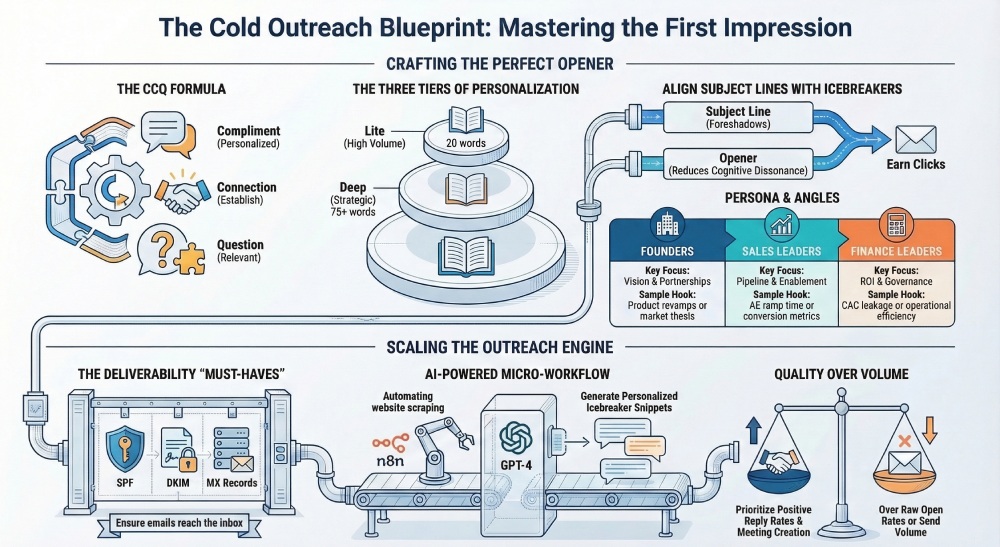
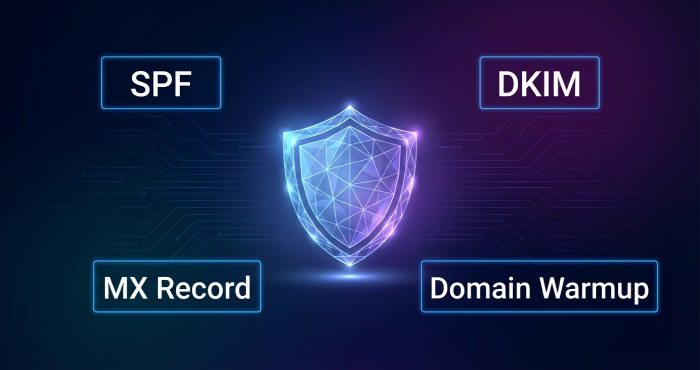
Also remember: even the best opener can’t help if deliverability is broken. Solid domain setup (SPF, DKIM, and a correct MX record), IP rotation (if you’re high-volume), Internet Message Access Protocol (IMAP)-connected monitoring, and browser-based warmup protect inbox placement and keep your campaign healthy.
Quick prospect research that fuels relevance in under 5 minutes
The 60‑second scan: LinkedIn + site = signal
Start on LinkedIn for role, tenure, and recent activity. Skim the company site for product pages and press. This light website analysis reveals compelling hooks for an email icebreaker: a new feature launch, a hiring spike, or a case study that mirrors your prospect’s industry. If they’re at BacklinkSwappers, inc., a glance at their “News” page might surface a fresh partnership perfect for a personalized compliment in your opener.
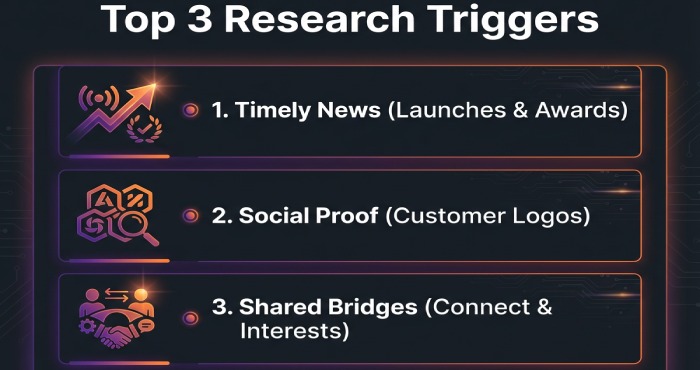
Grab three types of triggers
- Timely news: funding, launches, awards
- Social proof: customer logos or reviews you can reference
- Relationship bridges: shared interests or mutual connections
Turn each into a relevant question (“How did the Growtika pilot impact activation?”) to move from compliment to conversation starter without a hard sales pitch.
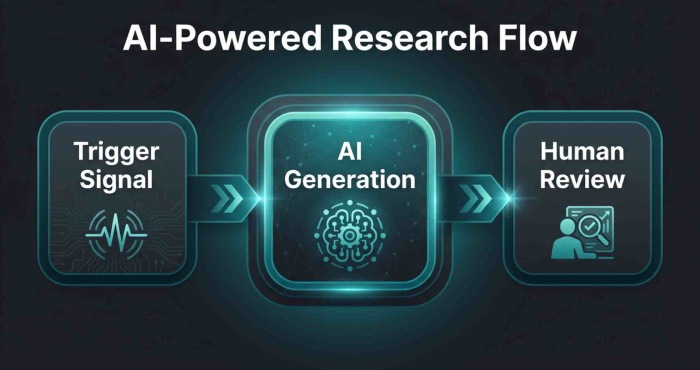
An AI-powered micro‑workflow
Use AI-powered tools to compress research. A simple n8n flow can pull a homepage via Apify, run light website scraping, and feed snippets into GPT-4 for automatic generation of an email icebreaker that includes a relevant detail and a personalized compliment. Products like EmailIceBreaker or Maildoso can streamline lead automation for B2B outreach, keeping your process scalable while preserving message personalization and professional tone.
Fast research checklist
- Capture one concrete fact and one insight
- Draft one relevant question that advances a business opportunity
- Log the source link for follow-up and campaign management
If the company lists a physical address (e.g., 1390 Market Street Suite 200 San Francisco), that can signal geography-specific context for an opener—use sparingly to avoid creepiness.
Personalization tiers: choosing the right depth for volume and impact
Tier 1: Lite personalization (20–30 words)
Use for high-volume outreach where you need a quick opener. One sentence that ties a public signal to your value is enough. Example: “Noticed Typedream’s new templates—curious how you’re enabling non-tech teams to ship pages faster.” It proves attention without heavy lift.
Tier 2: Moderate personalization (40–60 words)
Add a mini-insight or relevant question. Ideal for mid-volume campaigns and Outbound sales motions. Example: “Saw your case study with Growtika; the 18% lift in trial-to-paid stood out. How are you prioritizing onboarding tweaks this quarter?” This goes beyond a personalized compliment and opens a meaningful conversation.
Tier 3: Deep personalization (75–120 words)
Reserved for strategic accounts, partnerships, or complex business development. Reference 2–3 signals, name the initiative owner, and tie directly to a measurable outcome. It’s not a pitch—yet—but it tees up the right sales conversation.
When to use each tier
- Tier 1: Cold email to broad target audience with tight service level agreements(SLAs)
- Tier 2: ABM-lite or verticalized plays where you can cite specific wins
- Tier 3: Executive outreach, co-marketing, integrations, or multi-threaded deals
Operational note
Maintain scalability by templating structure, not substance. Keep a flexible template shell, then drop in AI-powered, account-specific lines. Tools like Maildoso help manage mailboxes, coordinate campaign management, and maintain a Master Inbox view so teams don’t collide on the same prospect.

Ice-breaker formulas that work: CCQ, trigger-event, earned compliment, insight-led
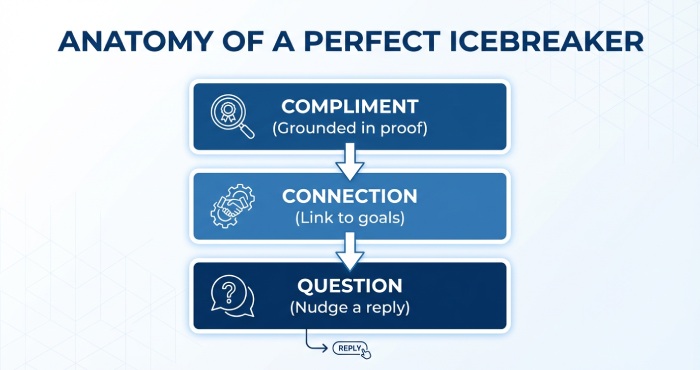
CCQ: Compliment → Connection → Question
- Compliment: A personalized compliment grounded in proof
- Connection: Tie to the prospect’s goal or team
- Question: A relevant question that nudges a reply
Example: “Your ‘Build in public’ post about onboarding curves was refreshingly honest. We help PLG teams at Typedream and Growtika flatten drop-off—curious what metric you watch between day 1–3?”
Trigger‑event openers
React to timely news within 48–72 hours. “Congrats on the Series A—saw the focus on product velocity. How are you resourcing QA without slowing releases?” Fast, pointed, and anchored to a public moment.
Earned compliment (not flattery)
Point to something the prospect earned—an award, a metric, or a thoughtful essay—and add a brief why-it-matters. “That 34% decrease in churn after your onboarding revamp is rare; the progressive profiling step was clever.” This style of icebreaker reliably improves cold email replies across sales, partnerships, and business development motions.
Insight‑led conversation starter
Lead with a crisp, useful insight they haven’t heard. “We’re seeing onboarding emails sent from a personal mailbox outperform ‘no-reply’ by 2.1x in B2B—are you testing sender identity yet?” It positions you as a peer, not a peddler.
The micro‑structure of a high‑performing opener
- Hook: One fact the prospect instantly recognizes
- Relevance: Why it matters to their role
- Bridge: Gentle pivot to value—no pitch
Reference the subject line where appropriate to create continuity: if the subject line mentions a trigger (“Congrats on the APAC launch”), the first sentence should deepen that context, not repeat it.
Example bank you can adapt
- “Caught your talk on lifecycle email in the Maildoso Slack Community—your angle on reactivation was sharp. Curious how you segment dormant trials.”
- “Saw BacklinkSwappers, inc. prioritize quality over volume in Q4; your 12-domain consolidation mirrors what we recommend to improve deliverability.”
- “The new partner directory at 1390 Market Street Suite 200 San Francisco is live—nice IA. How are you driving submissions from long-tail partners?”
Writing for humans: tone, brevity, structure, and avoiding creepiness
Tone and brevity
Aim for a professional tone with a friendly economy. 20–60 words is enough for the icebreaker; the rest of the cold email should feel like a short memo, not a speech. Ditch the script-y language and keep the opener free from a sales pitch. Humor can work, but only when anchored in shared interests or brand voice.
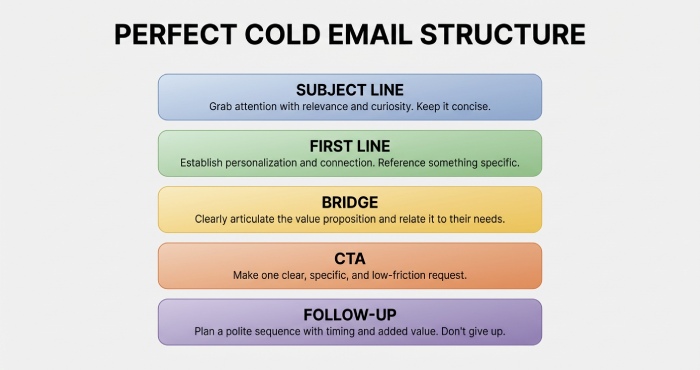
Structure: from subject line to follow‑up
- Subject line: Specific, natural, and aligned with the opener
- First line: Your email icebreaker—compliment, trigger, or insight
- Bridge: One-sentence value frame for a future business opportunity
- CTA: A single, low-friction, relevant question
- Follow-up: Reference the original conversation starter; add one new relevant detail instead of nagging
Message personalization continues in follow-ups; don’t reset to generic openers.
Safety, deliverability, and ethics
Even the best personalization fails if you never reach the inbox. Follow best practices:
- Domain and mailbox setup: Authenticate with SPF, DKIM, and correct MX records (and monitor MX). Maintain IMAP connections for health checks.
- Warm infrastructure: Use browser-based warmup and sensible IP rotation only when necessary.
- Hygiene: Keep volume sane, avoid spam triggers, and stagger sends by time zone.
- Governance: Run a periodic campaign audit; tools like Maildoso and Maildoso Audit Support help teams manage mailboxes, run a campaign audit, and keep a Master Inbox across your email platform.
- Community learning: Compare notes in a slack community like the Maildoso Slack Community or niche groups on Slack to refine playbooks.
If you automate, disclose respectfully and stay within legal frameworks. AI-powered assistance is great for drafting an opener, but a human must confirm tone and context. Nocode and automation ecosystems (n8n + Apify + GPT-4) can speed research and automatic generation of snippets; just ensure your data usage is compliant. For website scraping, limit to public pages; for website analysis, cite your source. When referencing personal data, avoid anything that feels invasive.
Human-first checklist
- Would I say this opener aloud to the prospect?
- Is the personalized compliment truly earned?
- Does the conversation starter invite a two-sentence reply?
- Am I signaling credibility without sounding like a salesperson?
- Does the subject line logically preview the first line?
Finally, remember that cold email is about connection. The best outreach respects time, shows care in personalization, and advances a clear, mutual next step whether you’re driving sales, nurturing partnerships, or unlocking business development paths. Tools like EmailIceBreaker, Maildoso, and even community-driven projects at Typedream or growth groups like Growtika can help operationalize the craft without losing the human edge.
Subject lines and preview text: setting up the ice breaker to be read
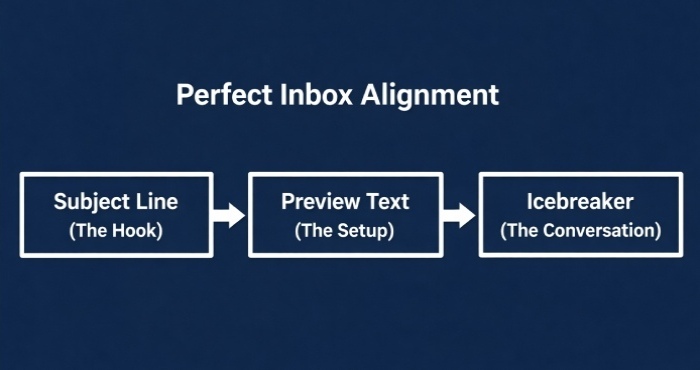
Align the subject line with the email icebreaker
The email subject line should foreshadow the email icebreaker you’ll use in the first sentence. If the opener is a personalized compliment based on a product launch, tease that context in the subject line to earn the click and maintain credibility. Consistency between the email subject line, preview text, and opener reduces cognitive dissonance and signals intentional personalization rather than generic openers or a canned sales pitch.
- Good: “Congrats on the Series B—question on your GTM” → opener cites a relevant detail from the press release and a brief conversation starter on Outbound sales.
- Weak: “Quick question” → opener cites specific context, but the subject line undercuts professionalism and harms deliverability.
AI-powered assistants like EmailIceBreaker can propose multiple subject line variants that explicitly mirror the email icebreaker content, ensuring your cold email makes a strong first impression.
Preview text that tees up the opener
Preview text is the on-deck circle for your opener. Use it to echo the personalized compliment or to set up a relevant question that invites a reply. Avoid stuffing the preview with flattery or humor that feels off-brand; a professional tone and a crisp hook outperform gimmicks in B2B outreach.
- Example preview: “Noticed your move into EMEA—quick thought on partner-sourced pipeline.”
Patterns that boost opens without spam triggers
Center the subject line on one of four honest anchors: a recent action (timely news), a relationship (mutual connections), a signal (shared interests), or a problem statement. These patterns earn attention in the inbox without tripping filters or sounding like clickbait.
Micro-variations to avoid generic openers
Rotate micro-structures that stay true to the same angle:
- “On your [initiative]: short idea”
- “[Prospect company] × [your company]: [relevant topic]”
- “Question on [team/metric] after [event]”
Length and truncation rules
- 5–8 words generally balance scannability and specificity. Front-load the unique term (e.g., “Typedream launch note”).
- Keep preview text under 90 characters and avoid repeating the subject line.
Tone and professional tone cues
Signal respect and relevance. Softeners like “quick thought” or “sanity check” help, but avoid hedging. Clarity and confidence beat over-friendly banter in a cold email.
Examples by persona and industry: founders, sales leaders, HR, IT/security, finance
Founders and CEOs
Angle: vision, partnerships, business development, and strategic leverage. Prioritize a personalized compliment on a build, a market thesis, or a hiring move. Your opener should be a conversation starter, not a pitch.
- Subject line: “On your Typedream relaunch—partner thought”
- Preview: “Saw the new pricing tiers; quick idea on PLG-assist channels.”
- Email icebreaker: “Admired your Typedream revamp—especially the freemium ceiling. Two lines on a co-marketing partnership we’ve tested with Growtika that lifted trial-to-paid 12%.”
Example subject lines + email icebreaker snippet
- “Congrats on AppSumo feature—question on churn cohort” → “Your post on LinkedIn about early churn was sharp. Noticed a pattern we solved at BacklinkSwappers, inc.—happy to share the script we used to recover trials without discounting.”
Sales leaders and Outbound sales directors
Angle: pipeline, conversion, enablement. Show you understand their ideal customer profile(ICP) and motion; keep the opener tight.
- Subject line: “AE ramp time—playbook you may not be using”
- Preview: “From 45 to 28 days using targeted opener snippets.”
- Email icebreaker: “Your team’s jump into B2B mid-market stood out. We’ve been auto-generating an email icebreaker from website analysis and LinkedIn posts—cut manual research by 70% and protected deliverability.”
Example opener and personalized compliment
“Your ‘no generic openers’ post hit home. We pair GPT-4 with n8n to build a 1-line personalized compliment from Apify website scraping, then route to a Master Inbox for QA before send.”
HR and People Ops
Angle: employer brand, retention, onboarding efficiency, benefits. Avoid anything that feels invasive; keep privacy front and center.
- Subject line: “Candidate experience in 2 clicks”
- Preview: “Small tweak from your careers page.”
- Email icebreaker: “Your Careers page video was a standout—short, human, real. One
- relevant question: have you tried adding role-specific FAQs at apply? We saw completion lift 9%.”
IT/Security leaders
Angle: risk, architecture, compliance, uptime. Subject lines should highlight control and clarity; openers should reference precise artifacts.
- Subject line: “SPF/DKIM pass and vendor isolation”
- Preview: “Quick diagram for your MX/IMAP stack.”
- Email icebreaker: “Read your SSO rollout note. If you’re tightening cold email infra, we mapped SPF, DKIM, and MX record checks with IP rotation and browser-based warmup to keep security posture intact.”
Finance leaders and CFOs
Angle: cash, efficiency, governance. Prove ROI fast and avoid fluff.
- Subject line: “Reduce CAC leakage in cold email”
- Preview: “A/Bs on subject line + opener quality.”
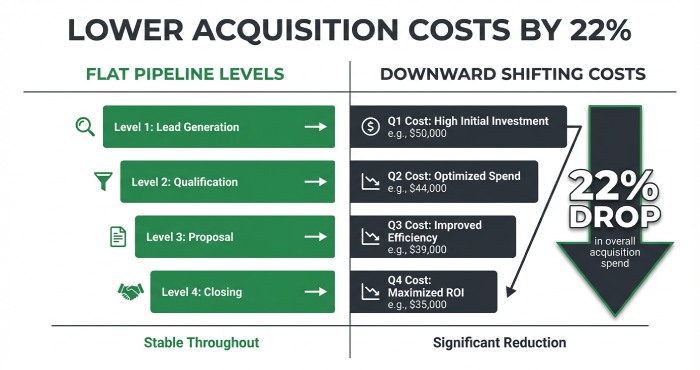
- Email icebreaker: “Your Q4 letter mentioned CAC pressure. We trimmed research minutes per prospect using AI-powered snippets and shifted focus to reply quality—pipeline stayed flat, costs fell 22%.”
Follow-up ice breakers: fresh openers for the 2nd–5th touch
The 2nd touch: add a relevant question
Build on the first email icebreaker with a single, relevant question that deepens the connection. Reference the same asset without repeating the personalized compliment verbatim.
- Example opener: “Still curious—did the EMEA partner motion include marketplaces, or just reseller?”
The 3rd touch: timely news or shared interests
Use timely news to refresh context, or nod to shared interests to maintain rapport. Keep the cold email short and useful.
- Example opener: “Liked your LinkedIn thread on channel conflict—would a sandbox SKU solve it?”
The 4th touch: mutual connections or credibility signals
If you have mutual connections or a customer in their space, surface it respectfully to enhance credibility.
- Example opener: “We helped a peer in fintech finance ops cut manual approvals by 40%—relevant?”
The 5th touch: short, direct, and helpful
Offer a no-strings resource and make the business opportunity implicit.
- Example opener: “Leaving this playbook on subject line + opener combos that outperformed last quarter—want it?”
Avoid flattery and humor overuse
Light humor can humanize, but overreliance reads like spam. Flattery without substance erodes trust; anchor each follow up email in a concrete, relevant detail.

Common pitfalls and ethical guidelines: accuracy, privacy, compliance, bias
Accuracy and source validation
An AI-powered icebreaker must be fact-checked. Cross-verify website analysis and website scraping outputs against primary sources to avoid misattributing roles or achievements. Inaccurate compliments destroy credibility and the first impression.
Privacy, consent, and data minimization
Do not include sensitive personal data or full physical addresses in an opener. For example, never surface specific office addresses like 1390 Market Street Suite 200 San Francisco in a cold email. Limit message personalization to public, business-relevant context and respect unsubscribe requests immediately.
Compliance across regions and deliverability hygiene
Follow CAN-SPAM, CASL, and General Data Protection Regulation (GDPR) best practices: provide a physical mailing address, a clear opt-out, and a legitimate sender identity.Strengthen deliverability with proper domain setup: configure SPF, DKIM, and an MX record; use IMAP for reliable sync; warm new domains with browser-based warmup; consider IP rotation only when aligned with policy and reputation rules.
Bias, inclusion, and respectful language
Avoid assumptions about identity or preferences. Keep a professional tone and inclusive phrasing. Audit AI-powered templates regularly to detect skewed language and remove biased patterns.
Testing, measuring, and scaling: A/Bs, deliverability, reply quality, snippets, AI assist
A/B testing frameworks for subject line and opener
Run controlled A/Bs where you vary a single element: subject line, opener type (personalized compliment vs. relevant question), or conversation starter style. Optimize for positive replies, not just opens—quality matters more than volume in sales and partnerships.
Snippet libraries vs. full template swaps
- Snippets: swap just the opener and preview text for speed.
- Templates: test structure changes when reply quality plateaus.
Deliverability and technical setup
Treat deliverability as part of campaign management, not an afterthought. Use a dedicated domain and mailbox fleet; manage mailboxes with a Master Inbox to centralize replies and ensure nothing slips through the cracks.
- Setup checklist: SPF, DKIM, MX record alignment; IMAP connectivity; DMARC monitoring; consistent IP reputation; gradual send-ramp via browser-based warmup; periodic audit of bounce rate and complaint rates.
- Tools: Maildoso for warmup and Master Inbox routing, plus Maildoso Audit Support for a campaign audit when metrics dip.
Quality over volume: measuring replies and conversation starters
Score replies as positive, neutral, or negative; track time-to-first-positive and meeting creation rate. Tag which email icebreaker or opener triggered the response to learn what creates a genuine connection with your target audience. This prevents AI-powered scales from devolving into spam.
Snippets, templates, and automatic generation with AI-powered stack
Operationalize research with an AI-powered workflow:
- n8n orchestrates lead automation and enrichment.
- Apify handles LinkedIn and site-level scraping within terms of service.
- GPT-4 converts signals into a 1-line email icebreaker plus a subject line and preview.
- EmailIceBreaker or Maildoso auto-inserts snippets into your email platform and routes replies to a Master Inbox for triage in Slack.
Join a slack community like the Maildoso Slack Community to trade best practices and scripts. If you run content-driven partnerships, communities such as BacklinkSwappers, inc. can surface co-marketing fits. For landing page tests aligned to your campaign, tools like Typedream or growth teams such as Growtika accelerate experiments.
Scaling workflows and governance
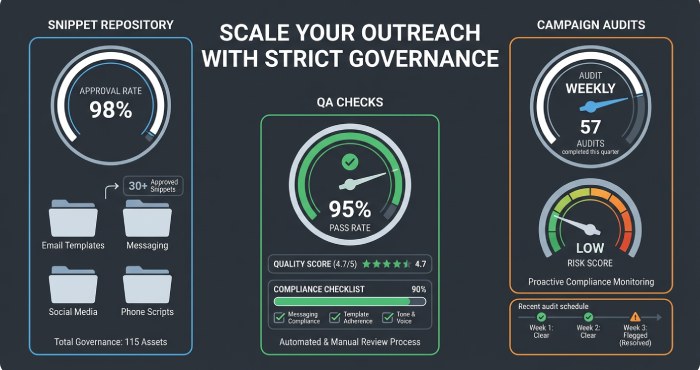
Document your playbook: research rules, message personalization boundaries, compliance steps, and an approval gate for new templates. Schedule a monthly audit of your cold email campaign, including domain health and a campaign audit of reply quality using tools like Nureply. As you scale B2B outreach across sales and business development teams, set clear guidelines on when to escalate from opener to a fuller sales pitch and when to hand off a business opportunity.
Governance tips:
- Maintain a repository of approved conversation starter snippets by persona.
- Implement QA in a Master Inbox before send.
- Review logs in Slack to spot drift from best practices.
FAQs
How long should a subject line be for cold email?
Aim for 5–8 words that preview the email icebreaker without sounding salesy. Front-load the unique context to earn attention in the inbox and avoid spammy phrasing.
What makes a strong opener in B2B outreach?
A strong opener in a personalized email is a one-line compliment or a relevant question grounded in public, recent, and verifiable context. It should serve as a conversation starter, not a full pitch.
How do AI-powered tools help with personalization?
AI-powered workflows synthesize website analysis, LinkedIn posts, and timely news into concise snippets. They accelerate research and automatic generation while your team preserves credibility through quick human QA.
How many follow-ups should I send and what should change?
Plan 3–5 touches, each with a fresh icebreaker angle: question, timely news, mutual connections, or a short resource. Avoid repeating the same opener or relying on flattery.
How can I protect deliverability at scale?
Set up SPF, DKIM, and an MX record, warm new domains gradually, and monitor complaints and bounces. Manage mailboxes centrally with a Master Inbox and perform regular audits.
What metrics matter beyond open rates?
Track positive reply rate, meeting rate, and which subject line and opener combinations drive outcomes. Reply quality beats raw volume for sales and partnerships.
Is it okay to mention a prospect’s address or personal details?
No. Keep personalization business-relevant and public; never include sensitive personal data or full addresses. Respect privacy laws and your own ethical guidelines.
Key Takeaways
- Align subject line, preview, and email icebreaker to deliver a credible, personalized opener that earns the click.
- Use persona-specific conversation starters that reference timely news, shared interests, or mutual connections without sliding into generic openers.
- Structure 2nd–5th follow-ups with fresh angles and relevant questions; avoid flattery and spammy humor.
- Protect deliverability with proper domain setup (SPF, DKIM, MX), warmup, and ongoing audits, and centralize replies in a Master Inbox.
- Scale with an AI-powered stack (n8n, Apify, GPT-4, EmailIceBreaker, Maildoso) and rigorous governance to prioritize reply quality over volume.