

Cold Email Job Vs. Cold Call: When To Email, What To Say, And Why It Works
Landing a job today often requires more than simply applying through online portals—it calls for proactive outreach. Two of the most effective strategies candidates use are cold emailing and cold calling. Both approaches aim to introduce yourself directly to a hiring manager or recruiter before a formal opportunity is advertised. However, knowing when to use a cold email versus a cold call can make the difference between being ignored and getting noticed.
Cold emails are generally preferred in professional job searches because they respect the recipient’s time while allowing you to present your value clearly and thoughtfully. A well-crafted cold email gives you space to explain who you are, why you’re reaching out, and how your skills align with the company’s needs. On the other hand, cold calls can feel intrusive if poorly timed, but they can be powerful in fast-moving industries or sales-driven roles where direct communication is valued.
Understanding what to say—and why each method works—is essential for successful outreach. Cold emails work because they create a low-pressure first impression and can be revisited by the recipient at their convenience, while cold calls succeed when immediacy and personal connection matter. By choosing the right approach and tailoring your message, you can significantly improve your chances of starting meaningful conversations that lead to job opportunities.

Cold email job vs. cold call: the case for proactive outreach
Cold outreach flips the traditional job search from waiting to winning. For a job seeker, a well-timed cold email can get you in front of a hiring manager or CEO before a job posting even exists. Cold calls can work too, but the asynchronous, documented nature of email makes it easier to craft an effective cold email, include your resume, and ask for meeting time without interrupting someone’s day. Used together, these channels move you to a job interview faster than an online job application on Indeed or LinkedIn alone.
When to email
- You’re targeting startup jobs at an early-stage startups (Seed round to Series B) where roles are fluid.
- There’s no job posting, or the posting is generic and you want to bypass the front door.
- You have a specific ask, a short email, and a clean email format that highlights relevant experience.
What to say
Use plain language, personalization, and a direct approach. Make a specific ask, demonstrate competency with past work, and include a crisp resume. Less is more: avoid buzzwords, use bullet points for clarity, and end with an ask for meeting or a 15-minute call that can lead to a job interview.
Why it works
Cold email scales, travels, and forwards easily inside a company. It lets decision makers skim, verify, and route you to the right person. An effective cold email signals you can communicate, do company research, and demonstrate value—strong predictors you will perform on the job.

Why cold outreach matters in today’s job market (hidden roles, speed, signal quality)
Hidden roles
A large share of startup jobs never hit a job posting. Teams hire from networks, investors (think Next Play or a founder’s Substack readership), and inbound direct outreach. A job seeker who messages a founder or CEO with a clear email example often surfaces a job opportunity before it’s public.
Speed
Hiring moves quickly in high-growth environments. If a company just closed a Seed round, hit $1M ARR, or is preparing a Series B, headcount opens overnight. Cold email lets you arrive first, attach your resume, and ask for meeting time before the hiring process formalizes.
Signal quality
An effective cold email shows initiative, communication, and competency. Compared with an online job application, direct outreach gives a hiring manager a stronger signal. They can review your professional background, personal project links (Substack, quarter–mile.com), and past work, and fast-track you to a job interview.

Email vs. call: strengths, weaknesses, and response psychology
Strengths of email
- Asynchronous: people answer when convenient, increasing reply rate.
- Shareable: a hiring manager can forward your email example to a teammate.
- Traceable: your resume and links are preserved; email format and email subject can be searched later.
Strengths of a call
- Urgency: a human voice can create momentum.
- Discovery: you can quickly qualify fit and refine your specific ask on the spot.
- Warmth: honest communication builds rapport rapidly, especially with founders.
Weaknesses and response psychology
Email can be ignored if it’s a vague email. Calls can feel intrusive if you haven’t built context. Psychologically, email lowers the recipient’s defense (no time commitment) and rewards clarity; calls reward confidence but penalize lack of preparation. A CEO at Snapchat like Evan Spiegel, or an investor such as Niraj Pant, might appreciate a concise cold email first, then a call once interest is clear.
Follow-up cadence
Most offers come from persistence. Send a follow up email 3–5 days later, then another a week after. Keep each follow up short, reference a new insight from company research, and restate your ask for meeting or job interview. Polite follow up beats one long vague email.

When to email, when to call, and when to combine: a practical decision framework
Email first
- There is a job posting and you want to bypass the queue with a tailored note to the hiring manager.
- You’re pitching for startup jobs where written communication is key (product, ops, growth).
- You need to include a portfolio or resume and demonstrate competency with concrete metrics (e.g., “grew ARR from $200k to $1.2M at Your Company”).
Call first
- You were referred by a mutual connection (networking) who suggested a quick phone intro.
- You’re reaching an operator who rarely checks email but answers the phone (e.g., field roles).
- Time-sensitive roles where speed matters and a direct approach is valued.
Combine both
- Email the founder or CEO with an effective cold email, then, if no reply, call their office line or DM on LinkedIn to reference the email subject and ask for meeting availability.
- After a strong call, send a follow up email recapping the specific ask, your resume, and next steps toward a job interview.
Research first: selecting target companies, mapping stakeholders, timing your outreach
Selecting target companies
Prioritize companies where you can demonstrate value quickly:
- Stage: Seed round to Series B if you want to work for startups.
- Momentum: hiring signals, ARR growth, recent press, or a new product launch (Substack posts, CEO letters).
- Fit: company culture that aligns with your career direction and professional background.
Use Indeed and LinkedIn to scan for patterns, but go beyond the online job application funnel.

Mapping stakeholders
Identify the hiring manager, founder, and relevant teammates. At That Company, the head of operations might be the real decision maker; at Snapchat, a product lead may screen for a CEO. Search LinkedIn, company pages, and team Substack posts. Note names (Ryan at Growth, Gandalf the platform lead) so your emails avoid buzzwords and feel personal.
Timing your outreach
- Right after funding (Seed round, Series B).
- Post-milestone (ARR threshold crossed, major launch).
- Off-cycle hiring windows before official job posting activity spikes.
Finding the right contact info ethically: tools, email formats, and verification tips
Tools and sources
Use ethical tools that respect privacy and public data:
- LinkedIn for names, roles, and mutuals.
- ContactOut or Nymeria to discover professional contact information.
- Clay to organize targets, personalize at scale, and manage follow up.
Predicting email format
Most companies use predictable email formats (first.last@company.com, first@company.com). Check press releases, investor decks, or engineering blogs for examples. When in doubt, test a few variations to find the correct email format without spamming.
Verification and deliverability
Verify addresses with a zero-bounce tool, include your full signature with contact information, and keep the first message a short email in plain language. Good deliverability raises reply rate and sets up your follow up email to land.

What to say in your cold email: structure and examples
Structure of an effective cold email
- Email subject: Specific, benefit-led. Example: “Ops lead who scaled ARR from $200k→$1.2M — quick intro?”
- Introduction: State who you are and why you are reaching out in one line.
- Personalization: One sentence that proves company research; reference a product, a Substack post, or a Seed round announcement.
- Proof: Bullet points with measurable past work to demonstrate competency.
- Specific ask: Ask for meeting time (15 minutes) leading to a job interview; propose two slots.
- Attachments/links: Resume, portfolio, Writing Club samples, or a personal project.
- Close: Honest communication, thanks, and contact information.
Use less is more, avoid buzzwords, and never send a vague email.
Email example variations
Email example 1: Founder/CEO at an early-stage startup
Subject: Built 0→$1M annual recurring revenue(ARR) at Your Company — 15 min to share ops playbook?
Hi Evan,
Who you are: I’m an ops generalist who scaled ARR from $0→$1M at Your Company.
Why you are reaching out: I read your post on Snapchat’s go-to-market and saw your Series B hiring push.
Why they should care: I’ve led onboarding, billing, and vendor ops at Seed round companies; I can replicate that here.
Proof (bullet points):
- Cut churn 18% by rebuilding invoicing (case study: quarter–mile.com)
- Launched support desk; NPS +24
- Managed finance stack during audit
Specific ask: Could we ask for meeting time next Tue/Wed? Attaching resume; happy to share more past work.
Best,
[Name] | [Contact]
Email example 2: Hiring manager for startup jobs in growth
Subject: 3 experiments → +27% activation — quick chat?
Hi Ryan,
I admire That Company’s recent Next Play partnership. My professional background spans lifecycle and SEO; here’s how I can demonstrate value fast:
- Ran 12-week activation sprint; +27% actives
- Built referral loop; CAC down 14%
- Wrote product-led content (see Writing Club essay)
Specific ask: Can we ask for meeting time this week? If helpful, I’ll send an email template and writing feedback examples. Resume attached.
Email example 3: Investor-operator hybrid
Subject: Builder seeking job opportunity with portfolio — intro?
Hi Niraj,
I’m exploring job opportunity paths across portfolio companies. I prefer work for startups at Seed round with clear company culture. I’m applying for jobs via direct outreach instead of an online job application queue. Could we ask for meeting time to discuss where my competency fits best?
Each email example uses plain language, a direct approach, and a concise email format that increases reply rate and moves you toward a job interview.
Notes on tone and content
- Personalization beats spray-and-pray: reference a founder AMA or investor update.
- Include your resume, but also show relevant experience via links to past work.
- If you lack formal career history, add a personal project to demonstrate competency.

What to say in a cold email: subject lines, openings, proof, value, and a clear CTA
Email subject and openings
Your email subject should be clear, searchable, and relevant to the job search. Use plain language and a direct approach: “Product intern — saw your Seed round” or “Engineer re: mobile crash rate on Your Company iOS.” Less is more. Avoid buzzwords and gimmicks; a vague email subject tanks reply rate.
Open with a one-line introduction that states who you are and why you are reaching out. Name the company and role if there’s a job posting, or the problem you noticed if there isn’t. Example opening: “I’m a job seeker with 2 years in growth analytics; I’m reaching out about startup jobs on your data team after seeing the Series B announcement.” This is an effective cold email opener because it anchors context immediately for the hiring manager or CEO.
If you’re writing to a founder, signal personalization by referencing a recent milestone (“Congrats on hitting $3M ARR”) or a relevant podcast/Substack post. If you’re writing to a hiring manager, reference their team’s scope or a shipped feature. This email format keeps attention on value instead of fluff.
Proof and value: demonstrate competency
In two to four sentences, demonstrate competency with concrete proof. Think: relevant experience, measurable outcomes, and past work. Use bullet points to make proof scannable and to demonstrate value without walls of text:
- Increased activation by 14% at That Company using event-based onboarding
- Built Gandalf, a personal project that cut support tickets by 22% at a Writing Club pilot
- Portfolio: quarter–mile.com; LinkedIn: linkedin.com/in/you
Attach a resume or link to your career history. Mention your professional background succinctly, then tie it to the company’s current priorities. Reference specifics from company research: Seed round vs. Series B, the GTM motion, ARR goals, or a hiring process nuance you noticed from Indeed or Next Play. Avoid buzzwords; focus on clarity and competency.
Clear CTA: ask for meeting
End with a specific ask and a clear call-to-action. Explicitly ask for meeting: “Could we schedule 15 minutes next week to discuss the growth analyst role?” A specific ask beats an open-ended “thoughts?” Include contact information and two time windows. Keep it a short email that invites a job interview conversation rather than a full application. If there’s a job posting, note that you submitted an online job application and are sending a job opportunity email directly to add context. Tell them you’ll follow up in a few days, and then actually follow up.

Templates and teardown: new grad, career switcher, portfolio-driven roles, and referral asks
New grad email example
Subject: New grad — data intern to improve onboarding metrics
Hi [Hiring Manager Name], I’m a new grad job seeker focused on analytics for startup jobs. I’m reaching out because your company’s Series B note mentioned onboarding as a priority, and I’d love to contribute.
Proof:
- Built an LTV model in Python; improved prediction MAPE from 28% to 12%
- Internship at Your Company; analyzed cohort retention for 200k users
- Past work: quarter–mile.com; LinkedIn: [link]
Would you be open to a 15-minute call to discuss the data intern role? I applied via Indeed, but I wanted to share context directly. If helpful, I can send a 1‑page teardown of your onboarding funnel. I’ll follow up Friday. Thanks for considering my resume.
This email format uses plain language, includes who you are, why you are reaching out, and why they should care, with an ask for meeting.
Career switcher email template
Subject: From IT ops to product — reducing incident MTTR at That Company
Hi [Hiring Manager/CEO], I’m transitioning from IT operations to product management after five years reducing MTTR and building internal tools. I’m reaching out about startup jobs on your platform team; your recent ARR update suggests reliability is a key driver.
Relevant experience:
- Led postmortems; shipped runbooks that cut P1 resolution by 35%
- Partnered with engineering to prioritize SLOs; demo: Gandalf status dashboard
- Professional background: IT Ops lead; career history and resume attached
Specific ask: Could we schedule 20 minutes to discuss how my competency in reliability translates to your product backlog? I’m happy to walk through a PRD for your incident flow. If there’s a fit, I’d welcome a job interview. I’ll follow up next week.
This direct outreach positions a career direction change with evidence and a clear, specific ask.
Portfolio-driven roles and links
Subject: Designer — 3 concepts to improve onboarding for Your Company
Hi [Founder/CEO], I’m a product designer who likes to work for startups. After reading your Substack on activation, I mocked up three onboarding concepts for your mobile flow.
- Case study: quarter–mile.com/onboarding (before/after, metrics, Figma)
- Personal project: Gandalf brand system; Writing Club microsite
- Why they should care: concepts reduce drop-off at step 2 by simplifying social sign-in
Are you open to a 15-minute review this week? Happy to send the Figma file. If there’s a current job posting, I’d appreciate a job interview conversation to explore the job opportunity.
This email example showcases past work and uses less is more writing to demonstrate value.

Referral and warm intro requests
Subject: Quick intro to [Hiring Manager] at Snapchat?
Hi [Ryan/Niraj Pant], hope you’re well. I’m a job seeker targeting growth roles at early-stage startup teams. I noticed Snapchat’s ads measurement team is hiring; I wrote a short teardown and would value a warm intro to the hiring manager (or to Evan Spiegel’s EA if that’s better).
- 1‑pager teardown attached; ARR lift levers highlighted
- Why I’m reaching out: my background aligns with their Series B–style growth challenges
- Specific ask: Would you be comfortable forwarding a short email template or making a two-line intro?
If not, no worries — a brief pointer to the right person would be hugely helpful. I’ll follow up in a week. Thanks for the honest communication.
This job opportunity email leverages networking and improves reply rate without being pushy.
Cold call fundamentals: concise openers, objection handling, voicemails that support your email
A good cold call mirrors the effective cold email: short, relevant, and respectful. Concise opener: “Hi [Name], this is [You]. I sent a cold email yesterday about improving your onboarding metric; do you have 30 seconds now or should I email a teardown?” If they say “email me,” confirm the email subject and send a follow up email immediately.
Common objections:
– “We’re not hiring.” Response: “Understood — could I send a two-slide idea and, if useful, ask for meeting later? If not, I’ll step back.”
– “Please apply online.” Response: “Will do. I submitted an online job application and wanted to add context directly to the hiring process.”
Voicemail should support your email: reference the email subject, repeat your name, specific ask, and contact information. Example: “Hi [Name], I’m following up on my cold email about onboarding ideas. If useful, I can share a 1‑page teardown. Ask for meeting: 15 minutes next week. Call/text [number].”

Follow-up strategy that works: cadence, multichannel touchpoints, and personalization at scale
Cadence and timing
Plan 5–7 touches over 10–14 days: cold email, follow up email, LinkedIn message, brief call, voicemail, and one final nudge. Personalization at scale can be done with Clay, Nymeria, and ContactOut to find the right hiring manager or CEO, but always add a line of context from company research. Multichannel increases reply rate: engage on LinkedIn (comment on a Substack post if relevant), then send a short email with the same specific ask. Track who you are contacting and why you are reaching out in a simple spreadsheet or Clay workflow.
Your follow up should add something new (a metric, a micro-teardown) rather than nag. Example: “Following up with a 2-slide deck on how That Company increased activation by 14% — similar idea for your onboarding.” Always restate the ask for meeting and make it easy to say yes.
Measure, iterate, and stay compliant: metrics, A/B tests, deliverability, and etiquette mistakes to avoid
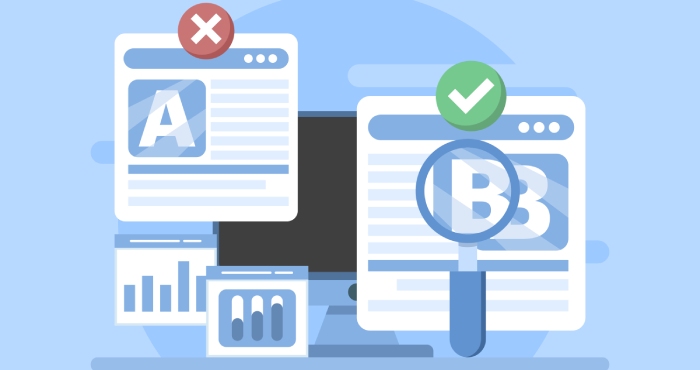
Track core metrics: reply rate, meeting rate, job interview rate, and job offer conversion by company segment (early-stage startup vs. Series B). A/B testing one variable at a time: email subject, opening line, or email format (bullet points vs. prose). Less is more in tests; keep a control and iterate weekly. Ask for writing feedback from peers or a Writing Club to hone plain language.
Deliverability matters: warm your domain, authenticate (SPF/DKIM/DMARC), and avoid sending too many links or images. Keep a clean email format, send from a real name, and include contact information and an opt-out line. Tools like Clay help with sequencing; Substack or LinkedIn can show thought leadership you reference in outreach.
Etiquette mistakes to avoid:
- Vague email with no specific ask or value
- Overusing buzzwords instead of concrete, relevant experience
- Ignoring company culture signals in your tone
- Misnaming leaders (double-check the CEO — Evan Spiegel runs Snapchat)
- Failing to follow up when you said you would
Finally, ensure honest communication. If you used Indeed for the job posting, say so. If you lack direct experience, demonstrate competency through past work and a personal project. Consistent, respectful direct outreach is how a job seeker wins startup jobs.
FAQs
How long should a cold email be for a job search?
Aim for 75–150 words. Keep a short email with an introduction, proof, and a clear ask for meeting. Less is more when contacting a busy hiring manager or CEO.
Should I attach my resume or just link to LinkedIn?
Do both. Attach a concise resume and include your LinkedIn link and portfolio; this email format maximizes options for how the recipient evaluates your professional background.
What if there’s no job posting?
Send an effective cold email to the founder or hiring manager referencing a problem you can solve. Demonstrate competency with past work and ask for a brief job interview to explore a job opportunity.
How many times should I follow up?
Two to three follow ups over 10–14 days is reasonable. Each follow up email should add value (a teardown, metric, or new insight) and restate a specific ask.
Is it okay to cold call as part of my job search?
Yes, if done respectfully. Reference your cold email, keep the call to 30 seconds, and leave a voicemail that supports your email subject and CTA.

What tools help with personalization at scale?
Clay, ContactOut, Nymeria, and Nurpely can enrich contacts and structure multichannel direct outreach. Use them to find the right company contacts, but always add custom context from in-depth company research to ensure your messaging feels relevant and personalized.
How do I tailor for early-stage startup vs. Series B?
For early-stage startup teams, emphasize scrappy execution and personal projects; for Series B, highlight metrics, ARR impact, and cross-functional process. Adjust tone to match company culture.
Key Takeaways
- A strong cold email uses plain language, concrete proof, and a specific ask to secure an ask for meeting.
- Templates work best when customized with company research, relevant experience, and links to past work.
- Follow up with a thoughtful cadence across email, LinkedIn, phone, and voicemail to raise reply rate.
- Measure reply, meeting, and job interview rates; A/B test email subject lines and email format.