
Cold Email Gdpr Explained: Key Rules For Effective Marketing
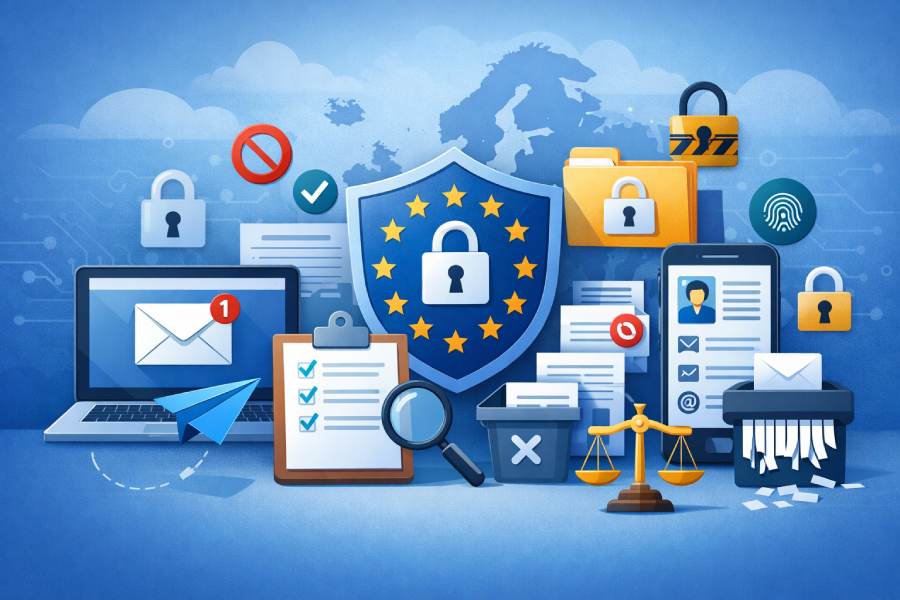
Cold email marketing remains a powerful way to reach potential customers, but in the European Union, it must be handled with care due to the General Data Protection Regulation (GDPR). GDPR sets strict rules on how personal data can be collected, processed, and used, directly impacting how businesses approach outbound email campaigns. Understanding these rules is essential to avoid hefty fines while maintaining trust with your audience.
At its core, GDPR is designed to protect individuals’ privacy and give them greater control over their personal information. When it comes to cold emails, this means marketers must have a lawful basis for processing data, ensure transparency about how contact details were obtained, and respect the rights of recipients. Simply finding an email address online does not automatically make it legal to use for marketing purposes.
Effective cold email marketing under GDPR is not about stopping outreach altogether, but about doing it responsibly. Concepts such as legitimate interest, data minimization, and purpose limitation play a crucial role in determining whether a cold email campaign is compliant. Marketers must carefully assess whether their messaging is relevant, proportionate, and genuinely beneficial to the recipient.
By aligning cold email strategies with GDPR requirements, businesses can create campaigns that are both compliant and effective. Following key GDPR rules not only reduces legal risk but also improves email engagement, brand credibility, and long-term customer relationships. When done correctly, GDPR-compliant cold emailing becomes a trust-driven marketing approach rather than an intrusive one.

What is Cold Emailing and Why It Matters in Marketing
Cold email is an outreach strategy in which businesses contact potential prospects or leads via unsolicited yet personalized messages sent directly to their email address. Unlike spam, which is indiscriminate, cold outreach relies on targeting precise individuals who are likely to benefit from the product or service being offered. This tactic is especially prevalent among sales teams in SaaS companies such as Mailshake and Close.com, driven by experts like Sujan Patel and Jory MacKay, who consistently emphasize the role of data-driven personalization in sales engagement.
For B2B organizations, cold email campaigns can drive high conversion rates, support business activity, and fuel lead generation. The efficiency and broad reach of targeted email campaigns make them a staple in modern email marketing strategies, particularly in hyper-competitive sectors such as financial technology—demonstrated by brands like Salesforce, Mint, and Intuit.
However, with the advent of stringent privacy laws, especially within the European Union, companies face enhanced expectations for data protection and GDPR compliance, making regulation compliance paramount in any sales engagement initiative.
Understanding the Basics of GDPR: An Overview
The General Data Protection Regulation (GDPR) is an EU regulation implemented in May 2018 to harmonize data privacy laws across Europe and guarantee enhanced rights for individuals with regard to their personal data. GDPR applies to any business processing personal data of EU citizens, regardless of the company’s physical location. Given the international scope of digital marketing, all organizations engaging in email marketing—including those outside the European Union—must evaluate their GDPR compliance if their campaigns reach EU markets.

At its core, GDPR is anchored in principles such as:
- Lawful processing: Processing personal data only for clearly defined, legitimate purposes.
- Data minimization: Collecting only the amount of personal data necessary for the relevant purpose.
- Accountability and transparency: Explaining data source to the data subjects (prospects), offering clear privacy policies, and providing information on how personal information will be used.
For cold outreach and marketing emails, GDPR introduces new rules regarding processing justification, consent management, and the handling of personal information—transforming the operational risk landscape for data controllers and any party involved in B2B cold email campaigns.
Is Cold Emailing Legal Under GDPR?
A frequently debated question centers on the legality of sending cold emails under the General Data Protection Regulation. Cold emailing in itself is not automatically illegal; rather, GDPR sets conditions to lawfully process personal data of email recipients when conducting outreach messages.
According to the legal framework established by the EU GDPR and interpretations by data protection authorities (such as Secure Privacy and Digital Guardian by Juliana De Groot), organizations must identify a legal basis for their data collection and ensure data privacy throughout the sales engagement. Most importantly, B2B cold email campaigns must:
- Offer transparency about how recipients’ personal data (name, email address, and other identifiers) was obtained.
- Justify why the targeted email is being sent—demonstrating how it serves a relevant purpose for the prospect.
- Include clear options to unsubscribe, enabling recipients to easily opt out of further marketing messages.
Failing to follow these requirements could expose a company to significant fines, data breach claims, or reputational risk due to violation of privacy laws.
Legal Grounds: Legitimate Interest vs. Consent in Cold Emailing
Under GDPR, organizations must establish a legitimate legal basis for data processing. For cold email campaigns, two central justifications are most pertinent: legitimate interest and consent.
Legitimate Interest
The principle of legitimate interest (outlined in Recital 47 of GDPR) allows the processing of personal data if it is necessary for the legitimate interests of the data controller—provided these interests are not outweighed by the fundamental rights and freedoms of the data subject.
For B2B cold emailing, legitimate interest can often be used as a lawful processing basis if:
- The outreach targets business contacts relevant to the sender’s business activity.
- The data collection is minimal, focused only on what is necessary (such as email address, business role, company name).
- Personalization adds value by tailoring messages to the recipient’s needs or role, thus demonstrating relevant purpose.
Recent guidance from experts like Mac Hasley (Convert) and Steven MacDonald (SuperOffice) emphasizes that documenting a thorough processing justification—including a detailed legitimate interests assessment in privacy policy documentation—is critical to demonstrate regulation compliance.
Consent
Obtaining explicit consent is considered the strictest legal basis under GDPR. To rely on consent, organizations must:
- Secure a clear, affirmative opt-in from recipients before sending marketing emails.
- Ensure that consent is freely given, specific, informed, and unambiguous—confirming recipients understand what data processing they agree to.
Given the impracticality of securing prior consent for first-contact B2B cold email, most companies rely on legitimate interest as the primary basis, supplemented by robust unsubscribe processes and clear privacy communication.

Essential GDPR Requirements for Cold Email Campaigns
Organizations aiming for GDPR compliance in cold outreach should embed these core requirements into their email strategy:
1. Transparency and Information Rights
- Explicitly explain data source: Be clear about where and how recipient’s personal information was obtained (e.g., public business directories, event attendee lists like those managed by Product Hunt or conference data providers such as Taskeater).
- Provide a privacy policy outlining data processing practices, recourse in case of data breach, data access rights, and contact details of the data controller.
2. Data Minimization and Personalization
- Practice data minimization: Only collect and process personal data that is necessary for your specific marketing purpose.
- Leverage personalization to demonstrate a genuine interest in the prospect’s business needs or function, boosting the lawful processing justification.
3. Unsubscribe Mechanisms and Consent Management
- Every marketing email must include an easy-to-find unsubscribe link. This enables recipients to opt out immediately, ensuring compliance with both GDPR and anti-spam laws (such as PECR in the UK).
- Respect unsubscribe requests. After a recipient has unsubscribed, promptly delete data or store in a do-not-contact list, per the right to be forgotten obligations.
- Document all unsubscribed data subjects for accountability and lawful cold emailing record-keeping.
4. Data Security, Secure Storage, and Accountability
- Implement rigorous data security measures—secure storage of email addresses, encrypted information storage, and regular audits—to minimize the risk of data breach.
- Follow data protection best practices as exemplified by leading organizations like Intuit and Digital Guardian.
- Limit access to personal data only to staff members directly involved in sales engagement, and outline data access protocols in internal policies.
5. Follow-Up, Retention, and Right to Object
- Apply sensitivity when planning a follow-up email or follow-up sequence. Repeated outreach without response could be considered harassment under GDPR and privacy laws.
- Regularly review data retention periods. Delete data that is no longer relevant for your business activity or upon the request of the data subject.
- Inform recipients of their rights, especially the right to be forgotten and the ability to request data access or deletion at any time.
6. Documentation and Regulation Compliance
- Maintain comprehensive records of data processing activities, consent management logs, legitimate interest assessments, and unsubscribed lists as mandated by EU regulation.
- Ensure ongoing training for your sales team and marketing staff regarding GDPR updates, with reference to resources from organizations like Secure Privacy and compliance-focused publications by experts such as Juliana De Groot.
Ultimately, aligning your cold email campaigns with GDPR not only protects your organization from hefty fines and investigation but also builds trust with prospects in the European Union and beyond. It signals a commitment to data privacy, security, and responsible outreach, creating a foundation for effective and respectful B2B email marketing in the evolving digital landscape.
How to Collect and Process Email Data Lawfully
Understanding Lawful Bases for Data Collection
To ensure GDPR compliance in your cold email strategies, it is essential to establish a lawful basis for collecting and processing personal data. The General Data Protection Regulation (GDPR) outlines several legal grounds, with “legitimate interest” being the most applicable for B2B cold email outreach. However, it demands a careful balancing test—you must demonstrate that your business activity does not override the rights or freedoms of the data subject. In many cases, especially in B2B contexts, demonstrating a relevant purpose and business necessity for contacting a prospect is crucial for GDPR compliance.
Best Practices for Collecting Email Addresses
When collecting an email address for cold outreach, always seek to minimize the personal data you gather—a principle known as data minimization. Secure resources like business directories, public LinkedIn profiles, or company websites, making sure the data collection aligns with EU regulation requirements and your stated purpose. Avoid scraping sensitive information and record your data source; the ability to explain data source on demand is mandated under recital 47 of the GDPR.
Lawful Processing of Personal Data
Processing personal data lawfully involves both technical and organizational safeguards. As data controller, your sales team is obligated to ensure data protection with secure storage and limited information access. This includes encryption, role-based data access control, and compliance auditing. Transparent privacy policies further demonstrate your commitment to data privacy and data security in all cold email outreach.
Crafting GDPR-Compliant Cold Emails: Key Elements to Include
Essential Components for GDPR Compliance
Every cold email sent under EU GDPR must clearly explain to the recipient why they are being contacted, identify the sender, and provide all information required by privacy laws. At minimum, your cold outreach messages should include:
- Clear identification of your company and sales team contact information
- Explanation of the lawful basis or processing justification for the email (e.g., legitimate interest for B2B relations)
- Details on the specific personal data being used
- Mention of the data source, enabling transparency for EU citizens
- Link to your privacy policy, outlining your approach to data protection and information storage
- Accessible unsubscribe link or simple opt-out instructions

Personalization and Data Minimization
Personalization not only boosts engagement but also supports GDPR compliance by demonstrating a relevant purpose for contacting the recipient. When using Nureply for outreach, avoid “blanket” or generic email marketing; instead, tailor each message based on the prospect’s business strategy or pain points. Data minimization means only including relevant information required for sales engagement while avoiding unnecessary personal information.
Unsubscribe and Consent Management
A robust unsubscribe process is crucial. Make unsubscribing straightforward—a visible unsubscribe link in every marketing message and swift removal from future outreach upon request are mandatory. Comprehensive consent management platforms such as Secure Privacy or features by providers like Mailshake (endorsed by Sujan Patel) can streamline compliance.
Rights of Data Subjects: Handling Responses and Opt-Outs
Responding to Data Subject Requests
Under the General Data Protection Regulation, email recipients (data subjects) have clear rights, including the right to access their stored data, object to processing, or request deletion (right to be forgotten). Sales teams must have a protocol to swiftly process these requests. Timely, transparent communication and proper records help maintain trust and regulation compliance.
Managing Unsubscribed and Opt-Outs
Whenever a recipient requests to be unsubscribed, the data controller must immediately cease outreach messages and update all records. Data minimization obligations also require deletion or anonymization of unnecessary information post-unsubscribe. Failure to respect opt-out or unsubscribe requests can lead to significant fines and be regarded as spam under privacy laws.
Processing Follow-Up Requests
GDPR compliance extends to all follow-up email communication. A follow-up sequence must never override a previous unsubscribe—this is a frequent compliance pitfall. Consistent review and secure storage of consent and opt-out logs prevent data breaches and unintentional unlawful processing
Common Pitfalls and How to Avoid GDPR Violations
Inadequate Consent or Processing Justification
One of the most common missteps is relying on assumed consent or not being able to articulate the legal basis for personal data processing. Ensure every prospect can trace why and how their email address was obtained and why outreach is relevant.
Failing to Implement Data Minimization
Gathering or maintaining excessive personal data increases risk and breaches the data minimization principle. Limit information to only what is necessary for each targeted email and regularly audit storage to delete data that no longer serves a relevant purpose.
Missing or Ineffective Unsubscribe Mechanisms
Sending a B2B cold email without a clear unsubscribe option puts your organization at risk of being flagged for spam—and possible non-compliance penalties. Providers like Mailshake and outreach experts such as Close.com emphasize automated systems for managing opt-out and unsubscribed requests.
Poor Data Security
A data breach presenting EU citizens’ email addresses or other personal information, even from a cold email list, could lead to massive fines. Invest in secure storage, encrypted communications, and staff training as advised by security authorities such as Digital Guardian and Juliana De Groot.
Best Practices for Effective and Compliant Cold Email Marketing
Aligning Sales Strategy with GDPR
Effective cold outreach balances compliance and personalization. Sales engagement platforms, such as Salesforce and Close.com, offer templates and workflows pre-configured for GDPR requirements. Continually train your sales team on regulation developments and data privacy best practices.
Documentation and Accountability
Maintain detailed records of all data processing activities, including data collection, lawful processing justifications, and follow-up email history. This accountability ensures preparedness for audits and builds resilience against potential fines or investigations by European Union regulators.
Leveraging Technology for Regulation Compliance
Modern email marketing tools now integrate GDPR compliance features, from privacy policy automation to secure consent management. Mint, Intuit, Convert, and other leading solutions help data controllers automate risk detection and fine-tune cold email campaigns within regulatory frameworks.
Continuous Monitoring and Improvement
Regular reviews, led by privacy compliance officers or partners like Secure Privacy, help adjust your email strategy as rules evolve. Advocate for only processing personal data serving a strictly relevant purpose in B2B cold email efforts, and use prospect feedback to improve personalization without crossing data privacy boundaries.
FAQs
What is the lawful basis for sending B2B cold emails under GDPR?
Most organizations rely on legitimate interest as their processing justification for B2B cold email. However, you must assess and document that your outreach does not override the rights and interests of the email recipient.
Do I need explicit consent to send cold outreach emails to EU citizens?
Explicit opt-in consent is not always required for B2B cold email if you can demonstrate a relevant business interest and comply with data minimization, transparency, and opt-out provisions outlined by the General Data Protection Regulation.
What should I do if a prospect asks to be unsubscribed or have their data deleted?
Immediately honor unsubscribe and right to be forgotten requests by ceasing further outreach, deleting relevant personal data, and confirming the action to the data subject per GDPR guidelines.
Can personalization in cold outreach lead to a GDPR violation?
Personalization is allowed and can be beneficial, provided you limit data collection and processing to only what is necessary for a relevant purpose and always respect the data privacy rights of the prospect.
Is it mandatory to include an unsubscribe link in every cold email?
Yes, per GDPR and best practice standards, every marketing email must include an easy-to-use unsubscribe mechanism for recipients.
What happens if my organization fails to comply with EU GDPR in cold outreach?
Non-compliance can result in significant fines, reputational harm, and in some cases regulatory prohibitions on further data processing or marketing emails to EU citizens.
Key Takeaways
- Always establish and document your lawful basis (typically legitimate interest) when processing personal data for cold email outreach.
- Personalize outreach while adhering strictly to data minimization and data protection principles to ensure GDPR compliance.
- Provide clear transparency, privacy policy access, and robust unsubscribe mechanisms in every cold email.
- Respect all data subject rights such as access, deletion, and objection requests to maintain regulation compliance.
- Routinely audit data processing practices, secure storage, and sales team training to avoid GDPR violations and potential fines.