

Outreach Email Software Buyer’s Guide 2026: Key Features, Pricing, And Integrations
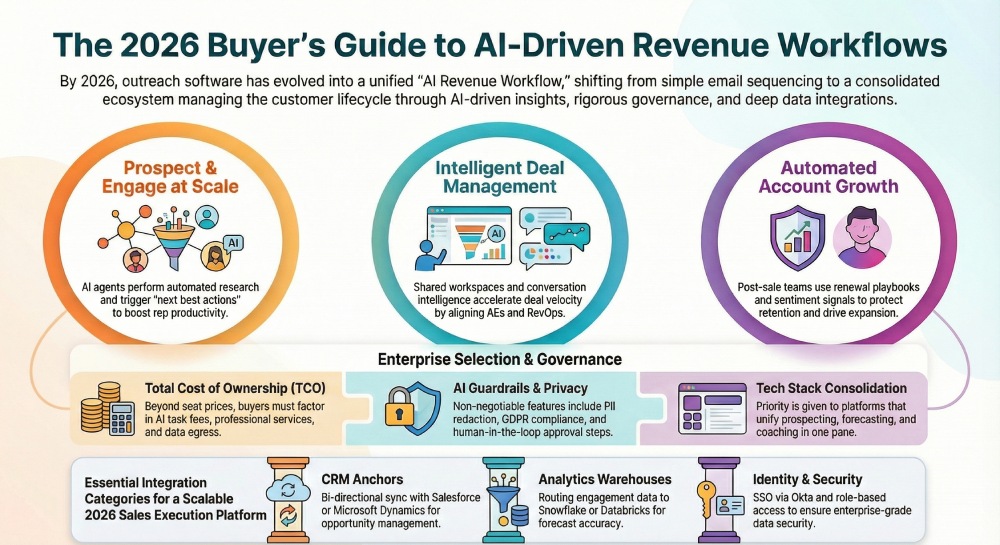
In 2026, outreach email software has evolved into a critical pillar of the modern sales platform, bringing together sales engagement, deal management, conversation intelligence, and pipeline management into a unified, AI-driven revenue workflow. This buyer’s guide explores how leading platforms like Outreach and Salesloft alongside ecosystem players such as Gong and Clari are reshaping how revenue teams prospect, engage, and close deals at scale.
With increasing demand for tech stack consolidation, enterprise buyers are prioritizing solutions that combine powerful integrations, transparent pricing, and advanced AI capabilities to streamline workflows across the entire customer lifecycle. From top-of-funnel lead generation to post-sale account growth, this guide breaks down key features, pricing models, integrations, and best practices to help organizations choose the right platform and drive measurable improvements in productivity, pipeline health, and forecast accuracy.
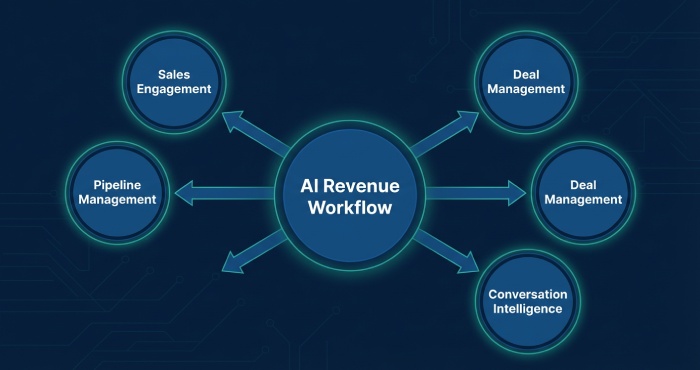
Market snapshot 2026 and core use cases for outreach email software
Platform overview and ecosystem
Outreach email software in 2026 sits at the center of the modern sales platform, unifying sales engagement, deal management, conversation intelligence, and pipeline management into one AI revenue workflow. Vendors such as Outreach (Seattle HQ) and Salesloft (Atlanta) continue to anchor the category, while adjacent leaders like Gong and Clari connect conversation intelligence and sales forecasting to complete a sales execution platform. Enterprise buyers prioritize tech stack consolidation, seeking industry-leading workflows that let revenue teams prospect and engage, manage deals, and forecast and plan from a single pane.
Leading vendors and integrations
Top platforms emphasize open integrations with Zoom for meeting scheduling, Snowflake and Databricks for analytics, Okta for SSO and role-based access, and CRM anchors like Salesforce and Microsoft Dynamics for opportunity management. Customers in complex environments think Siemens, Elsevier, McKesson, Worldpay, and Amplitude expect a platform overview that demonstrates scalable sales process design, buyer alignment via mutual action plans, and workflow automation that travels with reps across channels and devices, including EMEA hubs such as Prague.
Pricing signals to watch
Pricing typically follows a per-seat model for sales development and account executives, with add-ons for conversation intelligence, AI agents, and advanced sales forecasting. Expect volume discounts for enterprise sales, professional services packages for implementation, and extra fees for data security certifications or premium deliverability tooling. Shortlist vendors that publish transparent tiers, support a quick demo request, and document total cost of ownership, including integrations and data egress.
Core motions across the customer lifecycle
Prospect and engage at scale
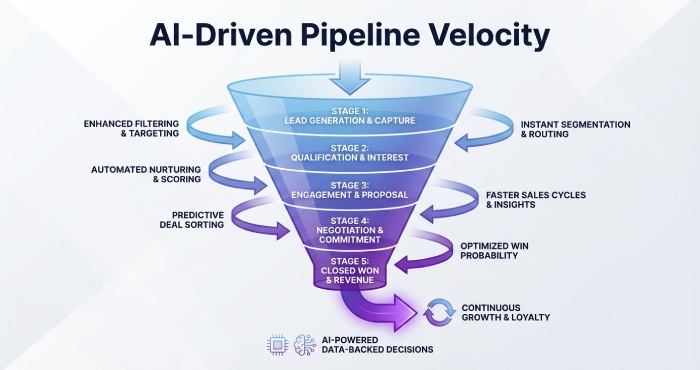
For top-of-funnel lead generation, outreach email software must let teams prospect and engage new logos while preserving sender reputation. AI-driven workflows enrich contacts via automated research, trigger next best actions, and route prospects to meeting scheduling boosting productivity for revenue teams.
Deal management and pipeline management
Mid-funnel, deal management and pipeline management features align AEs and revenue operations on opportunity management, deal insights, and sales process orchestration. Shared workspaces reduce swivel-chair time, while AI revenue workflow elements propose next steps to manage deals, accelerate deal velocity, and keep pipeline stages clean for more accurate sales forecasting.
Account management and growth
Post-sale, account management teams retain and expand customers through renewal playbooks, stakeholder management, and mutual action plans. Signals on renewal risk and customer expansion feed sales forecasting and quota attainment. Conversation intelligence and rep coaching help customer success teams coach and improve responses to objections and protect customer retention.
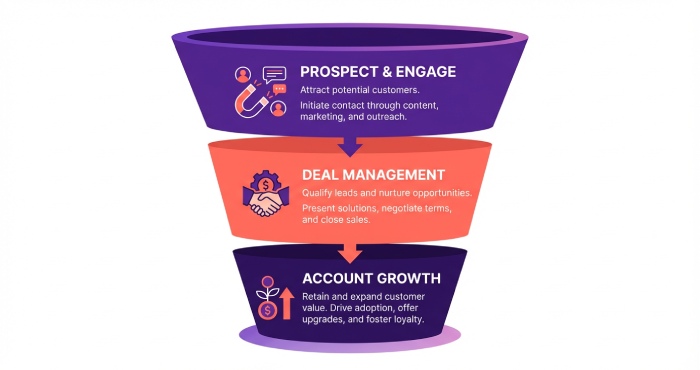
Outcomes for revenue teams and sales leaders
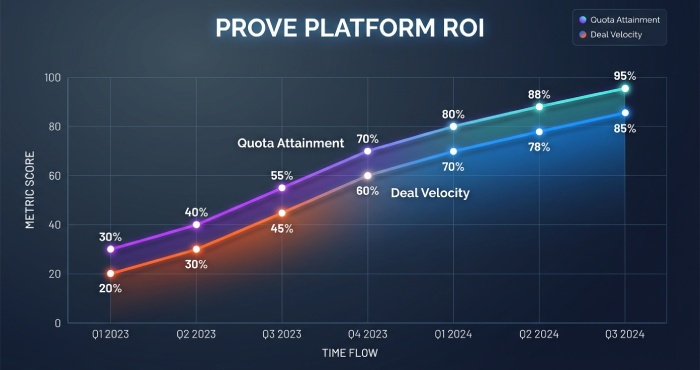
Revenue teams choose outreach email software to raise productivity, improve team performance, and deliver actionable insights to sales leaders. When conversation insights and AI-generated insights are connected to sales forecasting, forecast accuracy improves, enabling leaders to forecast and plan with confidence. The best sales platform options demonstrate measurable gains in quota attainment, deal velocity, and pipeline management hygiene.
Must-have features checklist: sequencing, personalization, A/B testing, deliverability controls
Sequencing and workflow automation
Sequencing remains foundational. Look for multi-channel steps, guardrails, and workflow automation that nudge reps with next best actions. Sales process orchestration should link prospect and engage motions with deal management tasks, including automatic creation of mutual action plans and CRM updates. Built-in meeting scheduling and role-based access control ensure compliance and control across territories.
Orchestrated execution
- Dynamic branching based on replies and intent
- Triggers tied to opportunity management and account management milestones
- Cross-team tasks for revenue operations and customer success
Personalization and conversation intelligence
Personalization must be deeper than tokens. Leading tools blend conversation intelligence with automated research to craft context-rich messages. AI agents surface conversation insights from calls and emails to fuel rep coaching and real time feedback, helping managers coach and improve messaging quality while preserving a scalable sales process.
Coaching and enablement
- Call and email scoring tied to coaching opportunities
- In-line recommendations that raise rep productivity
- Playbooks mapped to buyer alignment and industry personas
Experimentation and governance
A/B testing should extend to subject lines, CTAs, and send times, with statistical rigor and cohorting for clean readouts. Governance requires role-based access, template approvals, and industry-leading workflows that standardize quality without suppressing creativity.
Deliverability controls bundled in
- Per-domain throttling and send caps
- Auto-pause on high bounce or spam indicators
- Integrated health dashboards for inbox placement
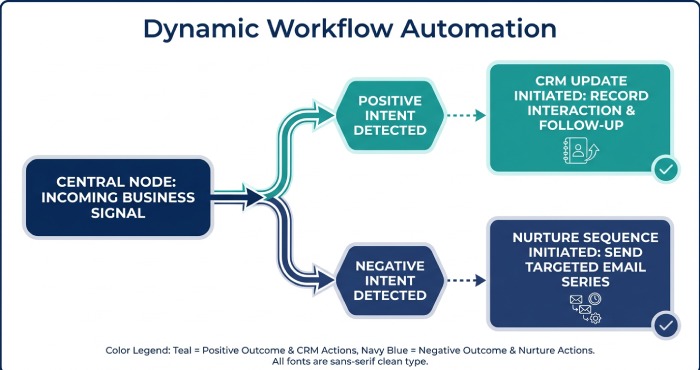
AI in 2026: generative personalization, intent signals, adaptive send times, multilingual support, guardrails
Generative AI agents and AI-driven workflows
The defining shift is the rise of AI agents embedded in the sales platform. These agents run AI-driven workflows across prospects and engage, deal management, and account management composing drafts, recommending next best actions, and updating CRM. A mature AI revenue workflow connects conversation intelligence to pipeline management so signals from calls drive outreach that advances deals and improves sales forecasting.
What great looks like
- AI agents that perform automated research and summarize customer stories
- Intent signals from web, product, and email that adapt sequences
- Closed-loop learning that elevates productivity across revenue teams
Adaptive timing and multilingual outreach
Adaptive send times optimize deliverability and engagement across regions and segments. Multilingual support is table-stakes for global organizations with teams in Seattle HQ, Prague, and Atlanta, enabling localized templates, compliance notices, and tone adaptation. This directly improves sales engagement metrics while reducing manual effort through workflow automation.
Globalization features
- Locale-aware content libraries and translation memory
- Time-zone aware sequencing and quiet hours
- Region-specific disclaimers for privacy and consent
Guardrails, transparency, and human-in-the-loop
AI guardrails protect privacy and data security while keeping brand voice intact. Require audit trails, human approval steps, and content risk checks. Managers should be able to tune models, surface explainability, and userep coaching interfaces to refine outputs keeping AI revenue workflow accountable and aligned with buyer expectations.
Risk controls to demand
- PII redaction and strict role-based access
- Safe prompts and blocklists
- Approval workflows for high-impact campaigns
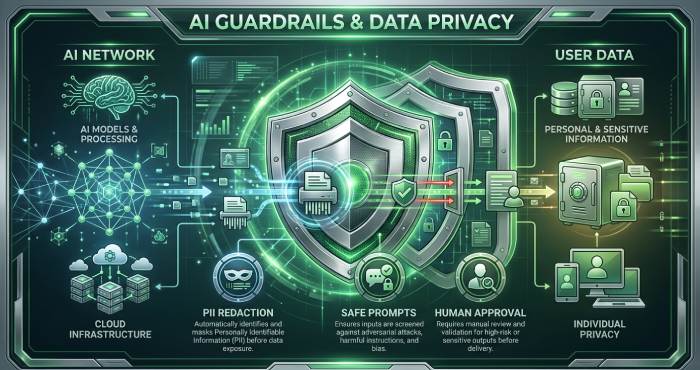
Data, privacy, and compliance: consent management, regional regulations, security certifications
Consent and regional compliance
Global outreach demands rigorous consent management, honoring GDPR compliance in the EU and opt-in/opt-out rules elsewhere. Platforms should log lawful basis, store proof, and automatically adjust sequences based on consent state. Enterprises like Siemens and Elsevier require built-in tools for privacy notices and preference centers that harmonize with CRM.
Regulatory readiness
- Granular consent by channel and purpose
- Automated suppression for unsubscribes and hard bounces
- Region-aware templates to meet local regulations
Security standards and data handling
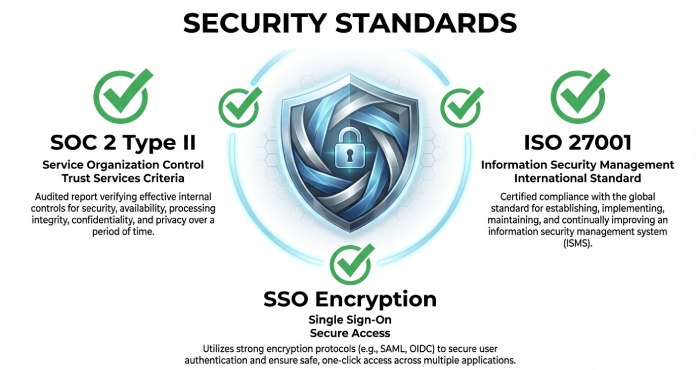
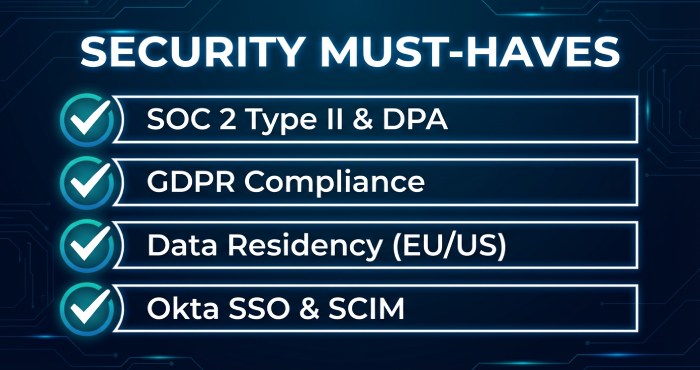
Ask for documented data security controls (SOC 2 Type II, ISO 27001), SSO via Okta, encryption, and audit logs. Look for a platform overview that explains data flows between outreach email software, CRM, and analytics warehouses. Vendors should provide buyer-ready artifacts for security reviews and support professional services during deployment.
Enterprise safeguards
- Least-privilege, role-based access and field-level controls
- Data retention policies and export tooling
- Incident response SLAs and pen-test summaries
Data residency and analytics integrations
Many enterprises route engagement data to Snowflake or Databricks for analysis that feeds sales forecasting. Healthcare and financial services organizations such as McKesson and Worldpay often require regional data residency and legal hold capabilities. Ensure integrations respect privacy while preserving the signal needed to coach and improve.
Analytics best practices
- Model-ready events for forecast accuracy
- Join keys for opportunity management and account management
- Clear lineage for actionable insights
Deliverability and sender reputation: authentication, warm-up, inbox placement, health monitoring
Foundation: authentication and configuration
Deliverability begins with proper authentication: SPF, DKIM, and DMARC, plus custom tracking domains and branded links. Outreach email software should validate DNS settings, enforce safe defaults, and provide proactive alerts to safeguard sender reputation and sustained sales engagement.
Technical essentials
- Aligned From/Return-Path domains
- BIMI for brand trust, where applicable
- Per-mailbox identity and rate controls
Warm-up and sending patterns
A smart warm-up plan ramps volume gradually, blends engaged contacts, and uses adaptive send times to mimic human behavior. Systems should pause sequences when risk rises, preserving domain health and ensuring that prospect and engage activity continues without disruption critical for pipeline management and downstream sales forecasting.
Programmatic protections
- Automatic list hygiene and bounce management
- Smart throttling during holidays or blocklist events
- Spam trap detection with real time feedback
Inbox placement and health monitoring
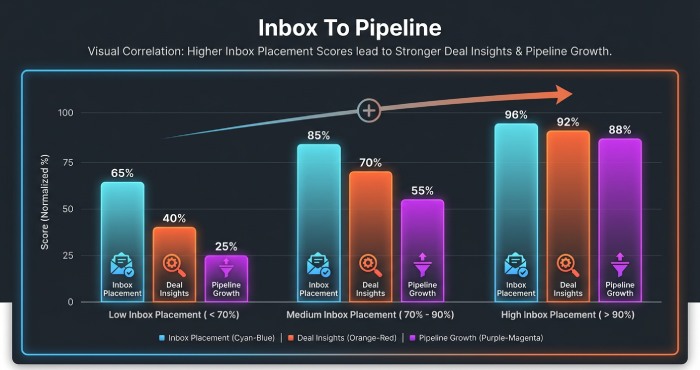
Use seed testing, postmaster tools, and reputation scores to monitor inbox placement. Dashboards should tie deliverability metrics to deal insights, so sales leaders understand how outreach impacts deal management, quota attainment, and team performance. Connected conversation intelligence can reveal when messaging triggers spam complaints, enabling targeted rep coaching to restore productivity.
Operational cadence
- Weekly health reviews with revenue operations
- Playbooks for remediation and buyer alignment
- Collaboration across revenue teams to sustain industry-leading workflows
Notable buyer patterns and references
Enterprise evaluations often involve cross-functional stakeholders sales leaders, revenue operations, security, and legal. Committees may include leaders like Andrei Grayson, Deepak Seelam, and Thorsten Reichenberger to balance risk and growth objectives. Many buyers cite customer stories from Omniplex Learning, Amplitude, Databricks, and Okta to validate outcomes before issuing a demo request.
Whether you select Outreach, Salesloft, or an adjacent sales execution platform, prioritize a solution that unifies AI agents, AI revenue workflow, workflow automation, and Nureply capabilities to amplify productivity across the full customer journey from prospect and engage to deal management, account management, and sales forecasting.
Integrations that matter
CRM, CDP, and data foundations
CRM sync and opportunity management
Your sales platform should maintain lossless, bi-directional CRM sync for contacts, activities, and opportunity management. Native integrations with Salesforce and Microsoft Dynamics ensure outreach email software updates the right fields, triggers next best actions, and preserves workflow automation without duplicates. This tight loop fuels AI revenue workflow, improves deal management, and enables revenue teams to forecast and plan with confidence.
CDP connections and identity resolution
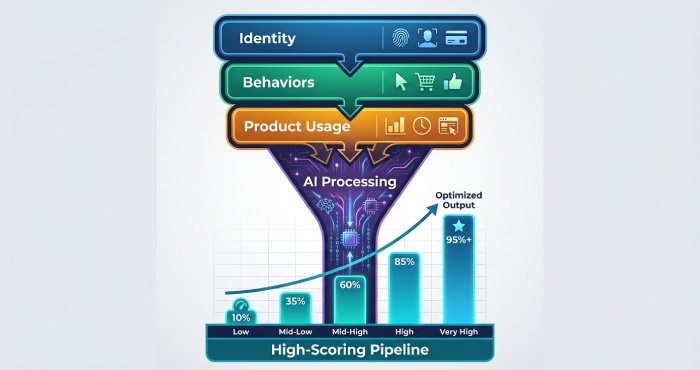
Connecting a CDP like Segment or Amplitude ensures clean identities and behaviors power sales engagement and AI-driven workflows. Feed product usage to drive propensity scoring, conversation intelligence triggers, and AI agents that prioritize who to prospect and engage next. This alignment shortens time-to-first-touch and elevates pipeline management quality.
Data enrichment and automated research
Use enrichment partners (e.g., Clearbit, ZoomInfo) to automate firmographic and technographic fills, then layer automated research to personalize messaging. Combined with conversation insights, AI-generated insights, and deal insights, reps get actionable insights before the first call—lifting productivity and accelerating manage deals motions.
Data mapping tips
- Map owner fields and role-based access early to avoid routing conflicts.
- Normalize stages across regions (Prague, Atlanta) for scalable sales process.
Marketing automation and social
Nurture alignment and buyer alignment
Tight coupling with Marketo, HubSpot, or Pardot prevents over-touching and preserves buyer alignment. Suppression lists and lead scores should feed the sales execution platform so AI agents sequence outreach email software at the ideal cadence and kick off mutual action plans when meetings progress.
Social signals and lead generation
Listen for key events on LinkedIn and X to trigger lead generation plays and next best actions. Social intent combined with website engagement data fuels sales development to prospect and engage the right stakeholders, boosting pipeline management efficiency and sales forecasting accuracy.
Content handoff checklist
- UTM governance for customer stories and assets.
- Track CTA conversions into opportunity management fields.
Calendaring, dialers, and APIs
Meeting scheduling and Zoom
Integrated meeting scheduling with Zoom and Google Calendar eliminates friction, ensures account executives hit quota attainment, and captures every meeting for conversation intelligence. Use scheduling rules to protect focus time and increase productivity without risking SLA breaches.
Dialers and conversation intelligence stack
Built-in or partner dialers, plus Gong for call analysis, should push conversation insights back to sequences and rep coaching dashboards. This closes the loop from talk-time to AI revenue workflow recommendations that help coach and improve at scale.
APIs and tech stack consolidation
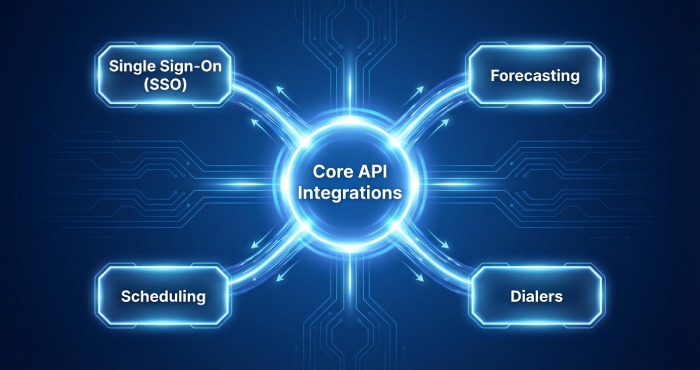
Robust APIs, webhooks, and event streams enable tech stack consolidation across Clari (forecast accuracy), Outreach (Seattle HQ), and Okta SSO. Open architecture supports sales process orchestration, custom AI agents, and workflow automation that spans marketing, sales, and customer success.
API guardrails
- Respect rate limits.
- Version-lock schemas to protect data security.
Pricing models and total cost of ownership
Seats and usage
Account executives, sales development, and revenue operations coverage
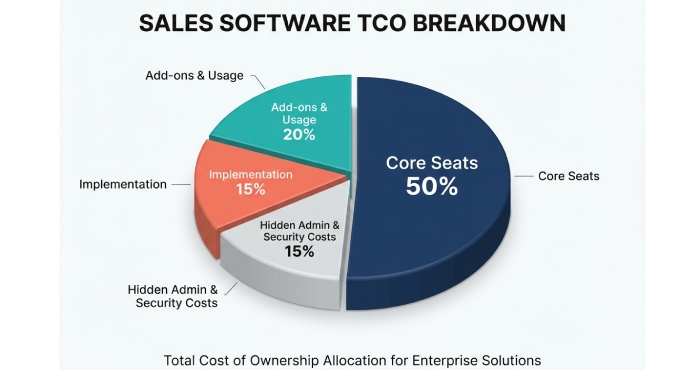
Budget for core seats across account executives, sales development, and revenue operations, plus viewer licenses for sales leaders. Factor SMS/voice minutes, monthly contact sends, conversation intelligence hours, and AI revenue workflow tasks when modeling total usage.
Usage modeling shortcuts
- Start with historical send/call volumes.
- Add 20–30% buffer for enterprise sales seasonality.
Add-ons and implementation
Conversation intelligence, AI agents, and professional services
Add-ons like conversation intelligence, AI agents, advanced reporting, and professional services can materially change TCO. Validate whether rep coaching, deal management dashboards, and sales forecasting modules are bundled or separate to avoid surprises.
Hidden costs
Data security, privacy, and GDPR compliance
Security reviews, privacy assessments, and GDPR compliance can add evaluation time and legal fees. Confirm encryption, data residency options, DPA terms, and role-based access, and ensure Okta SSO and SCIM streamline provisioning.
Change management and template governance
Plan enablement, template governance, and ongoing content QA. Poor governance erodes productivity, hurts buyer alignment, and inflates costs through rework.
TCO line items to watch
- Integration maintenance
- Admin time for template approvals
- Regional rollouts (Prague, Atlanta)
Evaluation framework and RFP checklist
Must-ask questions
Platform overview, role-based access, and workflow automation
Request a platform overview that demonstrates workflow automation across lead capture, prospect and engage plays, and account management. Probe role-based access granularity for managers, coaches, and cross-functional partners to support stakeholder management.
Forecast accuracy, sales forecasting, and AI-generated insights
Ask how the vendor drives forecast accuracy and sales forecasting through AI-generated insights and conversation intelligence. Clarify how signals translate into next best actions and how reps receive real time feedback.
Pilot design
Success metrics: reply rate, meeting rate, pipeline attribution
Design a 4–6 week pilot that targets reply and meeting rates, pipeline attribution, deal velocity, and quota attainment. Use matched control groups and standardize ICP, messaging, and cadences for industry-leading workflows comparisons.
Mutual action plans and buyer alignment
Include mutual action plans in later-stage pilots to test buyer alignment and opportunity management in complex deals. Track deal insights, stage progression, and renewal risk indicators.
Security and legal review
Data residency and Okta SSO
Validate SSO, SCIM, and device controls; map data flows and residency for EU workloads to satisfy GDPR compliance needs. Confirm audit trails for coaching opportunities and rep coaching interactions.
DPA, SOC 2, and GDPR
Request DPA, SOC 2 Type II, and penetration test summaries. Ensure privacy policies cover AI-driven workflows, especially for call recording and conversation insights.
RFP must-haves
- Export APIs and data portability
- Uptime SLAs and support tiers
- Named CSM and escalation path
Implementation and change management
Onboarding and training
Rep coaching, real time feedback, and coaching opportunities
Deliver role-based onboarding and microlearning tied to conversation intelligence cues. Use rep coaching with real time feedback tocoach and improve messaging, raising productivity across revenue teams.
Template governance and process orchestration
Sales process orchestration and next best actions
Create a governance board for templates, stages, and approvals to enforce sales process orchestration. Operationalize next best actions from AI agents so reps can prospect and engage, manage deals, and execute account management consistently.
Roles and permissions
Role-based access, account management, and stakeholder management
Define granular permissions for SDRs, AEs, managers, and professional services. Align account management handoffs to customer success to retain and expand, reduce renewal risk, and accelerate customer expansion.
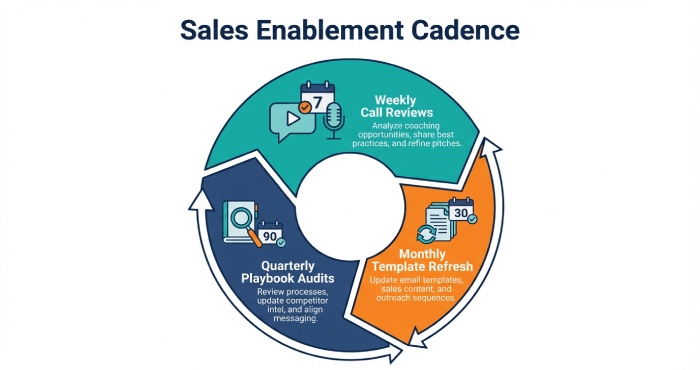
Enablement cadence
- Weekly call reviews
- Monthly template refresh
- Quarterly playbook audits
Metrics, benchmarking, and ROI
Core metrics
Reply and meeting rates
Instrument reply and meeting scheduling metrics across segments, personas, and regions. Attribute improvements to outreach email software and AI revenue workflow rather than seasonality.
Deal velocity, quota attainment, and team performance
Track stage-to-stage speeds, win rates, and quota attainment to quantify sales engagement impact. Benchmark team performance pre/post rollout to isolate the contribution of workflow automation and conversation intelligence.
Pipeline and forecast
Pipeline management, manage deals, and sales forecasting
Measure pipeline management health, including coverage, hygiene, and aging. Use sales forecasting models that blend historicals with AI-driven workflows to forecast and plan and manage deals proactively.
Optimization cadence
A/B tests, AI-driven workflows, and industry-leading workflows
Run biweekly A/B tests on messaging, steps, and channels; promote winning variations into industry-leading workflows. Feed results back to AI agents for continuous optimization and higher productivity.
Renewal risk, customer expansion, and retain and expand
Surface renewal risk early via usage and sentiment signals; route tasks to account management and customer success. Track NRR and multi-threading depth to validate, retain and expand outcomes.
ROI formula quick check
- Incremental pipeline created
- Win-rate lift
- Cycle-time reduction
- Cost to serve
Real-world integrations and ecosystem examples
Outreach vs alternatives and partners
Outreach (Seattle HQ), Salesloft, Gong, and Clari
In the ecosystem, Outreach and Salesloft power outreach email software and sales engagement; Gong enriches conversation intelligence; Clari focuses on forecast accuracy. The right mix depends on your sales execution platform strategy and tech stack consolidation goals.
Databricks, Snowflake, Siemens, Worldpay, Elsevier, McKesson, Amplitude, Omniplex Learning
Whether you operate in data (Databricks, Snowflake), industrials (Siemens), fintech (Worldpay), healthcare (McKesson), publishing (Elsevier), analytics (Amplitude), or training (Omniplex Learning), the integration and security requirements are similar—standard APIs, strict data security, and consistent stakeholder management.
Regional rollouts
Prague and Atlanta deployments with Zoom and standardized platform overview
Plan phased deployments across hubs like Prague and Atlanta with standardized meeting scheduling via Zoom, consistent platform overview training, and local champions. Establish a repeatable, scalable sales process to onboard quickly and avoid drift.
Champion network
- Sales leaders to sponsor
- Ops to instrument
- Managers to reinforce
Program governance and stakeholder alignment
Sales leaders and revenue teams
Sales platform ownership and revenue operations
Assign clear ownership for the sales platform to revenue operations with executive sponsorship from sales leaders. Align key performance indicator(KPIs) to revenue teams so AI revenue workflow, AI agents, and outreach email software directly support prospect and engage motions.
Buyer and customer success alignment
Customer retention and customer success
Connect late-stage deal management with customer success playbooks to drive customer retention. Use mutual action plans to ensure buyer alignment from sale to onboarding.
Escalation lanes
- Deal desk for complex pricing
- Legal for DPA
- Security for audits
- CSM for expansions
FAQs
How do I compare platforms without running a long POC?
Define a short pilot with clear success metrics (reply/meeting rates, pipeline attribution, forecast accuracy) and a control group. Include security and data security checks in parallel to compress timelines.
What integrations deliver the fastest impact?
Start with CRM, calendaring/Zoom, and dialer plus conversation intelligence to unlock rep coaching and real time feedback. Add enrichment and CDP later to scale AI-driven workflows and next best actions.
How should I budget for total cost of ownership?
Model seats by role, usage-based costs (voice/SMS, data), add-ons (AI agents, conversation intelligence), and professional services. Include enablement, template governance, and integration maintenance as hidden costs.
What security requirements are non-negotiable?
SSO via Okta, role-based access, encryption, audit logs, and GDPR compliance are table stakes. Ensure privacy terms are explicit for call recording and AI-generated insights.
How do I maintain process consistency across regions?
Codify sales process orchestration, templates, and coaching in a central library. Run monthly audits and leverage workflow automation to enforce next best actions for all revenue teams.
What metrics prove ROI quickly?
Track reply and meeting scheduling improvements, deal velocity, and quota attainment alongside pipeline management hygiene. Tie improvements to specific workflows within the sales platform, outreach email software, and cold email software to ensure a comprehensive view of performance and optimization opportunities.e.
When should I bring in customer success?
Engage customer success as soon as a deal enters late-stage to prepare mutual action plans and onboarding. This reduces renewal risk and accelerates retain and expand outcomes.
Key Takeaways
- Prioritize open integrations (CRM, calendaring, CDP, APIs) to power AI revenue workflow, sales engagement, and pipeline management.
- Model TCO beyond seats to include usage, add-ons (AI agents, conversation intelligence), enablement, and security compliance.
- Use a structured RFP and pilot with must-ask questions, measurable KPIs, and privacy/data security reviews.
- Drive adoption with rep coaching, template governance, and role-based access to sustain productivity and deal management quality.
- Instrument metrics for sales forecasting, deal velocity, and quota attainment, then optimize with AI-driven workflows and next best actions.