
The Ultimate 2026 Guide To Digital Marketing Lead Generation: Strategies, Tools, And KPIs
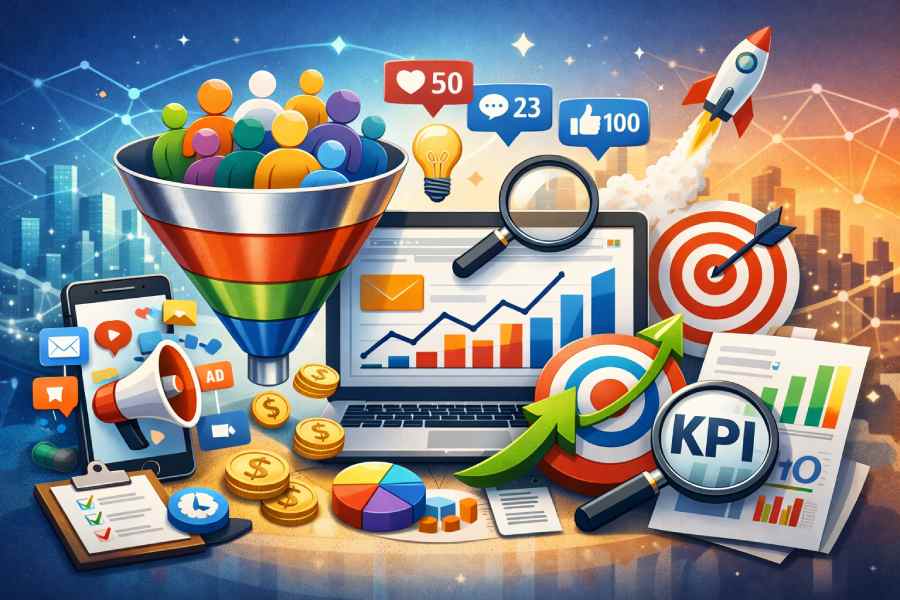
In 2026, digital marketing lead generation is no longer just about capturing emails—it’s about building data-driven, multi-channel systems that consistently attract, nurture, and convert high-intent prospects into loyal customers. With AI-powered automation, evolving privacy regulations, advanced analytics, and increasingly competitive ad ecosystems, businesses must go beyond basic tactics and adopt integrated strategies that align content, paid media, SEO, email marketing, and conversion optimization.
This ultimate guide explores the most effective lead generation strategies, must-have tools, and performance-driven KPIs you need to measure success—helping you create scalable campaigns, maximize ROI, and turn traffic into predictable revenue growth in today’s fast-moving digital landscape.
2026 landscape: AI, privacy, and the first‑party data imperative in lead generation
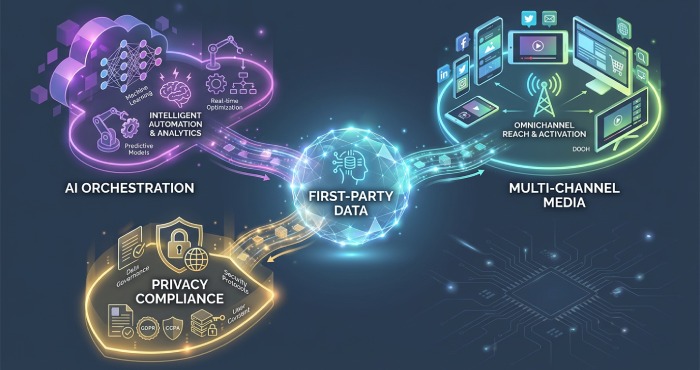
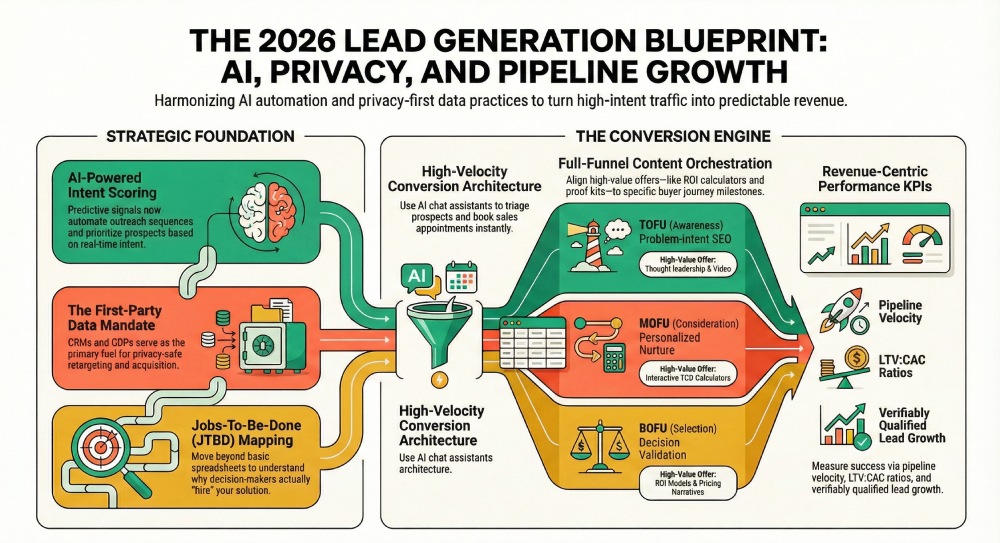
Artificial intelligence now underpins every serious digital marketing program, from audience modeling to media buying to pipeline attribution. In 2026, effective lead generation depends on harmonizing AI with privacy-first data practices to consistently produce qualified leads without sacrificing lead quality or inflating lead quantity. The mandate: reduce waste, accelerate the sales cycle, and improve conversion rates while protecting consent and identity.
- AI orchestration and decision support: Modern marketing software uses predictive signals to prioritize prospects, auto-create sales appointments, and score intent. Teams are experimenting with AI agents—think orchestration layers like AutoPylot or Astro—to sequence outreach and content across channels. These systems guide the sales process by surfacing next-best actions for decision-makers and shrinking time-to-first-response, which directly lifts ROI.
- Privacy and measurement: With third-party cookies gone, first-party data—emails, site behavior, CRM events, and zero-party preferences—is the backbone of digital marketing. Consented data powers lookalikes, retargeting in privacy-safe ways, and more precise lead acquisition. Expect modelled reporting for campaigns and incrementality testing to validate ROI when direct tracking is limited.
- The first-party stack: CRMs (Salesforce, HubSpot), automation (Salesforce Account Engagement with Engagement Studio), and CDPs unify the target audience, attribute revenue to channels, and maintain a healthy sales pipeline. Integrations with ad platforms like Google Ads, Bing Ads, and the Google Display Network transform owned insights into paid search and display advertising fuel—helping marketing services teams and any marketing agency achieve predictable pipeline growth.
Key takeaway: in 2026, the brands that win B2B lead generation are those that operationalize AI responsibly, scale personalized communication, and prove outcomes across the full customer journey.
Defining ICPs, buyer personas, and jobs-to-be-done; mapping journeys and high‑value offers
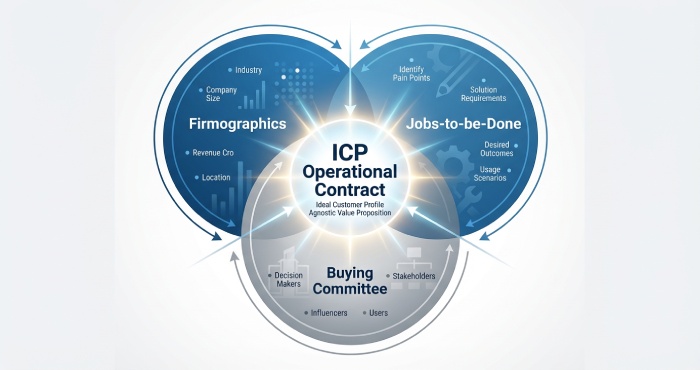
Your ideal customer profile (ICP) is not a spreadsheet—it’s an operational contract between digital marketing and sales. Precision here governs lead quality, lead quantity, and ultimately conversion rates.
- ICPs and personas through jobs-to-be-done: Combine firmographic filters with jobs-to-be-done (JTBD) interviews to understand why decision-makers hire your solution. Whether you sell to OpsVeda, Inhalation Sciences, or similar mid-market teams, define buying committees, triggers, and constraints that shape the sales cycle. A marketing agency can facilitate this research to sharpen marketing strategies and improve client acquisition.
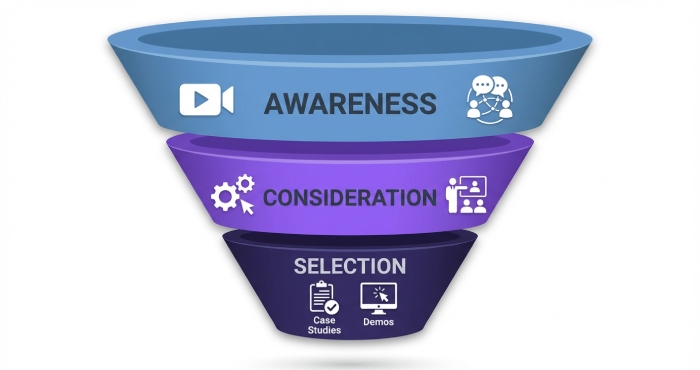
- Journey mapping to offers: Map milestones across awareness, consideration, and selection, then align high-value offers to each stage: calculators, ROI worksheets, interactive demos, and proof kits. Use lead scoring to balance lead quantity with a focus on qualified leads; pair it with lead nurturing streams to reduce friction in the sales process and accelerate the sales cycle.
- Operational alignment: Sync definitions in Salesforce or HubSpot so that prospects meeting ICP fit, behavioral thresholds, and budget/timeline criteria move to sales quickly. Engagement Studio flows can route, notify, and schedule sales appointments. This discipline keeps the sales pipeline clean and ensures marketing services are judged on both volume and verifiable revenue impact.
Tip: insist on shared definitions of MQL, SQL, and qualified leads; otherwise, even great campaigns underperform on ROI.
Content engine for TOFU–MOFU–BOFU: SEO, thought leadership, interactive tools, webinars, and gated vs ungated
In 2026, content marketing remains the compound-interest engine of lead generation, but formats and gating strategies must reflect how decision-makers actually research.
- TOFU (awareness): Prioritize SEO around problem-intent, create thought leadership on industry shifts, and leverage video marketing on YouTube and short-form. Social media marketing threads on LinkedIn, Instagram, TikTok, and Twitter grow brand awareness among a wider target audience. Ungated explainers and comparison pages prime prospects and feed retargeting pools with high lead quality signals.
- MOFU (consideration): Deploy interactive tools (TCO calculators, diagnostics), webinars with SMEs, and email marketing sequences that deliver personalized communication. Use gated content judiciously for high-intent assets—deep technical guides, benchmarks, or ROI models—so you capture qualified leads without bloating lead quantity. Integrate with marketing software to measure influence on conversion rates and pipeline growth.
- BOFU (selection): Publish customer evidence, security reviews, pricing narratives, and implementation roadmaps, and use case-studies across industries (from SaaS to life sciences) to reassure decision-makers. A marketing agency can build battlecards and demo scripts that reinforce your market position and smooth the sales process.
Distribution matters: syndicate across the Google Display Network for efficient reach, apply programmatic advertising to amplify hero assets, and orchestrate nurture streams that adapt by role and industry. The goal is to guide prospects through the customer journey, lift conversion rates at each step, and expand the sales pipeline with verifiably qualified leads.
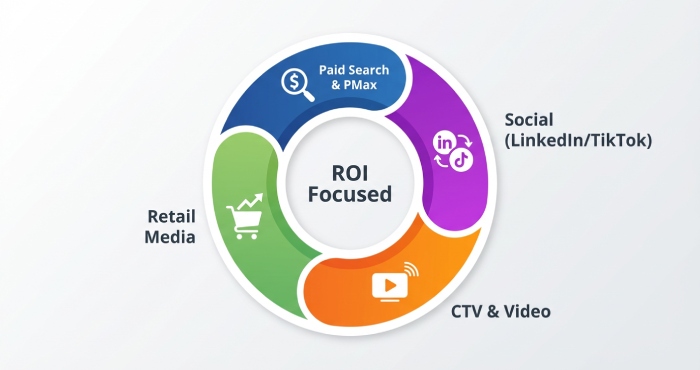
Paid acquisition in 2026: search/PMax, social (Meta/TikTok/LinkedIn), CTV, retail media, and creator-led campaigns
Paid channels are indispensable for net-new lead acquisition—especially when organic demand fluctuates. The mix you choose should mirror ICP media habits and prioritize ROI across the full sales cycle.
- Search and PMax: Paid search remains intent gold; structure Google Ads and Bing Ads for high-signal queries, feed them first-party audiences, and let PMax harvest incremental conversions while guarding brand terms. Layer in mobile marketing ad customizers for on-the-go decision-makers, plus retargeting that reflects stage and offer.
- Paid social and creators: Social ads on Facebook Ads, LinkedIn Ads, Instagram Ads, Twitter Ads, and TikTok Ads deliver reach and precision. For B2B lead generation, LinkedIn is still unmatched for job-title targeting among decision-makers, while TikTok and Instagram amplify brand awareness and creator credibility. Blend influencer marketing and affiliate marketing with creator-led explainer series to compress the sales cycle by educating prospects early.
- CTV, retail media, and beyond: CTV unites performance and storytelling; run programmatic advertising on premium inventory as modern TV advertising, with QR prompts for immediate response. Retail media, especially on Amazon, opens unexpected reach for some verticals. Complement with traditional media—radio advertising, print advertising, and outdoor advertising—when scaling awareness or events. Ensure display advertising on display networks is audience-led, frequency-controlled, and aligned to your sales process.
A note on structure: centralize budget allocation in your CRM/CDP, refresh audiences from Salesforce or HubSpot weekly, and use controlled tests to verify ROI. Expert marketing services from partners like Callbox can augment outbound sequences, warm up accounts, and hand off sales appointments that convert.
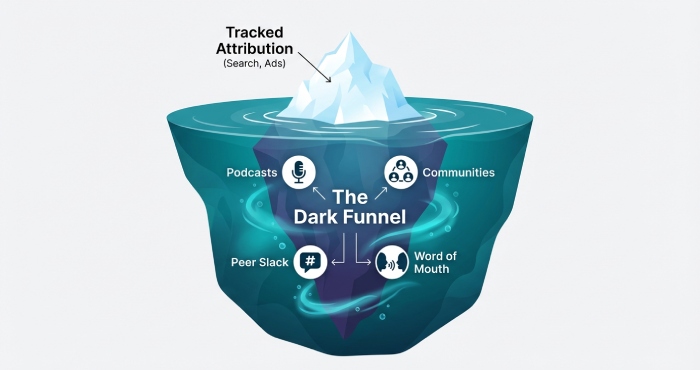
Social, community, and the dark funnel: podcasts, events, employee advocacy, and UGC
Much of 2026 demand originates in places analytics barely see—the dark funnel of communities, creator ecosystems, and peer channels. Winning digital marketing teams manufacture presence where buying conversations happen before forms are ever filled.
- Community and podcasts: Build or participate in practitioner groups on LinkedIn, Twitter, and niche Slack/Discord communities. Launch a podcast distributed on Spotify, Apple, and YouTube to unpack problems and success stories your target audience cares about. This raises market position, nurtures prospects pre-form, and increases the velocity of qualified leads once they engage.
- Events and field: Mix event marketing with direct mail to drive attendance to VIP demos at trade shows and conferences. Host roadshows and webinars that create immediate sales appointments with decision-makers. Coordinate with partners like Callbox for pre- and post-event follow-up that feeds the sales pipeline and proves pipeline growth.
- Employee advocacy and UGC: Arm SMEs and executives with narrative frameworks, then encourage employee advocacy on Facebook, Instagram, LinkedIn, TikTok, and Twitter. Curate user-generated content (UGC) and customer clips; amplify with social ads to extend reach efficiently. For complex solutions, share clips from OpsVeda- or Inhalation Sciences-style implementations to increase lead quality and signal readiness along the customer journey.
Measurement and enablement: Tag engagement via UTMs where possible, but more importantly, align anecdotal signals with account activity in Salesforce. Use Engagement Studio or HubSpot workflows for lead nurturing, route accounts to SDRs when intent spikes, and prioritize via lead scoring. When your marketing strategies consistently create educated prospects, the sales process shortens, conversion rates rise, and ROI compounds—even if some influence remains untracked.
Bringing it together: coordinate campaigns across channels, enforce ICP discipline, and let content plus paid acquisition do the heavy lifting. With the right marketing agency support, the right marketing services stack, and first-party data at the core, digital marketing in 2026 can scale lead generation, attract more qualified leads, and sustain client growth—while keeping an efficient sales pipeline and a provably improving ROI.
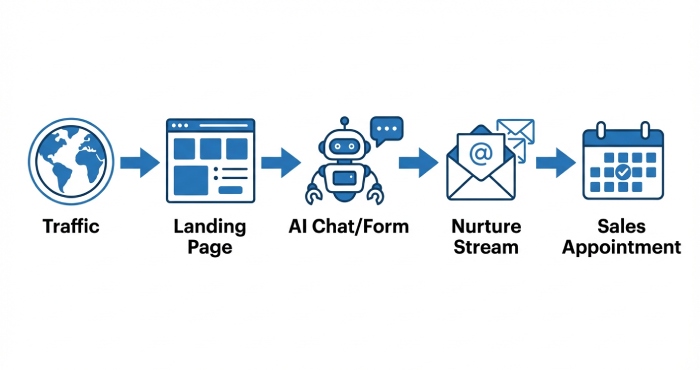
Conversion architecture: landing pages, forms, chat/AI assistants, offers, CRO, and personalization
Landing experiences and UX
Your conversion architecture translates digital marketing spend into predictable lead generation. Every touchpoint should guide a clear customer journey for your target audience and accelerate the sales process. Design for decision-makers and researchers alike: executives scan, while practitioners compare details. Balance lead quality and lead quantity by segmenting experiences for high-intent prospects versus early-stage visitors, and continuously improve conversion rates with disciplined CRO.
High-velocity landing pages and forms
- Focus each page on a single value proposition, mapped to a specific offer and stage in the sales cycle. For paid search via Google Ads and Bing Ads, mirror ad copy on the headline to match intent and improve conversion rates and ROI.
- Use short forms for top-of-funnel lead acquisition and progressive profiling to enrich qualified leads over time. Gate high-value content such as calculators, benchmarks, and industry playbooks to signal lead quality without depressing lead quantity.
- Incorporate mobile marketing best practices: fast load times, minimal fields, autofill, and tap-friendly CTAs. For display advertising and programmatic advertising sourced from display networks like Google Display Network, build variant pages aligned to creative messaging to improve retargeting performance.
Chat and AI assistants that qualify
AI chat assistants triage prospects, book sales appointments, and enrich records in your CRM. Use conversation design to surface buying signals, route B2B lead generation chats to humans when complex, and schedule meetings directly to accelerate the sales cycle. Integrate with Salesforce or HubSpot so chat outcomes update the sales pipeline in real time and assist the sales process with context for reps.
Offers, gated content, and personalization
Map offers to intent: demos and ROI assessments for hot prospects; templates, webinars, and case studies for earlier researchers. Blend content marketing with video marketing (YouTube), social media marketing (Facebook, Instagram, LinkedIn, Twitter, TikTok), and affiliate marketing or influencer marketing to widen reach and drive brand awareness. Use personalized communication based on firmographics, industry pain points, and behavior—dynamic headlines, proof points, and pricing tiers can lift conversion rates on high-value pages.
Microcopy, trust, and mobile UX
- Add micro-trust (customer logos like OpsVeda, Inhalation Sciences, AutoPylot, Astro), accreditation, and security notes near forms.
- Use social proof tailored to decision-makers (ROI outcomes, payback) versus users (feature depth, integrations).
- Maintain parity across devices; mobile UX gaps quietly erode qualified leads and distort ROI.
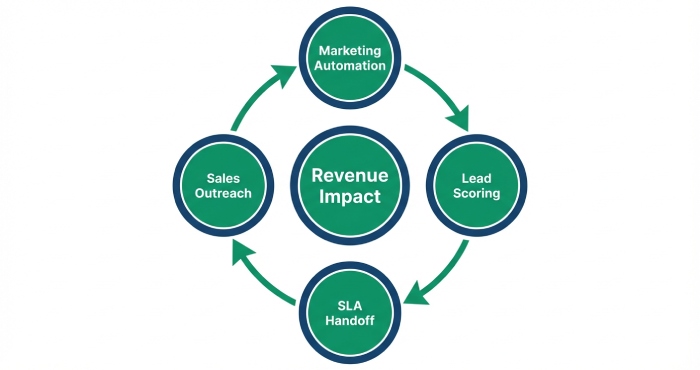
Lifecycle nurturing and automation: email/SMS sequencing, lead scoring, SLAs, and sales enablement
Email and SMS sequencing
Automated sequences turn raw lead quantity into sales-ready, qualified leads. Combine email marketing and compliant SMS to reinforce messages and speed up the sales process. Build tracks by persona and stage, using HubSpot workflows or Salesforce Account Engagement’s Engagement Studio to drip content that addresses objections, surfaces value, and requests sales appointments when engagement milestones are met.
Lead scoring, SLAs, and routing
- Lead scoring aligns marketing strategies with sales by weighting behavior (e.g., pricing page visits), fit (ICP match), and recency. Calibrate thresholds by back-testing against wins in your sales pipeline.
- Define SLAs: time-to-first-touch, handoff criteria, and recycle rules to preserve lead quality. Route by territory, industry, or product line, and ensure marketing software pushes alerts to reps in Slack or email so hot prospects don’t age.
Sales enablement and sales appointments
Equip reps with sequenced collateral—case studies, competitive one-pagers, return on investment(ROI) calculators—that match where prospects sit in the customer journey. Use call snippets and content tracking to coach to the sales process. A marketing agency delivering full-funnel marketing services should report on pre-pipeline influence, SQL conversion rates, and net-new client acquisition, proving pipeline growth alongside client growth.
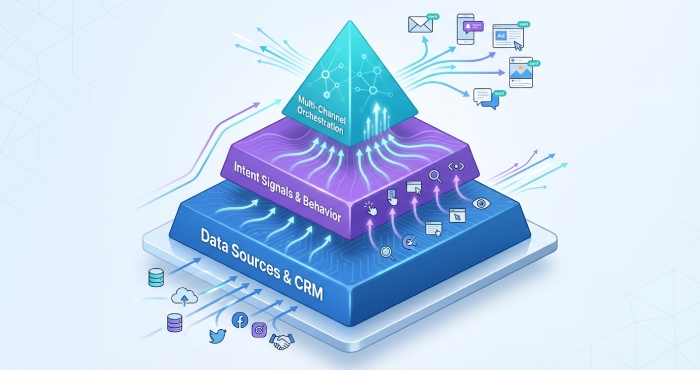
Account-based marketing and intent: data sources, orchestration, and personalization at scale
Data sources that signal demand
Blend first-party data (site, product, and email) with third-party intent to prioritize accounts already in-market. Use firmographic/technographic sources and platform signals (LinkedIn Ads engagement by seniority, Google Ads search terms, and content syndication from partners like Callbox). Layer event marketing signals from trade shows and conferences, plus traditional media bursts (TV advertising, radio advertising, print advertising, outdoor advertising) when building share-of-voice among hard-to-reach decision-makers.
Firmographic and behavioral layers
- Map buying committees—finance, IT, operations—to create routes for multiple decision-makers within the same account.
- Monitor surges around keywords tied to pain and value; combine with retargeting pools and sales outreach prioritization to compress the sales cycle and improve ROI.
Orchestration across channels
Align campaigns across social ads (Facebook Ads, Instagram Ads, LinkedIn Ads, Twitter Ads, TikTok Ads), paid search, display advertising, and direct mail to saturate named accounts. Sync journeys in your MAP and CRM so that personalized communication reaches each stakeholder at the right cadence, and ensure platforms like Nurpley are integrated to streamline data flow and campaign orchestration. For high-value accounts like OpsVeda or Inhalation Sciences, deliver 1:1 pages, custom video messages, and executive invites; for 1:few clusters such as AutoPylot or Astro, use verticalized offers and gated content to earn qualified leads.
Personalization at scale
Deploy dynamic content blocks, industry-specific proof, and geo- or role-based messaging so every touch feels bespoke without manual lift. ABM success hinges on lead quality more than lead quantity; keep measurement centered on account progression, stage-to-stage conversion rates, and influence on the sales pipeline.
The modern RevTech stack and attribution: CRM, MAP, CDP, server-side tracking, MMM vs MTA, incrementality testing
Core systems: CRM, MAP, and CDP
Anchor revenue data in a CRM like Salesforce with a MAP such as HubSpot or Salesforce Account Engagement for orchestration. Add a CDP to unify identities across web, app, and offline sources, enabling audience suppression and smarter lead generation while safeguarding data. Integrate ad platforms (Google Ads, Bing Ads), social endpoints, and display networks to align budget with ROI and market position.
Server-side tracking and privacy shifts
Move to server-side tagging to improve signal resilience amid Apple’s ATT and browser restrictions, and coordinate consent frameworks across regions. Pass hashed events to measurement partners and platforms (Amazon, Facebook, LinkedIn, TikTok, Spotify, YouTube) to stabilize attribution and inform programmatic advertising optimization.
MMM vs MTA and incrementality
Use MTA for near-term, user-level insight where data permits, and MMM for strategic budget allocation across channels, including traditional media. Neither replaces testing. Validate lift with geo or audience split incrementality tests, particularly for upper-funnel social media marketing and outdoor advertising, where click paths understate impact.

Practical test designs
- Geo holdouts for TV advertising and radio advertising to quantify halo on branded paid search and direct traffic.
- PSA or ghost ads for social ads to estimate true lift on qualified leads and downstream sales pipeline.
- Time-based rotation for direct mail to isolate contribution to sales appointments and pipeline growth.
KPIs that matter in 2026: definitions, formulas, benchmarks, and dashboards by channel and funnel stage
Definitions and formulas that align teams
- MQL → SQL → SAL → Opportunity: stage definitions must be shared to protect lead quality and ensure a smooth sales process.
{{LI}}Key formulas: Conversion rate = Conversions / Sessions; CAC = Spend / New Customers; LTV:CAC ratio; Pipeline velocity = (
Opportunities × Win Rate × ACV) / Sales cycle length; ROI = (Revenue – Cost) / Cost.{{/LI}}
- Track lead quantity and qualified leads separately; both drive client acquisition but impact ROI and the sales cycle differently.
Benchmarks by channel and funnel stage
- Paid search (Google Ads, Bing Ads): high intent; expect strong SQL rates and shorter sales cycle. Monitor CPA, ROAS, and search term quality.
- Social ads (Facebook Ads, Instagram Ads, LinkedIn Ads, Twitter Ads, TikTok Ads): optimize for cost-per-MQL, view-through influence, and retargeting lift.
- Content marketing and video marketing: benchmark assisted conversions, time-on-page, and subscriber growth; podcasts on Spotify and Apple can build brand awareness and future lead acquisition.
- Programmatic advertising and display advertising: focus on incremental reach, viewability, and post-view conversion rates via server-side attribution.
- Direct mail, trade shows, and conferences: measure appointment set rate, badge scans to SAL, and opportunity creation. Tie event marketing to ABM account progression.
Dashboards executives actually use
Create role-based views: marketing (campaigns and channel ROI), sales (sales pipeline health, opportunity aging), and finance (LTV, CAC payback). Visualize pipeline growth by source, cohort-level conversion rates across the sales process, and forecasted revenue by stage. Use drill-downs to see decision-makers engaged, target audience coverage, and prospects by segment so a marketing agency and internal teams can act quickly with the right marketing services.
FAQs
How do we balance lead quality and lead quantity without hurting revenue?
Segment offers and routing. Use progressive profiling and lead scoring to protect the sales process while running targeted campaigns that expand reach among your target audience.
What’s the fastest way to improve conversion rates on landing pages?
Tighten message match from ads to pages, cut fields, and add social proof for decision-makers. Test AI chat to pre-qualify prospects and book sales appointments directly into the sales pipeline.
When should we use MMM versus MTA for attribution?
Use MTA for optimizing bottom- and mid-funnel channels in digital marketing and MMM for portfolio-level budget decisions across online and traditional media. Validate both with incrementality tests to protect ROI.

How does ABM change our day-to-day lead generation?
You’ll focus on account progression, not just volume. Orchestrate personalized communication across channels and measure qualified leads, meetings, and opportunity creation within named accounts.
Which RevTech systems are essential for B2B lead generation?
A robust CRM (e.g., Salesforce), a MAP (e.g., HubSpot or Account Engagement with Engagement Studio), and a CDP for identity and audiences. Add server-side tracking and clean integrations to ad platforms for reliable ROI reporting.
Do SMS and email marketing play well together?
Yes—SMS accelerates time-sensitive touches while email marketing nurtures depth. Coordinate cadence to avoid fatigue and tie both to clear goals in the sales pipeline.
Can a marketing agency prove ROI beyond vanity metrics?
Absolutely. Require dashboards that connect spend to qualified leads, stage-to-stage conversion rates, sales cycle compression, and pipeline growth, not just clicks.
Key Takeaways
- Build conversion architecture that prioritizes decision-makers, pairs offers to intent, and uses CRO and AI chat to lift conversion rates without sacrificing lead quality.
- Operationalize lifecycle automation with lead scoring, SLAs, and targeted sales enablement to accelerate the sales cycle and improve ROI.
- Run ABM with intent data, multi-channel orchestration, and personalization at scale to advance named accounts through the sales pipeline.
- Modern RevTech blends CRM, MAP, CDP, and server-side tracking, with MMM, MTA, and incrementality testing to attribute revenue accurately.
- Track the right KPIs—conversion rates, pipeline velocity, LTV:CAC, and channel ROI—on executive-friendly dashboards to drive pipeline growth and client acquisition.