
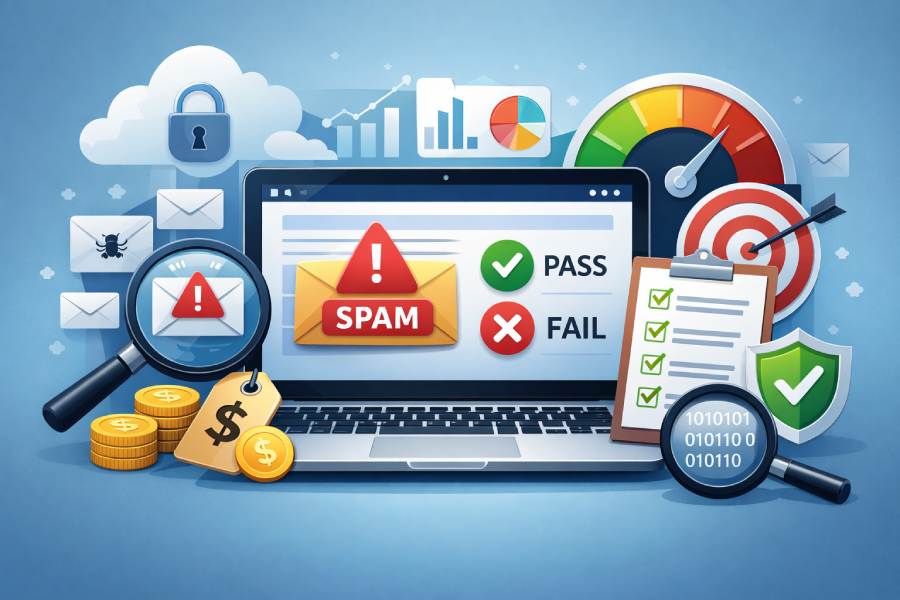
Choosing The Right Online Email Content Spam Checker: Features, Pricing, Accuracy
In today’s digital age, email remains one of the most powerful tools for business communication, marketing, and customer engagement. But as email traffic continues to grow, so does the threat of spam filters intercepting your carefully crafted messages — sometimes before they even reach your audience’s inbox. That’s where online email content spam checkers come in: intelligent tools designed to evaluate your email content against complex spam-filtering algorithms and help you optimize for higher deliverability.
Choosing the right spam checker isn’t just about ticking a box. It’s about understanding how different tools analyze content, what features they offer, how accurate their predictions are, and whether their pricing aligns with your budget and needs. With so many options available — each promising comprehensive analysis and higher inbox placement — making the right choice can feel overwhelming.
In this guide, we’ll break down the key features you should look for, compare pricing models, explain how accuracy and detection rates vary between tools, and offer expert tips to help you decide which solution best fits your email strategy. Whether you’re a seasoned email marketer or just getting started, understanding these factors will help you avoid spam traps and improve engagement with every campaign.
How to choose the right online email content spam checker: features, pricing, accuracy
Features to prioritize
Start with a spam checker that does rigorous email content analysis and integrates with your workflow. Non‑negotiables include:
- A robust spam words checker that flags spam trigger words from a current, contextual spam words list, not merely legacy “trigger words.”
- Multi-inbox deliverability test capabilities to preview email inbox placement across Gmail, Outlook, Yahoo Mail, and custom recipient mailbox setups in Google Workspace.
- An email template check that evaluates email markup, links, HTML and text version match, image to text ratio, and the unsubscribe link.
- Recommendations to avoid spam words and replace spam words with safer alternatives, plus template review and test email copy guidance.
Beyond content, look for checks that surface domain reputation and IP reputation risk, along with DNS settings validation (SPF record, DKIM, DMARC). A high-quality spam checker won’t guarantee email deliverability, but it reduces obvious content issues that cause anti-spam filters and spam filters to downrank email placement.
Pricing and accuracy tradeoffs
Pricing varies from free basic tests to enterprise subscriptions. Ensure the plan covers enough test mailing volume, API usage, and multi-inbox runs. Evaluate how accuracy is communicated: does the provider disclose its spam filter algorithm assumptions, the data behind its spam words list, and the limits of its email spam filter simulations? Balance cost with impact on email ROI and email campaign efficiency—accuracy that prevents a spam folder detour usually pays for itself quickly.
Lab vs real-world validation
Prefer vendors that validate findings with real mailboxes across major ESP environments and a range of mailing service routes, not just synthetic lab scoring.

Why online email content spam checkers matter for deliverability and pre-send QA
Protecting domain reputation and IP reputation
Every test email for spam you run before a send reduces the chance of negative engagement signals (deletes, complaints) that erode domain reputation and IP reputation. In mass mailing and bulk email scenarios, one flawed email body can trigger blacklists, create deliverability issues, and degrade long-term email deliverability. A disciplined pre-send checklist before send—anchored by a spam checker—safeguards your DNS and domain health monitoring efforts.
Improving email inbox placement and email ROI
Cleaner copy, safer links, and better technical hygiene translate to higher inbox rate and improved email inbox placement. Even small lifts in email delivery rate and open rate compound into measurable email ROI for email marketing, cold email, and email outreach. A content-first deliverability test reduces the reliance on manual moderation by catching spam trigger issues before the first live send.
How content spam checkers work: rulesets, ML scoring, blocklists, and what they don’t cover
Rulesets, ML scoring, and simulated spam filters
Most tools combine rules-based scoring (keyword density, trigger words proximity, capitalization, punctuation) with machine learning models trained on patterns associated with anti-spam filters. They approximate how an email spam filter evaluates the email subject line and email body, incorporating features like email placement tendencies, HTML anomalies, and link risk. Good platforms maintain current models aligned with major spam filters to reflect real-world filtering.
Blocklists, DNS, and what they don’t cover
Sophisticated platforms also query blocklists/blacklists and perform DNS checks for SPF, DKIM, and DMARC alignment. However, a content spam checker cannot fix poor sender behavior, a poisoned mailing list, or a weak ESP reputation. It won’t override low engagement, missing email authentication, or a damaged sender score. It is best used alongside deliverability test practices, domain health monitoring, and correct DNS settings to prevent the spam folder outcome.
Must-have features: multi-inbox testing, HTML/links analysis, keyword heuristics, and suggestions
Multi-inbox and HTML/links analysis
Seek multi-inbox testing across Gmail, Outlook, and Yahoo Mail, reflecting different anti-spam filters and spam filter algorithm nuances. Deep email content analysis should include:
- HTML validation, email markup sanity checks, and HTML and text version match
- Link and tracking domain risk analysis
- Image to text ratio optimization
- Unsubscribe link detection and compliance tips
These help a spam checker predict email inbox placement more reliably and guide a safer test email for spam workflow.
Keywords and suggestions
A modern spam words checker does more than highlight spam trigger words—it prioritizes context and suggests replacements. It should reference a living spam words list and provide phrase-level suggestions that avoid spam words but retain intent. Coupled with an email template check, the tool should guide a concise email subject line and balanced email body while highlighting any spam trigger patterns.
Template checks and copy tests
Create a repeatable email copy test routine: run a test email copy through the tool, implement suggestions to replace spam words, then run a second pass. Document changes with versioning to correlate improvements with email delivery rate and inbox rate over time.
Measuring accuracy: test methodology, false positives/negatives, and independent benchmarks
Test methodology and metrics
Assess accuracy using a test release plan:
- Send controlled test mailing batches to seed lists across Google Workspace, Gmail, Outlook, and Yahoo Mail.
- Compare predicted risk vs actual email placement (inbox vs spam folder).
- Track false positives (flagged but delivered) and false negatives (missed risk, filtered out) over multiple sends.
- Measure downstream metrics like open rate and reply rate to quantify email return on investment(ROI).
Independent benchmarks
Use third-party signals—G2, Capterra, and TrustRadius reviews—to compare vendor scoring consistency and support. Tools like mail-tester.com offer a simple baseline. Folderly and EasyDMARC add strong authentication and domain health perspectives (SPF, DKIM, DMARC), while Mailmeteor can complement testing with outreach tools for controlled sending. Keyword libraries from buywords.io help maintain a relevant spam words list for ongoing tuning.
Usability and workflow: collaboration, versioning, reporting, and API-driven automation
Collaboration and reporting
For teams, look for shared workspaces, comments, and manual moderation queues that support template review before sign‑off. Reporting should include trend lines for email deliverability, domain reputation, IP reputation, and deliverability issues by template. A standardized checklist before send fosters consistent outcomes across an ESP portfolio and mailing service variations.
API automation and integrations
Application Programming Interface(API) access enables automation: trigger a deliverability test and spam checker run on every pull request to templates; push results into your CI pipeline; fail a deployment if high‑risk spam trigger words appear. Integrate with your email service provider to run a test email for spam on every campaign draft. Brian, your marketing ops lead, can schedule nightly audits to keep templates compliant and maintain email placement quality across campaigns.
Pricing models and ROI considerations
Pricing structures
Vendors price by seats, monthly test credits, or domain count. Confirm that plans include multi-inbox tests, blocklist checks, and API calls. Some platforms bundle email authentication checks (SPF record creation, DKIM keys, DMARC alignment) and domain health monitoring. When evaluating ESP-agnostic tools, consider how they fit your bulk email cadence and whether they scale for mass mailing without punitive overage fees.
ROI calculation, test mailing, and test release
Model email ROI by estimating incremental revenue from improved email inbox placement and email delivery rate. Use a controlled test mailing to compare baseline vs optimized templates after the email content analysis, spam words checker passes, and email template check adjustments. Tie improvements to outcomes like higher inbox rate, fewer complaints, and better email campaign efficiency.

Vendor shortlist
- mail-tester.com: quick diagnostics to test email for spam and basic spam filters checks.
- Folderly: broader email deliverability tooling, with domain reputation insights and anti-spam filters troubleshooting.
- EasyDMARC: strong DMARC/SPF/DKIM focus to enhance authentication alongside content checks.
- Mailmeteor: useful for controlled sends and cold email tests via outreach tools workflows.
- buywords.io: supports maintaining an up-to-date spam words list for your spam words checker.
Across all choices, ensure the spam checker reinforces good email marketing hygiene: authenticated sending (SPF, DKIM, DMARC), clean mailing list practices, clear unsubscribe link placement, and content tuned to reduce spam trigger words. Combined, these reduce blacklists exposure, strengthen domain reputation and IP reputation, and improve sustained email deliverability and email inbox placement.
Pricing and total cost of ownership
Licensing models: tiers, per-scan vs. seats
Vendors price spam checker tools in three common ways: per-scan credits, seat-based licenses, and hybrid plans with API quotas. Per-scan works well for small teams running an occasional email template check or a quick test email for spam before a test mailing. Seat licenses suit content teams that run continuous email content analysis, template review, and manual moderation across many campaigns and mass mailing programs
Hybrids pair seats with API allowances so your automation or CI/CD can call a spam words checker, simulate an email spam filter, and log results without blocking engineers. Evaluate tiers that include higher-rate limits for deliverability test tasks, seed-list volume, and multi-domain coverage so domain reputation and IP reputation can be monitored across brands.
Hidden costs, API overages, and vendor lock-in
Scan-based plans can incur overages when your webhooks or outreach tools trigger more checks than expected. API overages also arise during a test release when CI runs a spam filters pass on every commit or when bulk email campaigns explode in size. Watch for add-ons like seed-list credits, mailbox provider panels (Gmail, Yahoo Mail, Outlook), extra recipient mailbox slots, blacklists monitoring, and DNS settings audits.
If the spam words list is gated behind premium tiers or the spam filter algorithm “lab” is only in enterprise, model those costs as part of total cost of ownership. Cross-reference pricing disclosures with peer reviews on G2, Capterra, and TrustRadius to gauge real-world overage patterns.

ROI math: tying checks to revenue and risk
Email ROI improves when email inbox placement rises, spam folder rates fall, and open rate and click rate trend up. A simple model: incremental revenue = (send volume × lift in inbox rate × lift in open rate × lift in CTR × AOV or LTV) − (tool cost + time). Factor savings from fewer deliverability issues, fewer blocks by anti-spam filters, and lower remediation costs after listings on blacklists.
Also include risk reduction—every bad send hurts domain reputation and IP reputation; a preflight spam checker and spam words checker that flags spam trigger words can prevent costly dips in email delivery rate. For outreach and cold email teams, even a small increase in email placement yields a meaningful pipeline; for email marketing at scale, the same spam words checker can protect mass mailing efficiency across regions and brands.
Privacy, security, and compliance
Data handling and retention
Scrutinize how the vendor handles the email body, attachments, and headers during email content analysis. Prefer transient scanning, redaction of PII, and short retention (e.g., 24–72 hours) unless you opt in for longer histories to support template review and trend analysis. Confirm whether HTML and text version match content is stored and how unsubscribe link and email markup are parsed. Ask how logs are segregated per domain, which regions store data, and how IP reputation and domain reputation telemetry is anonymized.
Regulatory posture and attestations
Look for GDPR/CCPA alignment, data processing agreements, and SOC 2 Type II or ISO 27001 attestations. Vendors that also validate email authentication—SPF record, DKIM, and DMARC—should document how DNS is queried and cached. Tools like EasyDMARC can integrate to cross-check SPF, DKIM, DMARC alignment while your spam checker runs. Prefer vendors with clear subprocessor lists, breach notification service level agreement(SLAs), and evidence of privacy-by-design, especially if you run regulated email outreach or bulk email campaigns.
Security controls and mailbox safety
Ask about encryption at rest and in transit, SSO/SAML, and role-based access to minimize human access to email subject line drafts and test email copy. For Google Workspace, Gmail, Yahoo Mail, and Outlook ecosystems, ensure the vendor’s add-ons do not elevate scopes unnecessarily. When simulating spam filters and the email spam filter algorithm, sandbox execution must be hardened to prevent false positives and to avoid accidentally mailing service endpoints. A mature vendor will provide domain health monitoring without risking anti-spam filters at mailbox providers.
Integrations and ecosystem
ESP plugins and outreach stack
Check for native integrations with your ESP and email service provider plugins so writers can trigger a spam checker, run an email template check, and test email for spam directly in the compose flow. Popular connections include Mailmeteor for Gmail-based mail merges, Folderly for remediation, and extensions compatible with Google Workspace and Outlook. Outreach tools used by agencies like Belkins benefit from in-editor spam words list prompts that help authors avoid spam words and replace spam words before scheduling mass mailing sequences.
Seed-list tools and deliverability test workflow
A credible deliverability test setup includes seed-list coverage across Gmail, Yahoo Mail, Outlook, and regional ISPs. Tools such as mail-tester.com and seed-list partners show email placement and inbox rate by recipient mailbox type, complementing your spam words checker and content checks. Pair those with IP reputation and blacklists lookups to detect upstream deliverability issues and to validate that cold email drips behave differently from promotional email marketing sends.
Webhooks, APIs, and CI/CD pipelines
For engineering-led teams, webhooks can post email content analysis results to Slack, while APIs gate merges until a spam trigger threshold passes. Bake a test email for spam into CI so templates and partials fail builds if the image-to-text ratio is off, HTML errors appear, or the email spam filter simulation score exceeds your threshold. Use automation to re-check after a test release, update DNS settings via EasyDMARC when authentication fails, route alerts from nureply, and send events to your data lake for continuous domain health monitoring.
Evaluation checklist and vendor comparison matrix
Checklist before send and vendor selection
- Spam checker accuracy on spam trigger words and broader trigger words beyond a canned spam words list
- Quality of spam words checker guidance to replace spam words with compliant alternatives
- Depth of email content analysis: email subject line linting, email body readability, email markup validation, HTML and text version match, image to text ratio
- Deliverability test coverage: seed lists, email placement panels, and spam filters simulation
- Authentication checks: SPF record, DKIM, DMARC, and DNS settings validation
- Reputation telemetry: domain reputation, IP reputation, blacklists and delisting advice
- Workflow fit: email copy test in-editor, template review queues, manual moderation, and checklist before send
- Integrations: ESP plugins, webhooks, CI/CD, mailing service support, outreach tools compatibility
- Reporting: email delivery rate, inbox rate, open rate, email campaign efficiency, and trends
- Compliance: GDPR/CCPA, attestations, retention controls, and data residency

Comparison matrix by use case and team size
- Solo or SMB cold email: Lightweight tools like mail-tester.com or Mailmeteor add-ons with a spam words checker, basic deliverability test, and low-cost per-scan pricing.
- Mid-market marketing teams: Platforms that combine spam checker automation, seed-list testing, domain health monitoring, and EasyDMARC-style authentication checks; shortlist vendors with strong G2 and Capterra feedback.
- Enterprise and agencies: API-first platforms (Folderly-class) with CI/CD, webhooks, role-based access, comprehensive blacklists monitoring, and TrustRadius-validated references; ensure SLAs, attestations, and multi-ESP coverage.
Implementation tips and continuous optimization
Configure thresholds and scoring
Define pass/fail levels for the spam filter algorithm and set different thresholds by campaign type: promotional, transactional, and cold email. Weigh categories such as spam trigger words, formatting errors, and authentication failures so a single spam trigger does not block a test release when risk is low. Tie alerts to domain reputation and IP reputation drifts so teams revisit templates before mass mailing.
Threshold calibration
- Start conservative, then relax thresholds based on inbox rate and email placement data over two to four sprints.
- Weight email spam filter simulations more heavily for new sending domains to protect early email deliverability.
- Escalate to manual moderation when a template repeatedly fails the email template check or introduces risky trigger words.
Experimentation and feedback loops
Run structured A/B tests on the email subject line and email body to learn which variants pass the spam checker while maximizing engagement. Use a spam words list to avoid spam words, then deliberately replace spam words with neutral phrasing and rerun the email copy test to quantify impact on email delivery rate.

A/B testing of subject and body
- Test email copy against multiple recipient mailbox types using seed lists to detect provider-specific anti-spam filters.
- Log variant scores from the spam words checker, track open rate changes, and prune losing variants quickly.
Deliverability feedback loops and monitoring
- Feed deliverability test and seed-list outcomes back into automation, updating wording when spam trigger words reappear.
- Monitor blacklists, domain reputation, and IP reputation daily; when deliverability issues arise, pause bulk email, fix email authentication, and re-warm with smaller mailing list segments.
- Document wins and misses so Brian or any new team member can replicate a proven checklist before send without guesswork.
FAQs
How often should we run a spam checker before campaigns?
Run it on every template change and again just before a test mailing. For mass mailing or high-stakes launches, add a deliverability test with seed lists to validate email inbox placement across providers.
Do spam words lists still matter with modern spam filters?
Yes, but context matters. Use a spam words checker to flag spam trigger words and then rely on email content analysis to judge tone, formatting, and authentication, which modern spam filters also weigh heavily.
What integrations are essential for engineering teams?
Look for APIs, webhooks, and CI/CD integrations that can test email for spam during builds. Pair with EasyDMARC to validate SPF, DKIM, and DMARC and with seed-list tools for real-world email placement data.
How do we protect privacy when analyzing email content?
Choose vendors with strict retention limits, encryption, and GDPR/CCPA attestations. Redact PII in the email body during analysis and restrict access via SSO and role-based access controls.

Can a spam checker improve email ROI for cold email?
Yes. Preventing spam folder placement and improving inbox rate boosts open rate and reply rate, raising email ROI. It also protects domain reputation, reducing remediation costs.
What metrics confirm better email deliverability?
Track email delivery rate, inbox rate, and open rate by mailbox provider alongside domain reputation and IP reputation trends. Watch blacklists and authentication pass rates to catch issues early.
Key Takeaways
- Treat a spam checker and spam words checker as guardrails that protect domain reputation, IP reputation, and email inbox placement.
- Bake email content analysis, authentication checks (SPF, DKIM, DMARC), and seed-list deliverability tests into CI/CD and pre-send workflows.
- Use a clear checklist before send to avoid spam words, validate HTML and text version match, and confirm unsubscribe link and DNS settings.
- Monitor blacklists and reputation continuously; respond with template review, replacement of trigger words, and segmented re-warm if deliverability issues appear.
- Tie improvements in email delivery rate and inbox rate to revenue to quantify email ROI and justify tool spend.